February 13, 2026
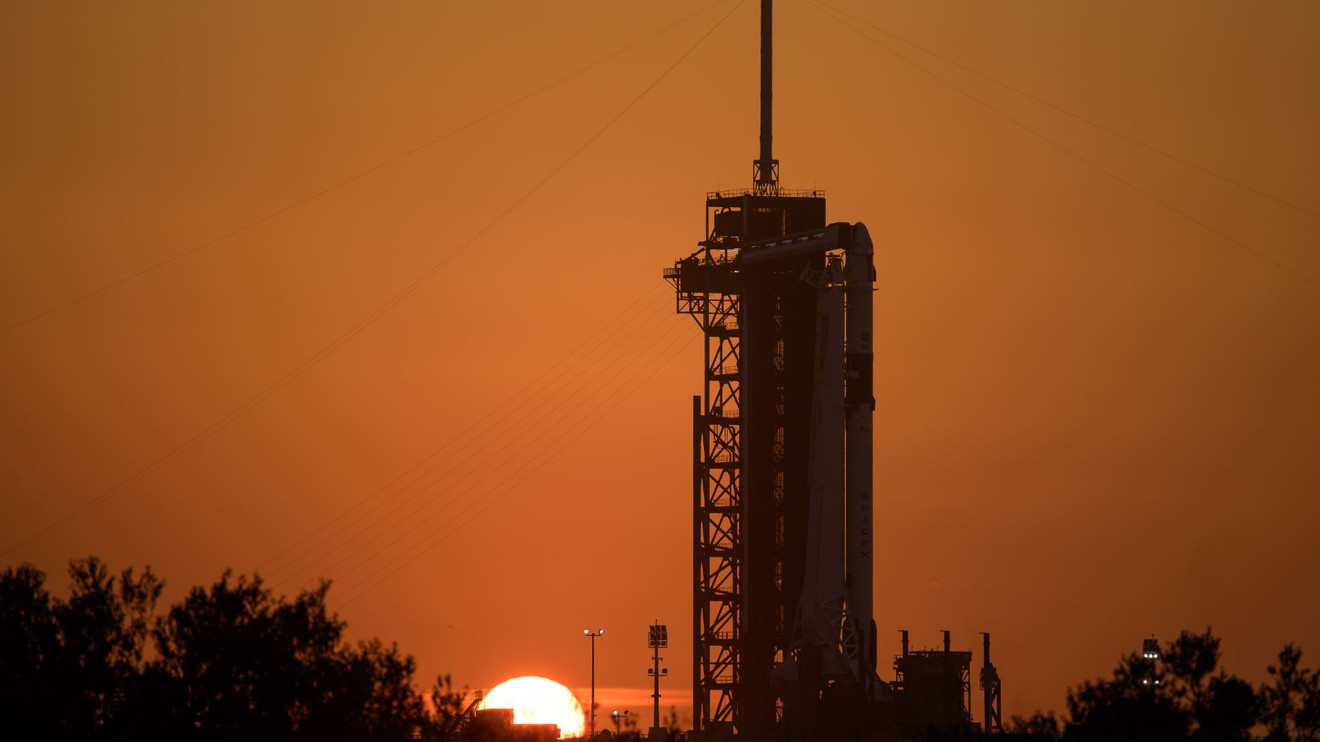
In the pre-dawn darkness over Florida’s Space Coast, a SpaceX Falcon 9 rocket roared to life at Space Launch Complex 40, successfully launching the Crew-12 mission to the International Space Station (ISS). The vehicle lifted off precisely at its targeted window, carrying a Dragon spacecraft named “Freedom” and four international crew members on an eight-month voyage. This morning’s launch marks SpaceX’s 12th operational crew rotation flight for NASA and the 20th overall crewed mission for Elon Musk’s company, restoring the orbiting laboratory to full staffing following a rare medical evacuation in January .
Weather officials with the U.S. Space Force 45th Weather Squadron had upgraded the forecast to 90% favorable in the final hours, a significant improvement from earlier in the week when high winds along the ascent corridor forced a two-day postponement. As the crew suited up inside the Neil A. Armstrong Operations and Checkout Building, technicians assisted the astronauts in donning newly redesigned SpaceX intravehicular activity suits. These updated suits feature a spiral zipper system replacing the traditional inseam closure, allowing the garment to split into upper and lower halves. “The changes will streamline suit production for future missions,” NASA noted during the live blog coverage, emphasizing that the suits remain adjustable by more than 14 inches to accommodate multiple body types .
Commanding the mission is NASA astronaut Jessica Meir, a veteran of 205 days in space who previously made history conducting the first all-woman spacewalks with Christina Koch. For Meir, a marine biologist by training who studied the diving physiology of emperor penguins and elephant seals, this morning’s ascent represents her second journey to orbit. Serving as pilot is Navy Commander Jack Hathaway, selected as an astronaut in 2021. Hathaway brings 2,500 flight hours across 30 aircraft types and 39 combat missions to his first spaceflight. The crew is rounded out by ESA astronaut Sophie Adenot, a former helicopter test pilot and search-and-rescue aviator, and Roscosmos cosmonaut Andrey Fedyaev, making his second trip aboard Dragon following his 2023 Crew-6 mission .
The urgency of today’s launch was underscored by the state of the ISS itself. Since January 15, the station has operated with a skeleton crew of just three astronauts—NASA’s Chris Williams and Roscosmos cosmonauts Sergey Kud-Sverchkov and Sergei Mikayev—following the first-ever medical evacuation in the station’s 25-year history. Crew-11 was forced to return to Earth a month early when an unidentified crew member experienced an undisclosed medical issue, splashing down off the California coast and requiring hospitalization. NASA Administrator Jared Isaacman praised the response, stating: “NASA was ready. The team responded quickly and professionally. This is exactly why we train, and this is NASA at its finest” .
The early departure eliminated the traditional handover period, where departing astronauts typically orient incoming crews directly aboard the station. Commander Meir addressed this challenge during a February 8 briefing, noting that while direct orbital turnover is preferable, it was not always standard practice. “The time of my last flight—around six, seven years ago—we did these indirect handovers,” Meir explained. “We ran into them several times and had a little bit of a debrief so they could pass along some pertinent things.” Despite the abbreviated transition, NASA expressed confidence that Crew-12’s experience—two members with prior orbital flights—would mitigate operational disruptions .
The composition of Crew-12 itself underwent a significant and sudden alteration just three months ago. Originally, veteran cosmonaut Oleg Artemyev was slated to fly as mission specialist. However, in December 2025, Roscosmos abruptly removed Artemyev, citing a “transition to another job.” Independent reports from Russian media painted a different picture, alleging Artemyev had violated International Traffic in Arms Regulations (ITAR) by photographing ITAR-protected information regarding SpaceX technologies. His replacement, Andrey Fedyaev, was selected specifically because his prior experience flying aboard Crew Dragon minimized the required training timeline .
For Sophie Adenot, this morning’s launch fulfilled a three-decade-old dream. Watching French astronaut Claudie Haigneré blast to space at age 14, Adenot recalled a revelation that defined her career. “At that moment, I told myself: one day, that will be me,” the helicopter pilot said during a recent briefing. Adenot now becomes the second French woman in space. Her ESA mission, named “εpsilon,” will feature her testing an artificial intelligence system integrated with augmented reality designed to enable astronauts to conduct autonomous medical ultrasounds—a capability critical for deep-space exploration .
The scientific manifest for Expedition 74/75 is densely packed. Over the next eight months, the crew will investigate pneumonia-inducing bacteria and their behavior in microgravity, explore on-demand intravenous fluid generation, and conduct automated monitoring of plant health to enhance space-based food production. Human health research is paramount: studies will examine how physical characteristics influence blood flow in weightlessness, utilizing ultrasound scans of vascular tissue. Additionally, the crew will simulate lunar landings to assess how abrupt gravitational transitions affect cognition and physiology—data directly applicable to NASA’s Artemis campaign .
The Falcon 9 first stage executed a flawless return to Cape Canaveral, landing at the newly operational Landing Zone 40, constructed directly adjacent to the launch pad. This marked the debut use of the pad-adjacent recovery zone for a crewed mission. Aboard the upper stage, Dragon Freedom—making its fifth trip to the orbital outpost—separated cleanly and began a 34-hour orbital chase. Docking with the ISS Harmony module is scheduled for 3:15 PM EST tomorrow, February 14 .
Crew-12’s arrival will restore the ISS to its full complement of seven residents, relieving Williams, Kud-Sverchkov, and Mikayev who have managed critical systems and research with reduced manpower since mid-January. NASA has consistently emphasized that maximum crew capacity is essential to extracting value from the approximately $3 billion annual investment in station operations. Administrator Isaacman reinforced this priority during his confirmation process: “I, like a lot of space enthusiasts, dream of the day where we have multiple commercial space stations in low-Earth orbit. But I think in order for that to be a financially viable model, we have to absolutely maximize the remaining life of the International Space Station—get the highest potential science and research to the space” .
The geopolitical context of this launch remains notable. Despite terrestrial tensions following Russia’s 2022 invasion of Ukraine, the ISS partnership endures as a rare bridge between Moscow and the West. Fedyaev’s presence, facilitated by a seat-swapping agreement, continues the precedent set by his 2023 flight. However, the Artemyev incident underscores that the orbital sanctuary is not entirely immune from espionage concerns. Roscosmos has declined to elaborate on the removal beyond bureaucratic language .
As Dragon Freedom ascends, it carries not only four astronauts but the weight of a program transitioning toward a commercial future. The ISS is scheduled for deorbit in 2030, and experiments conducted by Crew-12 are specifically selected to inform the design of next-generation commercial stations. For now, the 27-year-old laboratory remains humanity’s premier outpost in microgravity. Following docking, the crew will conduct safety briefings, transfer emergency equipment, and officially join Expedition 74 .
NASA’s live coverage, which began at 3:15 AM EST, captured the crew’s final wave to spouses and children visible through the glass of the crew quarters. Hathaway’s family, adhering to quarantine protocols, observed from a safe distance. Shortly after the “call to the floor,” the four astronauts, resplendent in their streamlined new suits, strode across the gantry and boarded Freedom for the third time this week—the first two attempts scrubbed by Atlantic winds. This morning, the winds relented .
The Crew-12 patch, visible on the right shoulder of each flight suit, depicts the space station ascending beyond Earth’s limb, encircled by 12 stars. It now represents a mission of restoration, scientific discovery, and the quiet endurance of international partnership 250 miles above the planet. The astronauts will sleep in orbit tonight, awakening Saturday to the sight of the station growing from a distant star to a sprawling complex. By Saturday afternoon, they will cross the threshold and float into history