
February 12, 2026
In a reversal that has fundamentally reordered the priorities of the twenty-first-century space race, SpaceX has formally abandoned its singular pursuit of the Red Planet in favor of establishing a permanent, self-sustaining settlement on the lunar surface. The announcement, delivered via social media platform X by founder Elon Musk on February 8, 2026, confirms that after nearly a quarter-century of aggressive rhetoric aimed at Mars, the world’s most valuable private space enterprise is turning its engines toward Earth’s closest celestial neighbor. “SpaceX has already shifted focus to building a self-growing city on the Moon, as we can potentially achieve that in less than 10 years, whereas Mars would take 20+ years,” Musk stated, effectively burying the company’s long-standing promise of Martian boots by the mid-2020s.
The announcement, which ricocheted across global financial markets and aerospace engineering departments with the force of a Super Heavy booster ignition, represents a tectonic shift for Hawthorne, California-based SpaceX. Since its founding in 2002, the company’s Articles of Incorporation and every subsequent investor presentation had been anchored to a singular, almost messianic vision: making life multiplanetary, with Mars as the promised land. Musk himself had famously declared his desire to “die on Mars, just not on impact,” and as recently as January 2025 had dismissed lunar ambitions with characteristic derision, posting that “the Moon is a distraction” from the imperative to reach the Red Planet directly. That distraction has now become the main event.
The strategic pivot, confirmed by multiple sources familiar with internal SpaceX discussions, was not impulsive. For months, the company has been quietly redirecting capital expenditure, engineering talent, and supplier contracts away from Mars transit architecture and toward a comprehensive lunar industrialization program. According to a Wall Street Journal report published February 6, SpaceX informed key investors that the company’s immediate fiscal and technical resources would be laser-focused on a March 2027 target for an uncrewed lunar landing – a mission that will serve as the foundational testbed for what Musk now terms “Moon Base Alpha” or simply, the “self-growing city”.
The rationale underpinning this existential redirection is, fundamentally, a triumph of orbital mechanics over ego. Musk elaborated in his X post that interplanetary travel to Mars is constrained by a merciless celestial calendar: “It is only possible to travel to Mars when the planets align every 26 months (six month trip time), whereas we can launch to the Moon every 10 days (2 day trip time).” This disparity, often glossed over in Musk’s earlier, more optimistic presentations, has now been acknowledged as the critical bottleneck. “This means we can iterate much faster to complete a Moon city than a Mars city,” he wrote. For an engineering culture predicated on rapid prototyping, explosive testing, and iterative design, the Moon offers the equivalent of a high-speed internet connection; Mars offers dial-up, with a 26-month buffer between attempts.
The technical community has largely greeted the shift with a mixture of relief and sober acknowledgment. Dr. Maria Zuber, former principal investigator for NASA’s GRAIL mission and a long-standing advocate of lunar science, emphasized the wisdom of the revised approach. “The aerospace industry has spent sixty years learning that we cannot skip steps,” she commented in a briefing following Musk’s announcement. “The Moon is not a distraction; it is the proving ground. It possesses the resources, the proximity, and the operational cadence necessary to develop the industrial capabilities that Mars will eventually demand. To attempt Mars first would be akin to building a transcontinental railroad without ever having constructed a tramway.” Her sentiment echoes a growing consensus that SpaceX’s previous “straight to Mars” posture, while inspirational, was operationally untenable given the current technological readiness of deep-space life support, radiation shielding, and in-situ resource utilization.
Yet technology is only one vector of this recalibration. Politics, specifically the gravitational pull of American statecraft, has played an equally decisive role. In December 2025, President Donald Trump signed an executive order titled “Ensuring American Primacy in Space,” which formally enshrined the Artemis Program as the central organizing principle of United States space activity. The order mandated a crewed lunar return by 2028 and directed NASA to establish the initial elements of a permanent lunar outpost by 2030. Crucially, it explicitly linked commercial space activity to national security imperatives, instructing the Department of Defense and NASA to integrate private enterprises like SpaceX into a cohesive national strategy. Musk, who has served as a close adviser to the administration, is now executing that directive.
The financial architecture of the pivot reinforces the political calculus. SpaceX is currently under contract with NASA for the Human Landing System (HLS) portion of the Artemis III and Artemis IV missions, a deal valued at approximately $4.5 billion. This reliable stream of federal funding stands in stark contrast to the speculative financing that has long underpinned Mars ambitions. “The overriding priority is securing the future of civilization,” Musk posted, “and the Moon is faster.” The subtext, unstated but widely understood, is that “faster” also means “solvent.” With SpaceX reportedly preparing for an initial public offering (IPO) as early as June 2026—a transaction analysts suggest could raise upwards of $50 billion—the company is under intense pressure to demonstrate a credible, near-term revenue model that extends beyond Starlink subscriptions and Department of Defense launches. A lunar city, backed by NASA contracts and tangible construction milestones, offers precisely that credibility.
To achieve this lunar vision, SpaceX has moved to consolidate Musk’s broader industrial empire. In a blockbuster transaction announced less than a week prior to the strategic shift, SpaceX acquired xAI, Musk’s artificial intelligence venture, in an all-stock deal valuing SpaceX at $1 trillion and xAI at $250 billion. The integration is not merely financial; it is deeply technical. Musk envisions a lunar industrial ecosystem where AI-driven autonomous robots perform the bulk of construction, resource extraction, and habitat maintenance, minimizing the need for costly and risky human extravehicular activity. “We are looking at a future where you don’t send a human to screw in a bolt; you send a machine that can build the entire factory,” remarked Dr. Fei-Fei Li, a Stanford computer scientist specializing in autonomous systems. “The Moon, with its three-second round-trip light delay, is the perfect environment for supervised autonomy. It is close enough for meaningful human oversight, but far enough to force genuine machine independence.”
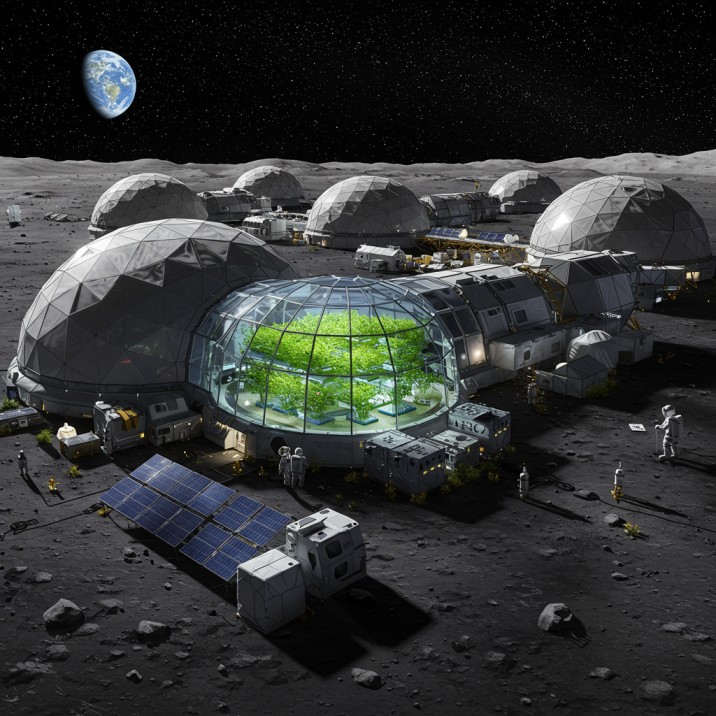
The “self-growing city” concept that Musk has touted is not merely rhetorical flourish. Detailed planning documents, shared with investors and subsequently described to news organizations, outline a three-phase lunar industrialization timeline. Phase One (2026-2028) focuses on Starship lunar adaptation and uncrewed validation, including the critical March 2027 landing. Phase Two (2028-2032) envisions the construction of a pressurized, radiation-shielded habitat cluster, supported by robotic excavators processing lunar regolith into 3D-printed berms and landing pads. It is Phase Three (2032-2036), however, that justifies the “city” nomenclature: the establishment of autonomous manufacturing capabilities, including the production of solar cells, radiators, and structural components directly from lunar materials. Musk has further hinted at constructing AI satellite factories on the lunar surface, leveraging the Moon’s low gravity and vacuum environment to manufacture and electromagnetically launch hardware into cislunar space more efficiently than from Earth.
This vision of a lunar industrial hub represents a profound departure from the Apollo paradigm of brief visits and flags. It also quietly resolves a paradox that has long haunted Musk’s Mars fixation: if humanity cannot sustain a permanent industrial presence 239,000 miles away, it has no business attempting one 140 million miles away. “The lunar city is the stress test,” explained Dr. Robert Zubrin, founder of the Mars Society, who despite his disappointment at the delay remains supportive of the underlying logic. “If we cannot keep a habitat alive and growing on the Moon, where help is days away, we certainly cannot do it on Mars, where help is years away. Musk has not abandoned the ultimate goal; he has simply acknowledged that the prerequisite steps were incomplete.”
Yet for all the rationalization, the pivot carries undeniable emotional and reputational weight. Musk has spent two decades belittling lunar exploration as a bureaucratic dead-end, a nostalgia trip for Baby Boomer engineers. His 2019 presentation of Starship featured Martian landscapes as the default backdrop; his 2016 International Astronautical Congress address in Guadalajara placed a Martian colony at the center of human destiny. To now embrace the Moon as the “overriding priority” represents a humbling admission that technological optimism, no matter how fervent, cannot repeal the laws of astrodynamics or the constraints of corporate finance. The company’s original 2026 deadline for an uncrewed Mars mission has been quietly stricken from internal roadmaps; the five-to-seven-year window Musk now cites for “beginning” Mars work is sufficiently vague as to be non-binding.
The international context adds further urgency. China’s space program, operating with methodical consistency, has publicly committed to a crewed lunar landing by 2030 and is constructing the basic elements of the International Lunar Research Station (ILRS) in partnership with Russia. For the United States, losing the lunar foothold race is politically untenable; for SpaceX, losing the associated contracts is commercially unthinkable. Musk’s shift thus aligns with a broader national recognition that the Moon, not Mars, is the immediate geopolitical prize. “The nation that controls the lunar poles controls the water ice; the nation that controls the water ice controls the fuel; the nation that controls the fuel controls cislunar space,” observed Dr. Namrata Goswami, a space policy analyst. “Elon Musk is an idealist, but he is also a rational actor. He reads the same strategic assessments that NASA and the Pentagon read.”
Competition is also mounting from the terrestrial private sector. Jeff Bezos’s Blue Origin, long dismissed by Musk as a plodding, overly cautious enterprise, has suspended its New Shepard tourism flights to redirect resources toward its own NASA-certified lunar lander. Bezos has consistently advocated for lunar industrialization as the logical first step—a position that, for years, placed him outside Musk’s spotlight. The irony is sharp: the tortoise may not have caught the hare, but the hare has voluntarily returned to the tortoise’s preferred starting line.
The immediate technical pathway is fraught. SpaceX’s Starship, while revolutionary in its fully reusable architecture, has yet to demonstrate the reliability required for human lunar landing. The Artemis III timeline has slipped repeatedly due to challenges with orbital refueling, life support validation, and thermal protection during high-energy reentry. Dr. Patricia Sanders, former chair of the NASA Aerospace Safety Advisory Panel, sounded a cautious note. “We should not confuse a shift in destination with a reduction in difficulty,” she stated. *“Landing a 50-meter stainless steel vehicle on an unimproved lunar surface, with no atmosphere to assist braking, is a genuinely novel problem. The Apollo landers were spidery, lightweight craft; Starship is a skyscraper. The controllability dynamics are fundamentally different.”*
Nevertheless, the resources now arrayed behind the lunar objective are unprecedented in the commercial space era. Thousands of SpaceX engineers are reportedly being reassigned from Mars-forward projects to the Lunar City task force. Recruitment postings have surged for specialists in robotic construction, lunar regolith processing, and space-based data center architecture. The xAI acquisition provides the algorithmic brain for a lunar industrial nervous system; Starlink provides the communications backbone; Starship provides the heavy lift. For the first time, the pieces of a coherent, funded, politically supported lunar industrialization program exist on a single balance sheet .
What, then, of Mars? Musk is careful to insist that the Red Planet remains in the trajectory. “SpaceX will also strive to build a Mars city and begin doing so in about 5 to 7 years,” he pledged. Yet within the aerospace community, such timelines are met with weary skepticism. Five to seven years from now is 2031 to 2033—a period in which SpaceX will be fully consumed by the operational demands of establishing, supplying, and defending a permanent lunar settlement. The 26-month launch windows will come and go; the funding will remain anchored to the nearer, more lucrative destination. Mars, in this architecture, becomes not the immediate objective but the long-term beneficiary of lunar industrial maturity. The city on the Moon is no longer a waypoint; it is the destination. Mars has been postponed to the status of an eventual, aspirational expansion.
As the Sun rises over the Sea of Tranquility on this February morning, the robots have not yet arrived; the regolith remains undisturbed. But the decision has been made, the capital committed, the trajectory plotted. Humanity’s first permanent settlement beyond Earth will not be a red outpost on a dusty Martian plain. It will be a grey, growing, self-replicating city on the Moon, built by algorithms and stainless steel, funded by terrestrial taxpayers, and driven by a billionaire who once insisted he would never stop at the Moon. The future of space exploration, it turns out, is not about going fast. It is about going where you can stay.