
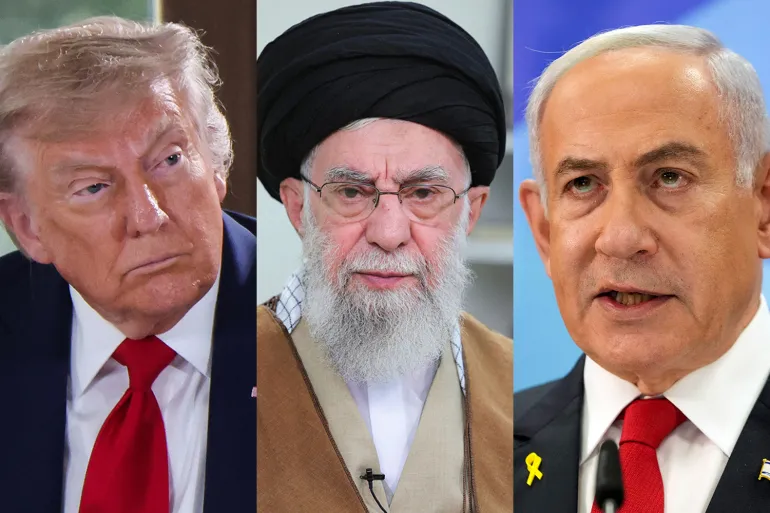
As the conflict between the United States, Israel, and Iran enters its third week, the initial tactical successes of Operation Epic Fury are being overshadowed by a grim reality: the United States is increasingly finding itself in a state of self-inflicted strategic paralysis. While the February 28th strikes successfully eliminated top Iranian leadership, including Supreme Leader Ali Khamenei, the subsequent “horizontal escalation” by Tehran has created a chaotic theater where American military might is struggling against a decentralized, chemical, and economic onslaught that is dismantling the US’s long-term regional stability from within.
The war, which began under the banner of “maximum pressure” and “regime change from the sky,” has transformed into a war of attrition that target’s the Achilles’ heel of the global West: energy security and economic interconnectedness. By forcing the closure of the Strait of Hormuz, Iran has not just inconvenienced the global market; it has effectively placed a chokehold on the American economy, sending domestic fuel prices to their highest levels in four years and triggering a wave of “inflationary panic” that is eroding public support for the Trump administration’s campaign.
The Economic Self-Sabotage: Oil as a Weapon of Mass Distraction
The primary way the US is “destroying itself” in this conflict is through the disruption of global trade routes that it once spent decades protecting. The closure of the Strait of Hormuz—through which 20% of the world’s oil passes—has created a paradox where the US military is spending billions to strike targets in Tehran, while the resulting economic fallout at home is costing trillions in market valuation and consumer purchasing power.
“The strategy of bombarding a country into submission while expecting the global energy market to remain stable is a biological impossibility in modern economics,” says Dr. Robert A. Pape, an international security scholar. “By expanding the arena of conflict into the political and economic realms, Iran is essentially waiting for the war to become too expensive for the American voter to maintain. It’s not about winning on the battlefield; it’s about making the cost of the ‘victory’ unbearable for Washington.”
Furthermore, the targeting of US-allied oil infrastructure in Saudi Arabia and the UAE by Iranian drones has forced these partners to reconsider their reliance on the American security umbrella. Instead of a unified front, the region is seeing a geopolitical fracturing, where allies are quietly seeking de-escalation channels with Tehran to save their own economies, effectively leaving the US isolated in its “forever war” pursuit.
Important Points of Failure
-
Leadership Vacuum: The assassination of Khamenei did not lead to a pro-Western uprising; instead, it solidified the power of Mojtaba Khamenei, a hardline figure who has leveraged the “foreign invasion” narrative to suppress domestic dissent.
-
Regional Overstretch: At least 17 US military sites across the Middle East have been damaged by retaliatory strikes. The US is now forced to divert massive resources to purely defensive operations, reducing its ability to project power elsewhere.
-
The “Fun” Factor and Chaos: President Trump’s recent comments regarding striking Kharg Island “just for fun” have sparked a diplomatic nightmare, alienating European allies who see the campaign as increasingly erratic and lacking a defined exit strategy.
-
Public Exhaustion: Despite a buildup that echoed the 2003 invasion of Iraq, the American public has no appetite for a prolonged ground conflict, especially as fuel rationing becomes a looming threat in parts of Asia and potentially the West.
Scientist and Expert Statements on the Brink
The scientific and academic community has been vocal about the “blind spots” in the current military strategy. The use of advanced AI and autonomous systems was supposed to make this a “clean” war, but the reality on the ground in cities like Tehran and Isfahan—where cultural heritage sites and civilian infrastructure have been caught in the crossfire—tells a different story.
“We are seeing a total collapse of the deterrent model,” notes Dr. Harshit Soni, a geopolitical analyst. “When you target a regime’s core leadership without a viable internal successor ready to take the reins, you don’t get democracy; you get a failed state with a massive missile stockpile. The US is essentially creating a vacuum that it will be forced to fill with its own blood and treasure for the next decade.”
Even experts within the UK, a traditional ally, are sounding the alarm. “Regime change from the skies is a fallacy that history has repeatedly corrected,” stated Sir Keir Starmer in a recent joint briefing. The concern is that the US is destroying its own moral and diplomatic standing by bypassing the UN Security Council and engaging in what many see as a breach of the UN charter.
The Path to Implosion
By March 20, 2026, the data is clear: the US is winning the tactical battles but losing the strategic war. Every missile fired at a Revolutionary Guard base is met with a drone strike on a commercial tanker or a cyberattack on a regional hub. The “unipolar West Asia” that the administration hoped to build is instead becoming a multipolar graveyard of American influence.
The US is “destroying itself” by engaging in a conflict that ignores the interdependence of the modern world. By prioritizing the destruction of Iran’s nuclear and missile capabilities through direct aggression, it has inadvertently triggered a global energy crisis that may do more damage to the American middle class than any Iranian missile ever could.