
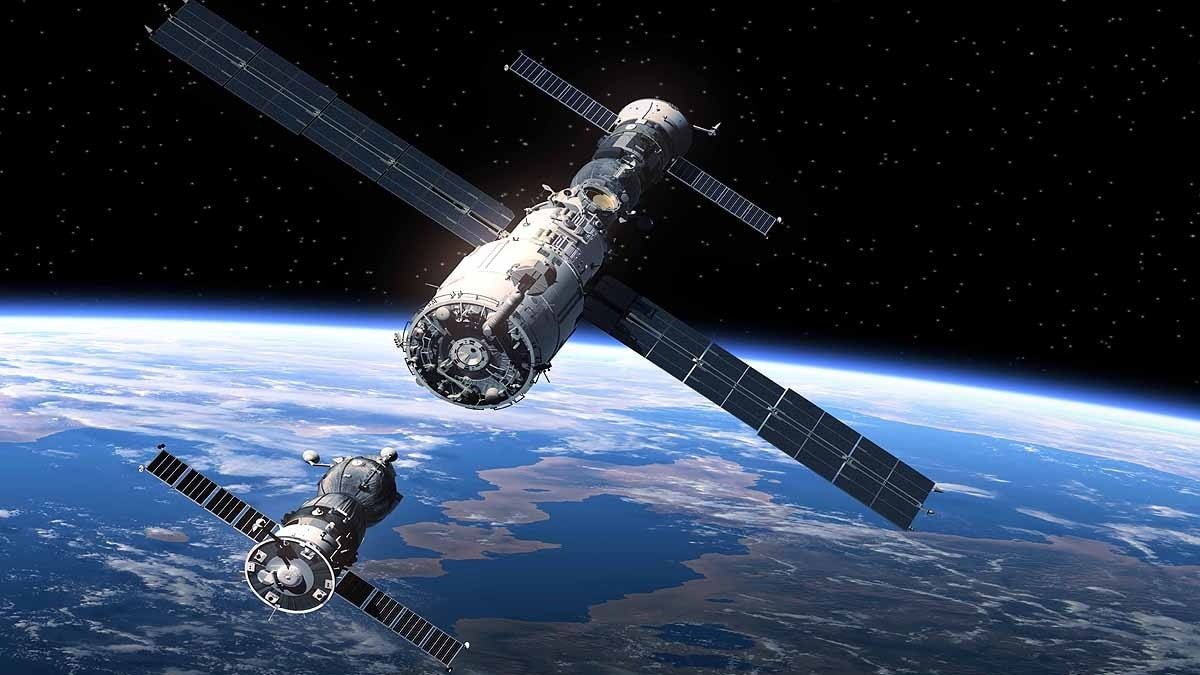
Docking technology, the precise art of connecting two spacecraft in the void of space, has rapidly evolved from a specialized capability into a cornerstone of modern space exploration, recognized by global space agencies as essential for achieving the most ambitious goals in lunar exploration and human spaceflight. This capability is no longer just an option but a fundamental requirement for missions that involve complex orbital assembly, crew transfer, and in-space refueling. The technology’s critical importance has been underscored by senior officials from the Indian Space Research Organisation (ISRO) and is a central component of NASA’s Artemis program, highlighting a global consensus on its strategic value. As missions become more complex, the ability to rendezvous and dock in orbit serves as the primary enabler for sustained human presence beyond Earth.
For national space programs like India’s, docking technology is the bridge to the next generation of indigenous space capabilities. Following the historic success of the Chandrayaan-3 lunar landing, ISRO has identified docking as a fundamental prerequisite for its future endeavors. A primary application is for lunar sample-return missions, a logical next step that involves a complex choreography of multiple spacecraft. In this scenario, a lander would descend to the lunar surface, collect samples, and launch back into lunar orbit to rendezvous and dock with a waiting orbiter. This crucial docking maneuver enables the transfer of the samples to the orbiter, which then returns them safely to Earth. Without this in-orbit handover, retrieving scientifically invaluable lunar material for study on Earth would be extraordinarily difficult.
Furthermore, docking is the foundational technology for constructing and maintaining the proposed Bharatiya Antariksh Station (BAS), India’s planned national space station. Following the model of the International Space Station (ISS), the BAS will be assembled in orbit from multiple modules. Each of these modules will require precise docking to form a single, pressurized, and functional structure. This modular approach allows for the complex station to be built piece by piece, relying on docking mechanisms to ensure structural integrity, seal the pressurized tunnel between modules, and allow for the transfer of power, data, and astronauts. This capability is thus the lynchpin for ISRO’s long-term vision of establishing an independent, crewed outpost in space, serving as a platform for sustained scientific research and international collaboration.
This operational reality is mirrored in the United States’ Artemis program, where docking is not merely a supporting technology but a central strategy for returning humans to the Moon. NASA’s plans for the Artemis missions, including the introduction of an additional mission in 2027, explicitly feature rendezvous and docking tests as critical milestones to de-risk future lunar landings. The Artemis III mission is designed as an in-space test flight that will include docking with commercial landers from both SpaceX and Blue Origin, serving as a vital rehearsal for crewed docking procedures in the harsh environment of space. In a significant architectural update, SpaceX has proposed a revised plan for its Starship Human Landing System (HLS) that involves docking the Starship with the Orion spacecraft in low Earth orbit, rather than in a distant lunar orbit—a change designed to improve crew safety by allowing for quicker abort options and reducing the complexity of propellant logistics. This consolidated stack would then perform the translunar injection burn together, demonstrating an even more integrated use of docking to streamline mission architecture.
The engineering behind these operations is highly advanced, with docking systems evolving to become more sophisticated and standardized. Modern docking mechanisms, such as the European-designed International Berthing and Docking Mechanism (IBDM), incorporate complex “soft capture” and “hard capture” systems to manage the kinetic energy of the rendezvous and ensure a secure, pressurized connection. The future of this technology is moving toward even greater capabilities, with research into hybrid systems like HARMONIA that could perform both cooperative docking with standard spacecraft and non-cooperative grappling of defunct satellites, a crucial function for in-orbit servicing and active debris removal. The ongoing development and use of these systems by both government agencies like NASA and ISRO and commercial companies underscore the reality that successful docking is the technical key that unlocks the full potential of humanity’s future in space, enabling lunar exploration, the assembly of space stations, and the collaborative ventures that will define the next era of spaceflight.