
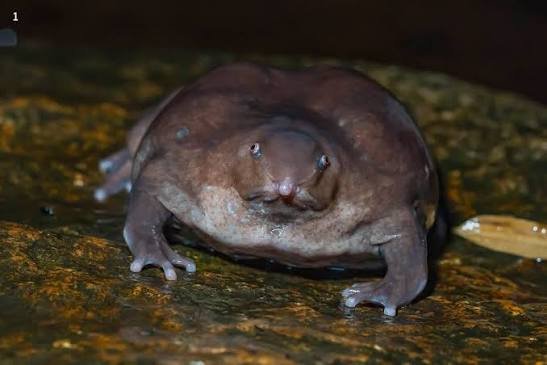
India’s purple frog (Nasikabatrachus sahyadrensis) is one of the most extraordinary amphibians on Earth, a species that has survived in near-isolation for over 130 million years while spending roughly 46 weeks of each year buried deep underground. It emerges only for a brief window of two weeks during the monsoon to breed, making it one of the most secretive and evolutionarily distinct creatures in the animal kingdom.
Discovered only in 2003 in the Western Ghats mountains of southern India, the purple frog was immediately recognized as the first new amphibian family described since 1926. Its closest living relatives are not found in India but in the Seychelles archipelago, thousands of kilometers away in the Indian Ocean. This remarkable geographic split is living evidence for the ancient supercontinent Gondwanaland, which began to break apart around 130 million years ago, separating India from the Seychelles and leaving the purple frog’s ancestors isolated on the Indian subcontinent.
For most of the year, the purple frog is almost invisible. It burrows 1.3 to 3.7 meters underground, sometimes even deeper, using its powerful hind legs and hard, white ridges on its feet to dig through loose, damp soil. Its pointed snout is specially adapted for feeding on termites within the soil, making it one of the only known amphibians to forage entirely underground. The frog’s body is bloated and purplish, with a small head and a pig-like snout, leading locals to call it the “pig-nosed frog.” In Kerala, it is also known as the Mahabali frog, named after the mythical king who emerges from the underworld for just one day each year.
The breeding season is triggered by the arrival of the monsoon rains. Males emerge first, typically at the beginning of the rains, and begin calling from near the surface or from shallow burrows. Their call is a distinctive, chicken-like clucking — a series of short, pulsatile notes that have been acoustically analyzed by scientists. After about two weeks of nightly serenades, the males fully emerge and search for females, who are roughly three times larger than the males and the color of ripe eggplants. When a male finds a female, he climbs onto her back and grips her tightly in a mating embrace called amplexus. The female then carries the male to a suitable breeding site — typically small, shaded rock crevices along fast-flowing seasonal streams.
Once at the site, the male uses his feet to help the female release thousands of eggs, which he fertilizes as they are laid. The eggs are deposited in the crevices and underwater tunnels of the rocky stream bed, hidden from predators and protected from the current. After laying, both adults burrow back underground, and the entire breeding process may take only a few hours to a couple of days. The eggs hatch into tadpoles equipped with sucker-like mouthparts, which allow them to cling to rocks in the fast-flowing water and graze on algae without being washed away. After about 100 to 120 days, the tadpoles metamorphose into miniature frogs and also disappear underground.
Despite its remarkable survival through mass extinctions and continental drift, the purple frog is now classified as Endangered on the IUCN Red List. Its restricted range — limited to parts of Kerala and Tamil Nadu in the Western Ghats — makes it highly vulnerable to habitat loss and degradation, particularly from coffee, cardamom, and ginger plantations. Conservationists have also identified other threats: changes in rainfall patterns due to climate change can cause eggs to be washed away or dry up, pollution and plastic waste can clog the crevices where eggs are laid, and passing cars can kill frogs during their brief surface appearances. The construction of check dams that alter stream flow also poses a risk to breeding sites.
Conservation efforts are underway. The EDGE of Existence program, run by the Zoological Society of London, has identified the purple frog as a top-priority species for conservation, and researchers like Sandeep Das are working to understand its ecology and involve local communities in protecting its breeding grounds. The frog’s unique life history — 46 weeks underground, 130 million years of evolutionary independence, and just two weeks to breed — makes it a symbol of both India’s ancient biological heritage and the urgent need to protect the Western Ghats, one of the world’s most important biodiversity hotspots.