
Tuesday, March 31, 2026
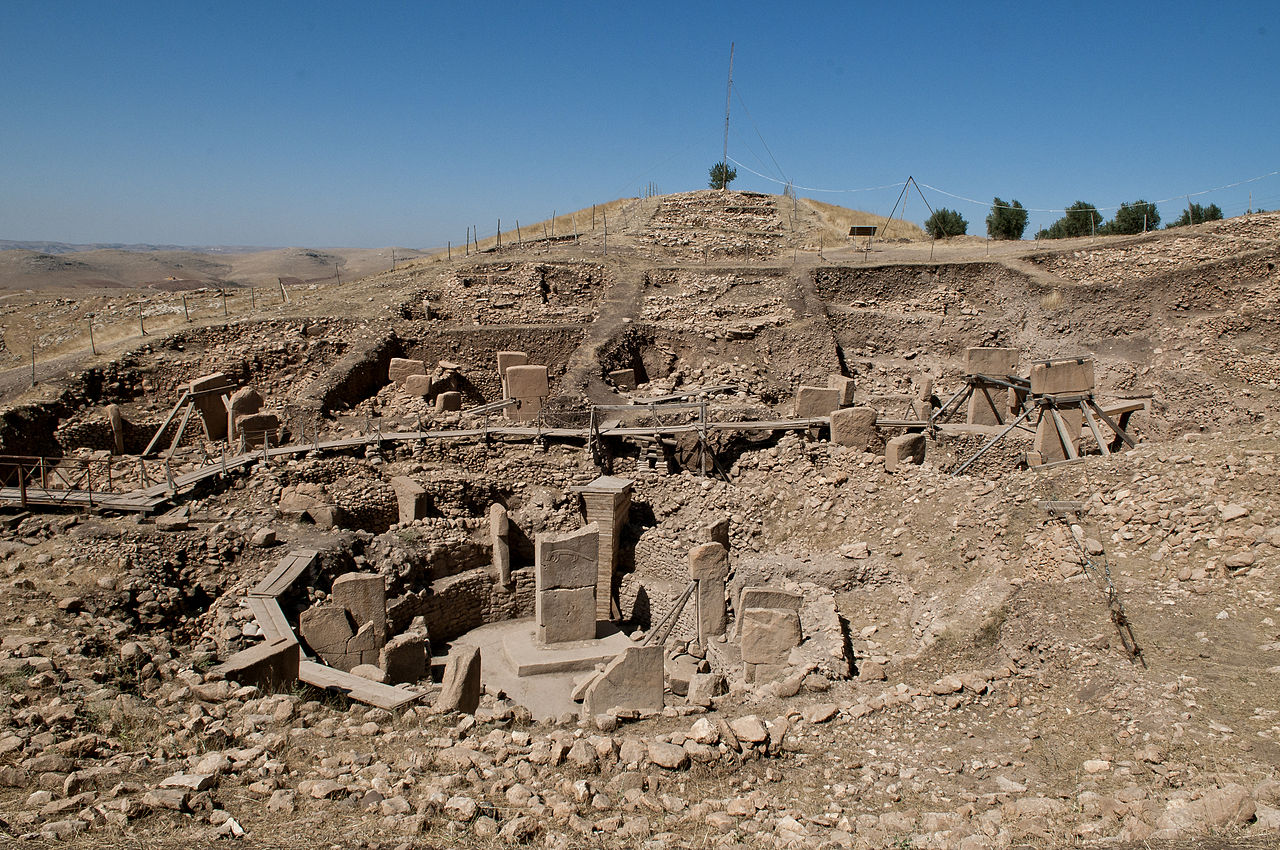
The golden sands of southeastern Turkey continue to yield secrets that defy the established timeline of human history. Today, the archaeological world remains fixated on Göbekli Tepe, a site that, by all traditional logic, should not exist. Situated on a limestone ridge near the Syrian border, this massive complex of T-shaped stone pillars dates back approximately 12,000 years, placing its construction at roughly 9600 BCE. This timeline is staggering; it predates the invention of the wheel, the development of writing, and even the domestication of wheat. For decades, historians believed that humans only began building monumental structures after they settled into farming communities. However, Göbekli Tepe proves that hunter-gatherers—nomadic people who lived off wild game and foraging—possessed the social organization and engineering prowess to move limestone blocks weighing up to 50 tonnes.
The site consists of multiple circular enclosures, each featuring towering pillars carved with intricate reliefs of foxes, scorpions, lions, and vultures. These are not mere drawings; they are sophisticated 3D sculptures that suggest a deep symbolic or religious life. “We have found no homes. Where is everyone?” famously asked the late Dr. Klaus Schmidt, the original excavator whose work continues to haunt the field. His observation remains the central mystery: there are no signs of kitchens, toilets, or permanent dwellings at the core of the site. This has led many to believe that Göbekli Tepe was the world’s first temple, a place of pilgrimage where scattered tribes gathered for rituals before retreating back into the wilderness.
The mystery deepened earlier this month as new excavations under the Tas Tepeler project revealed even older layers at nearby Karahan Tepe. Archaeologists found a pillar carved with a realistic 3D human face, a discovery that suggests these ancient people were obsessed with the human form and perhaps ancestor worship. Regarding these latest finds, Necmi Karul, the head of the excavation, stated, “The facial discovery confirms the human symbolism of the pillars. These finds provide rare insight into the complex symbolic expression of communities over 10,000 years ago.” The sheer scale of the labor required to build these sites is what leaves experts speechless. It is estimated that hundreds of people would have needed to cooperate to haul these stones from nearby quarries, requiring a level of political and religious leadership previously thought impossible for that era.
Perhaps the most chilling aspect of the site is its end. Around 8000 BCE, the people who used Göbekli Tepe didn’t just leave; they deliberately buried the entire complex under thousands of tons of clean dirt and refuse. This wasn’t a natural disaster or an abandonment due to war; it was a purposeful act of internment. Some scientists suggest that a catastrophic event may have prompted this. Dr. Martin Sweatman of the University of Edinburgh, who has studied the astronomical carvings on the pillars, remarked, “It appears the inhabitants of Göbekli Tepe were keen observers of the sky… a comet strike might have triggered civilization by initiating a new religion.” If this theory holds, the pillars may be the world’s oldest solar calendar, a memorial to a “day the fire fell from the sky,” which forced a nomadic people to unite, build, and eventually invent farming to survive a changing climate.
At present, Göbekli Tepe stands as a silent sentinel that has flipped the pyramid of civilization upside down. It suggests that religion and the need to gather came before agriculture and cities. We are looking at a “lost world” of high culture that existed at the very end of the last Ice Age, a society that vanished as mysteriously as it appeared, leaving behind only stone giants to tell their story. The site remains an open wound in the side of traditional history, a reminder that the further we look back, the more we realize how little we truly know about our own origins.