
May 6, 2026
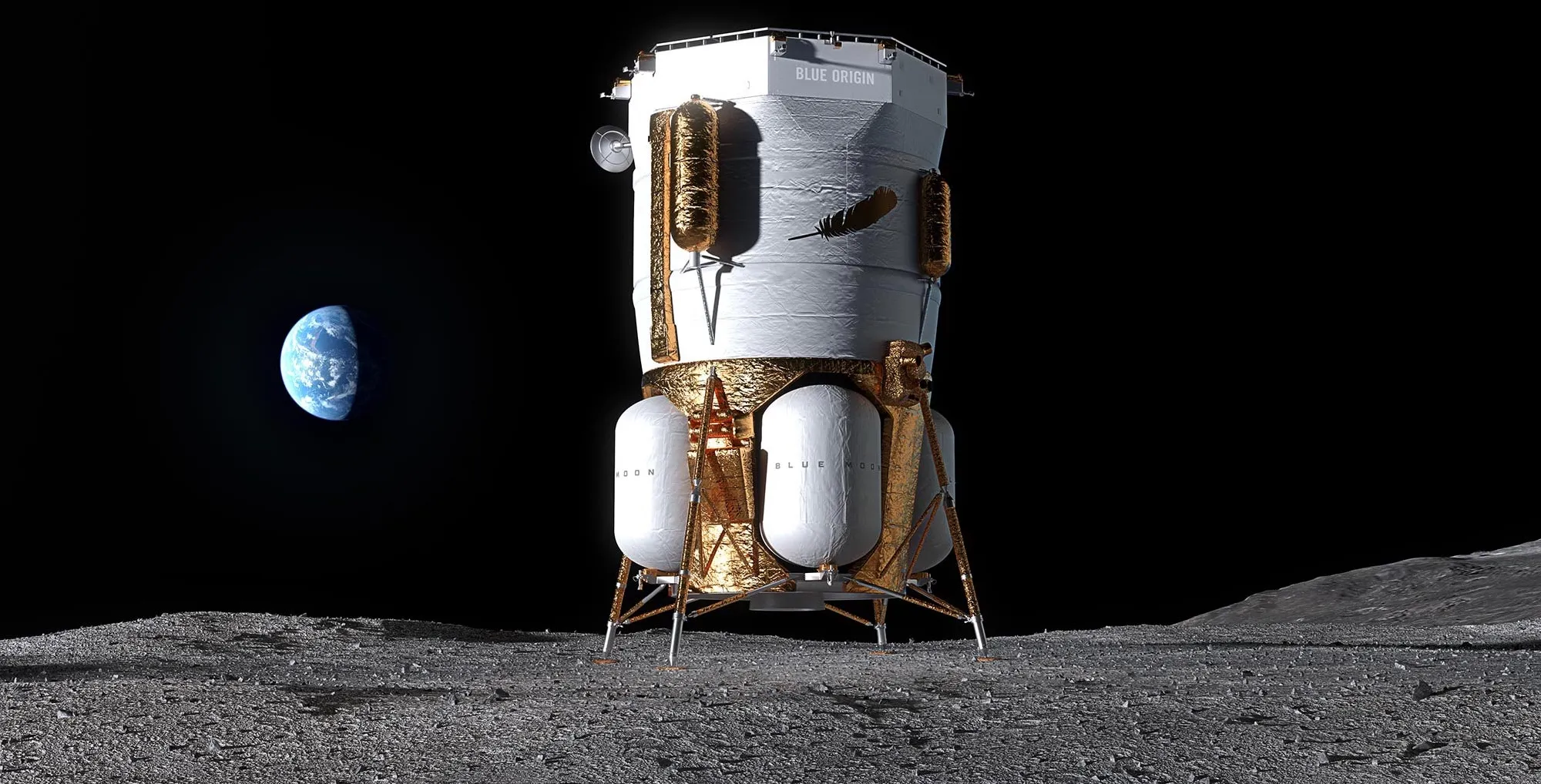
In a significant development for the Artemis program and the future of lunar exploration, Blue Origin’s uncrewed cargo lander, the Blue Moon MK1, nicknamed “Endurance,” has successfully completed a critical series of environmental tests inside NASA’s historic Thermal Vacuum Chamber A at the Johnson Space Center in Houston, Texas . This milestone, announced by NASA on May 4, represents a pivotal step forward for the private space firm and validates the spacecraft’s readiness to withstand the harsh realities of deep space travel .
During the rigorous evaluation, engineers exposed the lander to the extreme temperature swings and the unforgiving vacuum of space that it will encounter during its voyage to the lunar surface. By successfully modeling these conditions on Earth, the testing team was able to verify the structural integrity and thermal performance of the largest lunar lander ever built. This success marks a turning point, transitioning the program from theoretical design and manufacturing into the final phases of launch preparation.
The completion of testing at Chamber A—a facility originally constructed for the Apollo program—is not merely a technical formality but a requirement for mission certification. The MK1 is scheduled for launch later this year aboard Blue Origin’s New Glenn rocket for the “Pathfinder Mission 1” . This uncrewed flight will serve as a demonstration, aiming to prove out key systems such as the BE-7 engine, cryogenic propulsion, and autonomous guidance, navigation, and control .
Beyond its role as a technology demonstrator, Endurance will carry actual science payloads to the Moon’s South Pole under NASA’s Commercial Lunar Payload Services (CLPS) initiative . These include the Stereo Cameras for Lunar Plume-Surface Studies (SCALPSS), which will capture high-resolution imagery of how the lander’s engine plume interacts with the dusty lunar surface, and the Laser Retroreflective Array (LRA) to help orbiting spacecraft precisely pinpoint the lander’s location . “The completion of this test campaign is a testament to the power of public-private partnerships. By utilizing our historic facilities, we are helping Blue Origin retire significant technical risk before they ever light their engines for the Moon,” stated a NASA program manager following the announcement .
While the MK1 is a historic achievement, it serves a higher purpose as the precursor to the human-rated MK2. The data and flight experience gained from this uncrewed cargo mission are directly feeding into the development of the Mark 2 (MK2) lander, which is designed to carry astronauts from lunar orbit to the surface and back as part of the Artemis 3 and 4 missions, currently targeted for the late 2020s . With the successful completion of these ground tests, Blue Origin has vaulted ahead in the commercial space race, demonstrating tangible hardware progress even as partners like SpaceX continue their own development testing.
However, challenges remain on the horizon. The recent orbital anomaly suffered by the New Glenn rocket during a previous mission in April has placed a heightened emphasis on the rocket’s reliability ahead of the MK1 launch later this year . Furthermore, the MK1’s journey will not be without competition; NASA’s current architecture for Artemis 3 plans to test “one or both” of the commercial landers in lunar orbit, leaving room for a potential showdown or collaboration between the Blue Moon MK2 and SpaceX’s Starship .
As Endurance prepares to leave the test chamber for final integration, it carries with it not just cargo, but the critical flight data that will determine how—and when—humans return to the lunar surface. Jeff Bezos, Blue Origin’s founder, commented on the milestone, saying, “We are laying the groundwork for a sustained human presence on the Moon. Endurance proving its mettle in the vacuum chamber is a clear signal that our vision for lunar infrastructure is ready to fly.”