11 May 2026
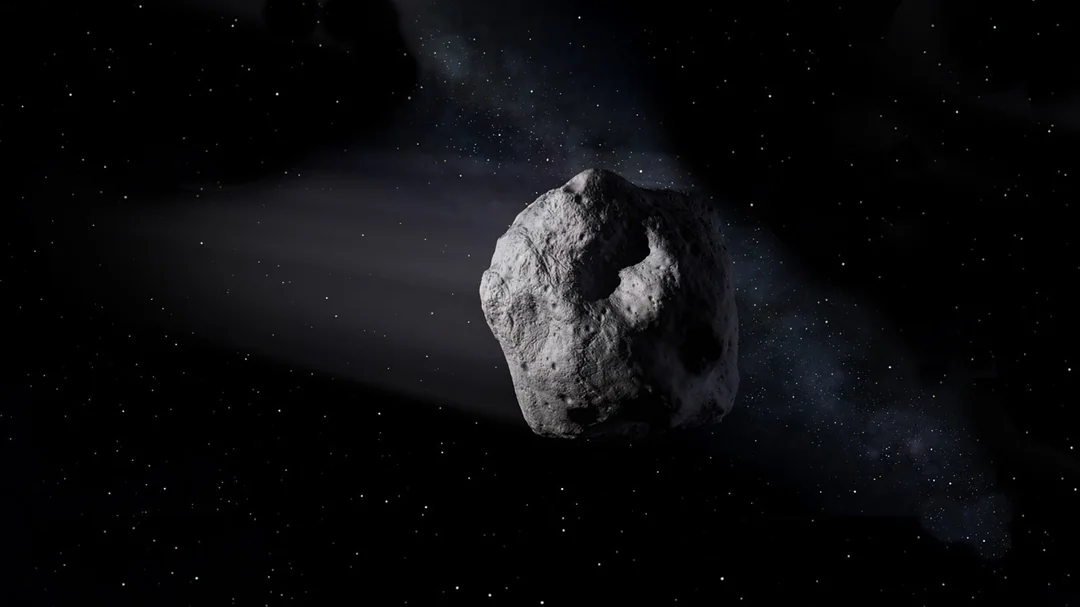
The European Space Agency (ESA) and Japan Aerospace Exploration Agency (JAXA) formally finalized a landmark international agreement to jointly mount an ambitious asteroid mission targeting Apophis, a near-Earth object that will make a historically close approach to our planet in 2029. The signing ceremony, held virtually between ESA’s headquarters in Paris and JAXA’s Sagamihara Campus, marks the culmination of over two years of technical negotiations and paves the way for a dual-probe mission designed to study Apophis before, during, and after its unprecedented flyby.
Under the agreement, ESA will lead the development of the Ramses (Rapid Apophis Mission for Space Safety) spacecraft, while JAXA will contribute a unique micro-lander and a suite of high-precision instruments for surface composition analysis. “This is not just another asteroid mission – Apophis will pass within 32,000 kilometers of Earth’s surface, closer than many geostationary satellites. No object of this size has ever been observed under such extreme tidal forces,” said Dr. Elena Vinter, ESA’s Director of Planetary Defense. *“We have a once-in-10,000-year opportunity to watch a large asteroid being physically deformed in real time.”*
The mission, now officially named “Ramses-JAXA Joint Apophis Exploration (RJAXE),” is scheduled for launch in February 2028 aboard an Ariane 64 rocket, with the JAXA micro-lander – tentatively called “Okami” (Wolf) – hitching a ride inside Ramses’ protective shell. Upon arrival at Apophis in February 2029, Ramses will enter a close, elliptical orbit, deploying Okami just 72 hours before the asteroid’s closest approach to Earth on 13 April 2029.
The lander, weighing only 48 kilograms, will anchor itself using micro-spikes and a cold-gas harpoon system to study how the asteroid’s surface responds to Earth’s gravitational pull. “Okami will measure Apophis’ surface acceleration with micrometer precision,” explained Professor Kenji Tanaka, JAXA’s project lead. “We expect to see tremors, landslides, and possibly the exposure of fresh, pristine material from the asteroid’s interior as tidal forces crack the surface. This has never been attempted on a body undergoing such dramatic stress.” Key scientific goals include measuring how Apophis’ rotation rate changes (currently 30.5 hours per rotation), mapping its shape and density before and after the flyby, and analyzing how its thermal properties evolve under Earth’s gravitational perturbation.
The agreement also outlines a robust technology demonstration component: Ramses will test autonomous navigation around a rapidly spinning, irregular body using AI-driven hazard avoidance, while JAXA’s lander will trial semi-hard landing techniques on a low-gravity object. Both agencies have committed to sharing all raw data in near real-time via a dedicated public portal, with no proprietary hold periods – a rare move in interplanetary missions. “The spirit here is that planetary defense belongs to all humanity,” noted Dr. Vinter. “If an asteroid of this size – roughly 350 meters across – were to hit Earth, it would deliver the energy of a large hydrogen bomb. Understanding how Apophis reacts to external forces is not academic; it directly prepares us for potential deflection or disruption missions in the future.” The mission’s secondary objectives include testing a prototype laser ablation system for minor trajectory adjustments and deploying three CubeSats (two from ESA, one from JAXA) to perform multi-angle imaging of tidal deformation.
Financial and political backing for the agreement was finalized after the 2025 ESA Ministerial Council approved an additional €280 million for planetary defense, while JAXA secured ¥45 billion (approx. €310 million) through a supplemental budget. The mission’s total cost is estimated at €590 million, excluding launch vehicle and ground support. Notably, NASA has signed a separate coordination agreement to provide Deep Space Network tracking and to collaborate on radar observations of Apophis using the Goldstone Solar System Radar.
“We are not competing – we are complementing,” said Professor Tanaka. “NASA’s OSIRIS-APEX mission will visit Apophis two months after the flyby, but only Ramses and Okami will be there during the moments of maximum tidal stress. Our data will calibrate NASA’s later observations, turning a single event into a multi-phase, multi-perspective study.” Critical milestones outlined in the agreement include a joint simulation campaign in July 2026 to practice flyby-phase operations, a full-scale lander drop test on a simulated regolith bed in late 2027, and a “silent launch” readiness review in September 2027.
Beyond the immediate science, the ESA-JAXA partnership explicitly aims to establish international protocols for fast-response asteroid missions – a concept known as “NEO rapid reaction.” Both agencies have agreed to cross-train their mission control teams and to create a shared emergency operations center in Darmstadt, Germany, staffed jointly from 2027 onward. “This is a paradigm shift,” commented Dr. Vinter. “Instead of waiting for a threat and then scrambling, we are building a standing capability. Apophis is a perfect test case: its 2029 approach is a dress rehearsal for how the world would respond to an inbound object with only a few years’ warning.”
The agreement also includes a public engagement component: citizen scientists will be invited to help analyze images of surface changes through a Zooniverse project, and real-time “tidal tremor” audio from Okami’s seismometer will be streamed online. “We want people to feel the asteroid shudder,” said Professor Tanaka with a smile. “That emotional connection is what turns abstract planetary defense into a shared endeavor.”