May 19, 2026
The geological community has been set ablaze by a groundbreaking discovery that fundamentally alters our understanding of the Atlantic Ocean’s most enigmatic region. For generations, the name Bermuda has evoked tales of the paranormal, mythical disappearances, and sensationalized secrets. However, a major breakthrough published in the journal Geophysical Research Letters has replaced supernatural speculation with profound geological reality. Scientists have officially unraveled a long-standing oceanic mystery by discovering a massive, unprecedented rock structure hidden deep beneath the island of Bermuda. Led by seismologist William Frazer of the Carnegie Institution for Science and geophysicist Jeffrey Park from Yale University, the research team identified a colossal subterranean foundation trapped inside the tectonic plate itself. This monumental finding explains a physical anomaly that has perplexed earth scientists for decades: how a volcanic landmass remains soaring high above the sea floor millions of years after its volcanic engines died out.
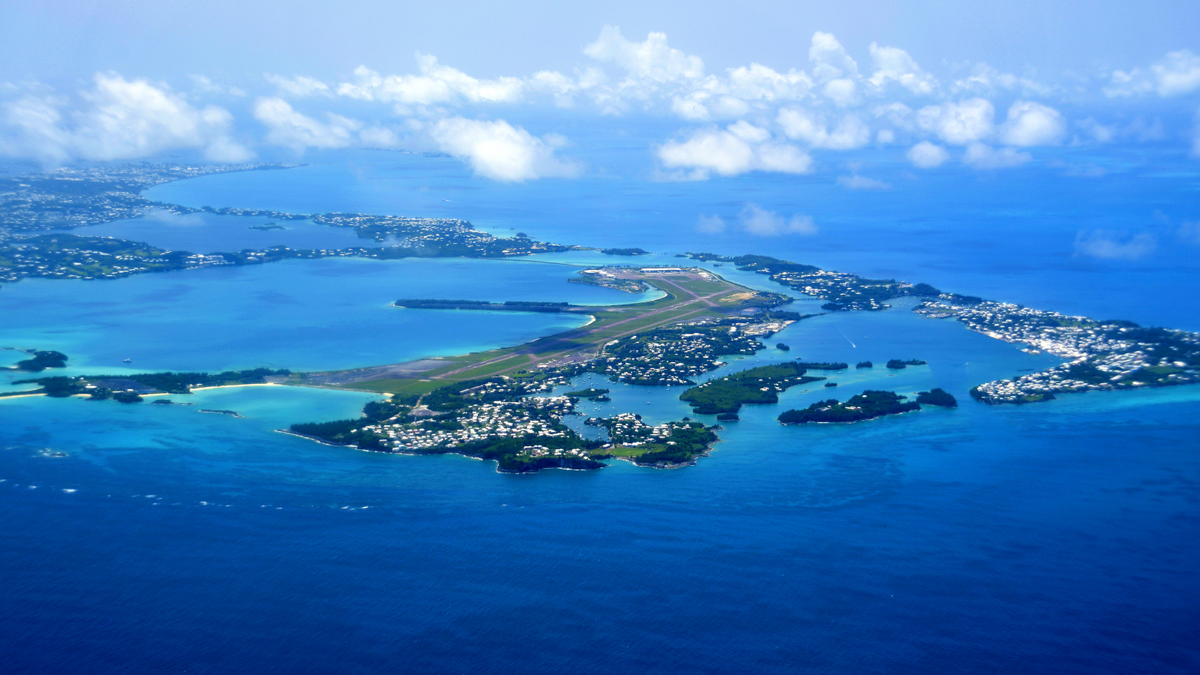
The true scientific mystery of Bermuda has never been about vanishing ships, but rather its defiance of basic geological laws. Normally, volcanic islands such as Hawaii form directly over intense mantle plumes—upwellings of super-heated rock from deep within the Earth that breach the crust, create islands, and push the surrounding seafloor into a broad dome. Over millions of years, as the tectonic plates shift away from these thermal hotspots, the ground cools and the islands naturally subside, sinking back toward the ocean floor. Bermuda entirely rejects this universal pattern. The island’s last volcanic eruption occurred more than 30 million years ago, and there is absolutely no active mantle plume beneath it today; yet, Bermuda continues to sit atop a massive swell, standing roughly 1,600 feet higher than the surrounding ocean floor. This persistent elevation has given geologists a severe headache for generations. Without a heat source or buoyant pressure from a mantle plume to actively prop it up, the island simply should not be sitting as high as it does.
To pierce through this millions-of-years-old conundrum, researchers utilized a cutting-edge planetary “ultrasound” technique. Because scientists cannot physically drill twenty miles beneath the Atlantic crust, the team relied on seismic waves generated by large earthquakes occurring across the globe. As these seismic vibrations ripple through the planet’s interior, they accelerate or slow down depending entirely on the density, temperature, and specific chemical composition of the rock layers they pass through. By meticulously analyzing recordings collected from a vital seismic station anchored on the island, the team mapped the Earth’s interior down to a depth of 20 miles, exposing a massive, previously invisible layer of low-density rock directly beneath Bermuda’s oceanic crust. Measuring an astonishing 12.4 miles (20 kilometers) in thickness, this buried anomaly represents a unique subterranean foundation unlike anything clearly documented elsewhere on the planet.
The discovery reveals that Bermuda does not rely on a continuous thermal engine to stay afloat. Instead, this newly discovered 12-mile-thick rock layer is significantly lighter and less dense than the heavy mantle material surrounding it, granting it an immense, natural buoyancy. Rather than being pushed up by an active plume from below, Bermuda behaves like a giant underground raft, permanently floating high above the Atlantic basin due to the buoyancy of this trapped material. In geological terms, this extraordinary phenomenon is known as “underplating.” Scientists believe this hidden raft was forged during Bermuda’s volatile volcanic past tens of millions of years ago. During this era, carbon-rich molten rock from deep within the Earth forced its way upward, wedging itself into the base of the tectonic plate just beneath the crust. Instead of erupting onto the surface, this material cooled and solidified permanently in place, leaving behind a thick, buoyant anchor that prevents the island from sinking.
Furthermore, this newly exposed rock layer holds secrets that stretch back much farther than Bermuda’s own volcanic timeline. Geochemical clues suggest that the unique material forming Bermuda’s underground raft may trace its ultimate roots back hundreds of millions of years to the formation and breakup of the ancient supercontinent Pangea. This timeline implies that deep-Earth convective cycles can preserve and transport ancient, chemically distinct pockets of material inside tectonic plates for millennia before they are utilized to alter the topography of the modern ocean floor. The revelation completely upends standard textbook models of marine geology and mantle mechanics, confirming that the earth’s interior possesses forces and recycling mechanisms that are far more complex than previously assumed.
The profound implications of this study have driven researchers to reconsider how volcanic island systems evolve over vast geological periods. Describing the sheer oddity of the data, lead author and Carnegie Science seismologist William Frazer expressed deep fascination with the uniqueness of the site. “Bermuda is an exciting place to study because a variety of its geologic features do not fit the model of a mantle plume,” Frazer explained, emphasizing how the island consistently breaks standard conventions. “We observe thick underplating, something that is not observed at most mantle plumes.” He further noted that the presence of such a massive, unexpected structure indicates a significant gap in current scientific models regarding the inner workings of our planet. “This suggests that there are other convective processes within Earth’s mantle that have yet to be well understood,” Frazer added, pointing out that the discovery opens up entirely new pathways of inquiry for global geophysics.
Independent experts have also verified the weight of these findings, acknowledging that the research elegantly solves a puzzle that has left scientists grasping for answers. Sarah Mazza, a prominent geologist at Smith College who was not directly involved in the study, agreed that the breakthrough offers a beautiful explanation for Bermuda’s stubborn refusal to subside. “There is still this material that is left over from the days of active volcanism under Bermuda that is helping to potentially hold it up as this area of high relief in the Atlantic Ocean,” Mazza observed, validating how the ancient, trapped volcanic debris acts as a persistent structural support system.
Now that the mystery of Bermuda’s elevation has finally been solved, the scientific community is shifting its focus toward a much broader global question. Scientists are preparing to launch investigations beneath other isolated oceanic islands to determine if these hidden buoyant rafts are a true geological anomaly or if they represent a widespread, undocumented planetary phenomenon. If similar thick, underplated structures are discovered lurking beneath other seemingly inactive island chains, the textbooks outlining Earth’s mantle dynamics and crustal evolution will require a definitive rewrite. While the legendary tales of the Bermuda Triangle have long captured the imaginations of the public with ideas of the paranormal, reality has once again proven to be far more fascinating. Deep beneath the Atlantic waves, wrapped in ancient tectonic history, Bermuda’s hidden foundation has finally revealed its truest and most extraordinary secret.