May 14 2026
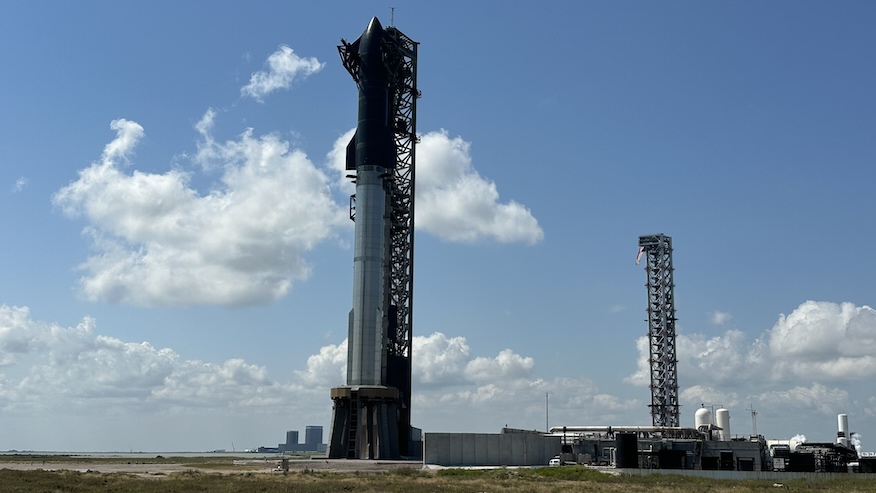
In a milestone announcement that has sent ripples through the global aerospace community, SpaceX has officially set May 19, 2026, as the target launch date for the highly anticipated Starship Version 3 (V3). This mission, designated as Flight 12, marks the debut of a radically redesigned vehicle that stands as the tallest and most powerful rocket ever assembled, eclipsing even its own predecessors. Standing at a staggering 124 meters (407 feet) tall, the V3 architecture represents a “clean-sheet” evolution of the Starship system, engineered specifically to transition from a test prototype to the operational infrastructure required for NASA’s Artemis III lunar landing and eventual crewed missions to Mars.
The technological centerpiece of the V3 upgrade is the introduction of the Raptor 3 engine. These next-generation powerplants have been stripped of complex exterior plumbing and heavy shrouds, resulting in a significantly lower mass while delivering higher performance. The sea-level variants now produce 250 tons of thrust, while the vacuum-optimized versions reach 275 tons. By integrating sensors and controllers internally, SpaceX has achieved a vehicle-level weight saving of approximately one ton per engine. “The Raptor 3 is a marvel of engineering simplification,” noted a lead propulsion researcher familiar with the project. “By moving from a ‘forest of pipes’ to a sleek, 3D-printed internal architecture, SpaceX has not only increased reliability but has fundamentally improved the power-to-weight ratio that is critical for deep-space payloads.”
The Super Heavy V3 booster (Booster 19) also features visible structural changes, most notably the shift from four grid fins to three larger, 50% stronger grid fins. These fins have been repositioned lower on the booster to better survive the intense heat generated during the integrated hot-staging maneuver. In this version, the single-use protective interstage has been replaced by a permanent integrated hot-stage, exposing the booster’s forward dome directly to the upper stage’s engine ignition. This change, while daring, streamlines the separation process. “The structural integrity required to handle the direct blast of the upper stage while maintaining a reusable booster is a high-wire act of materials science,” remarked a senior structural analyst at the Starbase facility. “This design emphasizes rapid reusability over traditional safety margins.”
Launch operations for Flight 12 will also debut the newly completed Launch Pad 2 at Starbase. This updated facility features a more robust propellant farm with increased storage and high-capacity pumps, allowing for faster vehicle fueling than ever before. The iconic “chopstick” catch arms on the launch tower have been shortened and converted from hydraulic to electromechanical actuators, providing the precision and speed necessary for future “catch” operations. While SpaceX will not attempt to catch the booster or the ship during this maiden V3 flight—opting instead for a controlled splashdown of Booster 19 in the Gulf of Mexico and Ship 39 in the Indian Ocean—the pad upgrades are essential for the rapid turnaround goals of the program.
The flight profile for Flight 12 remains suborbital but carries high-stakes secondary objectives. For the first time, the Starship upper stage is equipped with four docking drogues and dedicated fluid connections to support future ship-to-ship propellant transfer. Demonstrating the ability to manage cryogenic fuel in microgravity is the “holy grail” of the Artemis program, as it will take multiple “tanker” Starship flights to refuel a single Lunar Landers in orbit. “Without orbital refueling, the Moon and Mars remain out of reach for heavy payloads,” explained a planetary scientist specializing in mission architecture. “Starship V3 is the first vehicle designed from the ground up with the ‘plumbing’ necessary to make space-based logistics a reality rather than a theory.”
Avionics and communication have also received a massive overhaul. The V3 stack carries 60 custom avionics units capable of delivering 9 megawatts of peak power, supported by an upgraded navigation suite for precision autonomous flight. Real-time monitoring has been enhanced with 50 onboard camera views transmitted via a redundant, low-latency 480 Mbps Starlink connection. This will allow engineers to monitor the heat shield’s performance in unprecedented detail during reentry. “The data density we expect from Flight 12 is an order of magnitude higher than previous tests,” an aerospace data scientist stated. “We aren’t just watching a rocket fly; we are receiving a high-definition medical check-up of every weld and sensor in real-time.”
The scientific community is watching this launch with a mix of trepidation and immense optimism. The delay between Flight 11 and Flight 12 was caused by a pressure test failure of the original V3 hardware in late 2025, proving that the leap to Version 3 is not without its risks. However, the successful 33-engine static fire test conducted on May 7 confirmed that the Raptor 3 engines are ready for the stresses of liftoff. For NASA, the success of V3 is non-negotiable; the current 2027-2028 timeline for Artemis III hinges entirely on Starship’s ability to prove its reliability as a human-rated lander.
As the countdown begins for the May 19 window, which opens at 5:30 p.m. local Texas time, the world looks toward Starbase. Starship V3 is more than just a larger rocket; it is a prototype for a permanent bridge between Earth and the lunar surface. If the redesigned grid fins hold, the Raptor 3 engines fire true, and the heat shield survives the punishing return through the atmosphere, humanity will have taken its most significant technological leap toward becoming a multi-planetary species. As one researcher succinctly put it: “V1 was about learning to fly, V2 was about learning to survive, and V3 is about learning to work in space.”