4 June 2026
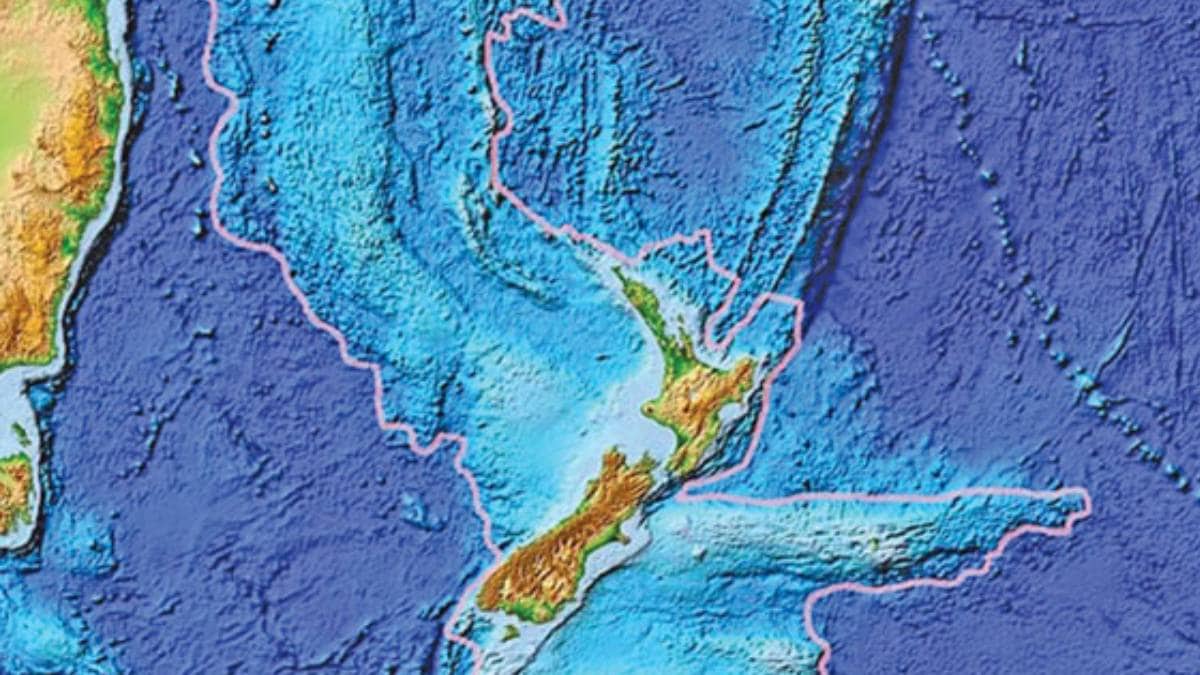
A team of geologists and oceanographers officially confirmed the existence of Earth’s hidden 8th continent, a vast sunken landmass named “Te Riu-a-Māui” (Māori for “The Long White Cloud”) lying beneath the southwest Pacific Ocean floor. Stretching across over 5 million square kilometers, this submerged continent is larger than India and had evaded detection for centuries due to its 3,000-foot average depth below sea level.
Using advanced seismic tomography, gravity mapping, and deep-sea drilling, researchers pieced together fragments of ancient continental crust from the Zealandia region, finally proving that the landmass is not merely a cluster of microcontinents or oceanic plateaus, but a single, continuous continental block that broke away from the supercontinent Gondwana approximately 83 million years ago. “We have spent nearly a decade analyzing zircon crystals and basalt samples from the ocean floor,” said Dr. Alana Hikuroa, lead geophysicist at the University of Auckland. “The isotopic signatures clearly show continental crust, not oceanic basalt. This is a paradigm shift in how we view Earth’s geology.”
The continent’s surface, now buried under Pacific sediments and volcanic rock, contains fossils of ancient forests, freshwater algae, and land-dwelling dinosaurs—proof that it once rose above the waves before a series of massive tectonic subsidence events pulled it under. “What excites us most is the biodiversity locked in those underwater caverns,” added marine biologist Dr. James Pallister from the Woods Hole Oceanographic Institution. “We’ve found chemosynthetic ecosystems and potentially new species of crustaceans that have been isolated for over 50 million years.” The discovery also reshapes understanding of plate tectonics and earthquake risk along the Pacific Ring of Fire, as the hidden continent’s slow collision with the Pacific Plate may explain unexplained seismic anomalies near Fiji and Vanuatu.
Governments and indigenous Pacific communities have already called for protected status for the region, while energy and mining corporations eye rare earth elements detected in the continental shelf. “This is not just a geological curiosity,” stated Dr. Hikuroa. “It rewrites textbooks and reminds us that even on a well-mapped planet, we have barely scratched the surface of what lies beneath.” The findings, published in Nature, urge a complete redrawing of global continental models, adding an eighth major landmass to Earth’s roster—though for now, Te Riu-a-Māui remains silent, sunken, and spectacularly hidden.