July 15, 2026
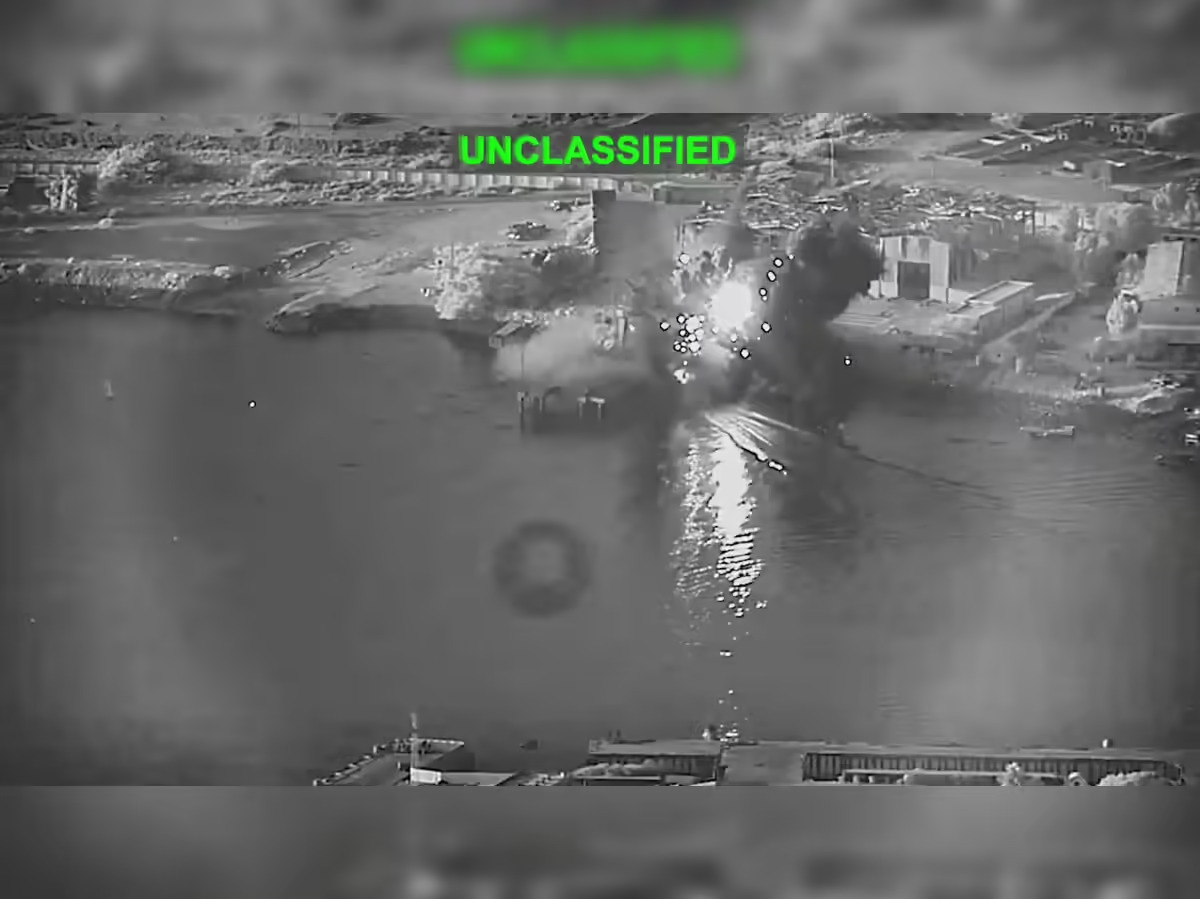
A significant escalation in the ongoing conflict between the United States and Iran occurred when the U.S. military announced the first-ever use of sea drones in active combat. In a series of strikes that have heightened tensions across the Middle East, the U.S. Central Command (CENTCOM) confirmed that it successfully utilized multiple unmanned surface vessels (USVs) to attack Iran’s Bandar Abbas naval base, a critical hub for the Iranian navy and a strategic chokepoint on the Strait of Hormuz . This marked a pivotal moment in modern naval warfare, as these “kamikaze” drone boats, identified as three “Corsair” unmanned surface vessels built by Saronic, were deployed to strike a submarine and ship maintenance facility at the port . According to CENTCOM, the operation, which took place a day prior, successfully degraded Iran’s ability to continue attacking commercial shipping in the vital waterway . The U.S. military released footage showing the three drones striking their targets at the naval base, a move that was quickly condemned by Iran, which stated that the attacks had “rendered futile” the diplomatic efforts of the preceding months .
This unprecedented use of sea drones was part of a broader and more intense wave of U.S. military action against Iran, marking the third consecutive night of strikes aimed at imposing a “heavy cost” on Iranian forces for their alleged aggression against commercial vessels . The U.S. campaign was a direct response to Iranian attacks on three commercial tankers transiting the Strait of Hormuz, as well as the targeting of two very large crude carriers from the UAE, which resulted in the death of at least one crew member . The White House, under President Donald Trump, signaled its intent to continue the pressure, with Trump vowing that the U.S. was going to “hit them very hard tonight, and we’re going to hit them hard tomorrow,” . Beyond the drone boat strikes, the U.S. military targeted a wide array of Iranian military assets, including coastal surveillance systems, radar sites, surface-to-air missiles, anti-ship cruise missiles, and drone launch sites, aiming to cripple Iran’s defensive and offensive capabilities in the region . The escalation also saw the U.S. revoke a license that had allowed Iran to sell oil on international markets, a move that was part of a fragile interim truce and further imperiled the already tenuous diplomatic situation, causing oil prices to rise more than 3% .
Iran responded with immediate and forceful retaliation, launching its own series of attacks on U.S. military assets in the Gulf region. The Islamic Revolutionary Guard Corps (IRGC) announced on the same day that it had shot down two U.S. drones near Bandar Abbas and the southern city of Lar . In a broader offensive, the IRGC claimed to have struck a U.S. facility and infrastructure in Bahrain and targeted U.S. military bases in Kuwait, destroying HIMARS rocket launcher positions, fuel depots, and Patriot air defense systems . They also reported destroying U.S. long-range air surveillance and maritime detection radar systems in Oman . The rapid escalation created a chaotic situation with conflicting claims, as Iranian media reported a series of explosions near the port city of Bandar Abbas and Qeshm Island, while the IRGC claimed to have fired missiles at U.S. vessels and targeted bases in Kuwait and Jordan . This exchange of heavy blows signaled a dramatic breakdown in the fragile interim agreement that had been reached between the two nations just weeks prior . The U.S. and Iran appeared to be on a dangerous collision course, with the U.S. using the historic deployment of sea drones as a central tool in its campaign to reassert control over the Strait of Hormuz, while Iran’s leadership vowed to take any measure necessary to safeguard its national security and respond to what it termed U.S. military aggression .