
June 29, 2026
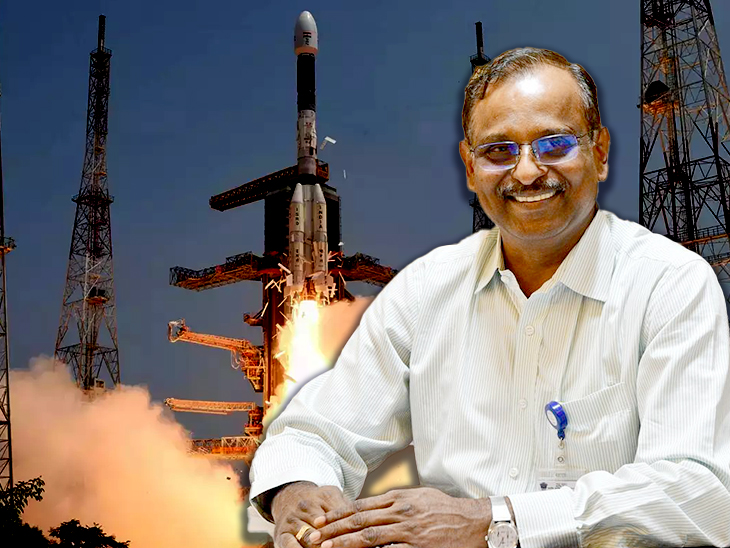
The Indian Space Research Organisation (ISRO) is at a pivotal juncture in its space exploration history, with the Gaganyaan human spaceflight programme making significant advances and the first uncrewed mission firmly on track, according to ISRO Chairman V. Narayanan. The ambitious project, described by Narayanan as a “technology-intensive national mission,” is progressing methodically, with the agency emphasizing a cautious, step-by-step approach to ensure the absolute safety of its future astronauts. The primary focus is on the first of three planned uncrewed missions, a critical precursor to India’s maiden crewed flight.
Speaking at the 17th Air Chief Marshal L. M. Katre Memorial Lecture in Bengaluru, Narayanan provided a comprehensive update, stating, “We are working towards the first uncrewed mission. You will come to know about the dates very shortly”. He reinforced this commitment, adding, “We are now working on the first uncrewed mission this year. Then once we review the result, we’ll come back to the crewed mission”. This mission, designated G-1, is slated to be a critical test flight, reportedly targeting a launch window between August and September 2026 from the Satish Dhawan Space Centre in Sriharikota.
The spacecraft will carry Vyommitra, a female-looking half-humanoid robot, to simulate human functions and evaluate the performance of the crew module, life-support systems, environmental control, and re-entry dynamics in low Earth orbit. The primary objective is to demonstrate the end-to-end mission capabilities, aerodynamics of the human-rated launch vehicle, and the safe recovery of the Crew Module, thereby validating the complex systems before any astronauts are onboard.
ISRO has already completed two of the most demanding tasks for the Gaganyaan mission: human-rating the launch vehicle and developing its critical safety systems. This human-rated version of the Launch Vehicle Mark-III (LVM3), known as the HLVM3, has undergone rigorous testing and over 8,000 ground tests to qualify its structural integrity and propulsion systems. The pathway to the crewed mission is meticulously structured; as Narayanan emphasized, “before sending actual human beings, we have to do 3 uncrewed missions”.
These three uncrewed flights (G-1, G-2, and G-3) are essential to prove the reliability of every system and ensure a safe environment for the astronauts, a principle that Narayanan stressed is paramount: “human safety is very important”. Following the successful completion of these validation flights, the historic crewed mission, H-1, is planned to carry three Indian Air Force pilots, selected for the program, into low Earth orbit for up to a week. The Indian Air Force’s contribution has been vital to the mission’s progress, with Narayanan acknowledging their “outstanding contribution”.
Hindustan Aeronautics Limited (HAL) is also a key partner, manufacturing the visible structural components of the launch vehicle, including the tankages and heat shield. While the first uncrewed mission is the immediate goal, official timelines have shown some variance. Earlier this year, the G-1 mission was tentatively slated for March 2026, but recent updates from ISRO suggest a shift to later in the year, potentially towards the third quarter of 2027. Narayanan addressed this, indicating that while efforts are ongoing for a launch by the end of 2026, the actual schedule is under constant review and will be based on the progress of the preparatory work, with a slide in his presentation pointing to a possible launch in the third quarter of 2027. Despite these shifting timelines, the resolute message is that the first uncrewed mission is the immediate priority.
In a parallel development that significantly boosts India’s future heavy-lift launch capability, Narayanan announced a major milestone with the successful hot test of the power head of a new, indigenous 200-tonne semi-cryogenic engine. This test, conducted on June 24 at the ISRO Propulsion Complex in Mahendragiri on the Tamil Nadu coast, was hailed as “a major achievement and milestone” by the ISRO chief. “It was a major achievement and milestone, and now we are getting ready for the engine test”. The test involved the Power Head Test Article (PHTA), which includes all engine systems except the thrust chamber, and was pushed to a thrust level of 175 tonnes, which is “close to 90 per cent of the thrust load” .
This marked the eighth in a series of hot tests, with earlier runs at 47% and 60% thrust levels, and demonstrated the successful functioning of the main turbopumps delivering pressures of 400 and 500 bar. This semi-cryogenic engine is a crucial component for next-generation heavy-lift launch vehicles, showcasing ISRO’s growing prowess in advanced propulsion systems. Addressing the broader picture, Narayanan confirmed that the space agency had resolved the issues that had previously interrupted its launch schedule and that satellites are ready for upcoming missions, with the exact launch dates to be announced soon.
In a testament to India’s expanding international space collaborations, Narayanan also highlighted the Chandrayaan-4 lunar sample return mission, and Chandrayaan-5, a joint mission with Japan that will deploy a 350-kg rover capable of operating for nearly 100 days—a significant leap from the 25-kg rover used in Chandrayaan-3. With the Gaganyaan programme entering its decisive phase, the successful development of next-generation engines, and launch operations poised to resume, ISRO is on the cusp of a transformative new chapter in its spacefaring ambitions, steadily advancing toward the historic goal of launching India’s first astronauts from Indian soil.