June 28, 2026
As the sun rises on a new era of warfare, the US Army is accelerating the development and deployment of what may be its most transformative and unsettling technology: a family of Robotic Combat Vehicles (RCVs) designed to take the ultimate risk on the front lines—the risk of death—so that human soldiers do not have to. The vision is stark and deliberate: humans will no longer go first; machines will . This shift, driven by lessons from the brutal, drone-saturated battlefields of Ukraine, is forcing a complete doctrinal overhaul within the Pentagon. As of mid-2026, the Army is aggressively pushing to integrate these unmanned ground systems into its formations, aiming for initial fielding by 2028, despite significant internal resistance, budget squabbles, and profound technological hurdles .
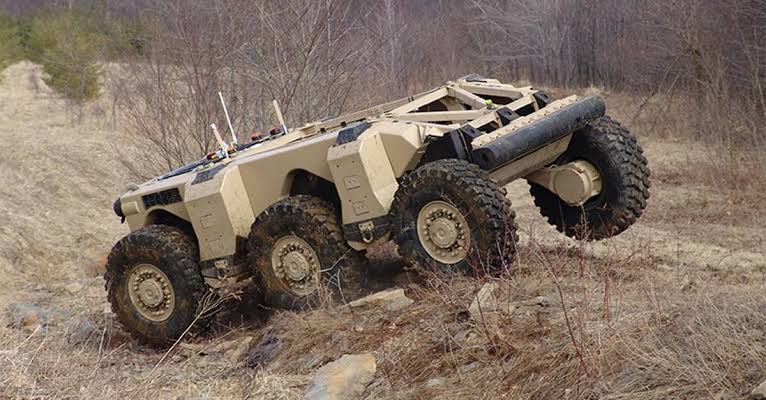
The vehicle at the heart of this revolution is not a single machine but a concept of three distinct robotic warriors: the RCV-Light (under 10 tons), RCV-Medium (10-20 tons), and RCV-Heavy (20-30 tons) . The Light variant is currently the priority; conceived as the expendable scout, it is meant to spearhead advances into deadly terrain, drawing fire and identifying enemy positions while its human operators remain safely in the rear . This robot is designed to be “attritable”—a military term for affordable enough to lose. As Army Secretary Daniel Driscoll starkly noted, citing the Ukraine war, “if an $800 drone can destroy a thing… we just can’t sustain it” if every loss is catastrophically expensive .
However, the road to this robotic future is anything but smooth. In a dramatic twist that highlights the program’s volatility, the Army itself attempted to cancel the main RCV competition in early 2026, with Secretary Driscoll calling the vehicles “incredibly large, incredibly heavy, incredibly expensive” and admitting the initial requirements were flawed . This bureaucratic move was met with fierce resistance from Congress, led by Senator Susan Collins, who, at a May 2026 hearing, questioned the decision’s “height of irony” after the Army had showcased the Ripsaw platform in a parade . The Senate Armed Services Committee fought back, adding $19 million to the fiscal year 2026 budget to force the Army to purchase six RCVs, effectively reviving the very program the service tried to kill . This legislative battle underscores a fundamental strategic tension: Congress sees robots as the key to future combat, while the Army worries about rushing a system that isn’t ready or affordable.
As the policy debate rages in Washington, the technology is advancing through a series of key demonstrations and industry partnerships aimed at solving the most difficult engineering challenges. Summer 2026 marks a critical juncture with the Army’s MARS program exercise at Fort Irwin, where four Textron M5 autonomous vehicles will be tested for the ability for a single soldier to control a fleet of breaching robots from 20 kilometers away . This “one-to-many” control capability—a holy grail for the program—is being developed alongside a “mesh network” that allows machines to communicate with each other without a central hub, ensuring resilience against enemy jamming . The Army’s 2026 budget documents, detailing the Human-Machine Integrated Formations (H-MIF) project, reflect this priority, allocating significant funds to integrate “best of breed autonomy and Soldier-Robot interface advancements” . This includes developing advanced sensors and AI for “Aided Target Recognition” in both temperate and sub-tropical environments, all aimed at creating a system that can reliably identify threats without human input .
The drive for commercial speed has also led to a pivotal partnership between American Rheinmetall and the electric vehicle (EV) startup Harbinger, announced in May 2026 . They are collaborating to build a family of autonomous vehicles that combine combat-proven integration with affordable, modern automotive design. The critical innovation is Harbinger’s drive-by-wire, hybrid-electric chassis, which allows a vehicle to be controlled entirely by software, making it “autonomy-ready” from the factory . This hybrid system offers a dual advantage: a 500-mile range for operational endurance, and the ability to run on battery power alone in a “silent watch” mode, dramatically reducing its heat and noise signature and making it harder for enemy sensors to detect . This focus on cost and mass production is deliberate. CEO of American Rheinmetall, Matthew Warnick, stated their goal is to provide “robotics they can trust, at a cost that lets them field them in the numbers required to win” . In this philosophy, the RCV is not a precious asset but a replaceable tool of war, mirroring the mass-produced tactical drones that have reshaped modern conflict.
Yet, for all the progress, the path to a fully autonomous killing machine remains fraught with peril. While the Army’s official goal for fielding is 2028, experts warn that large-scale autonomous ground operations are “at least a decade away” . The technical obstacles are immense, particularly in developing robust autonomy for complex and chaotic combat environments. Researchers at the Army’s CERDEC lab are grappling with the reality that AI, while excellent at recognizing cats in the vast datasets of the internet, is not yet good at identifying a camouflaged enemy tank hiding in a bush . The AI needs to be trained for military-specific contexts, and ensuring reliable navigation without GPS, which is easily jammed, remains a primary challenge . As the Army pushes forward into this brave new world of unmanned warfare, the future of the battlefield is being written not just in steel and software, but in a precarious balance of congressional will, industrial innovation, and the fundamental, unresolved question of whether a machine can truly be trusted to make life-and-death decisions.