June 28, 2026
India stands at a pivotal moment in its spacefaring journey, having fully mastered the complex cryogenic engine technology that was once strategically denied to the nation. This milestone was underscored by ISRO Chairman V. Narayanan during the 17th Air Chief Marshal L. M. Katre Memorial Lecture, where he outlined the country’s remarkable progress and its ambitious future in space exploration . Narayanan emphasized that this denial has been transformed into a testament to indigenous innovation, stating, “Today, I thank the countries that denied the technology. Today we have developed three cryogenic propulsion systems” .
This achievement is not just a technical victory but a significant geopolitical statement, showcasing India’s ability to overcome international technology control regimes like the Missile Technology Control Regime (MTCR), which had previously blocked its access to this crucial technology . The journey from being denied the technology in the early 1990s, following the Pokhran nuclear tests, to developing multiple indigenous systems highlights the determination and resilience of Indian scientists who turned a diplomatic obstacle into a strategic asset .
The immediate focus of ISRO is the Gaganyaan human spaceflight mission, with a cautious and methodical approach being prioritized. Narayanan confirmed that the first uncrewed mission is slated for this year, a critical step before India can proceed with crewed spaceflight . He explained, “We are now working on the first uncrewed mission this year. Then once we review the result, we’ll come back to the crewed mission” . This careful path includes three uncrewed missions to validate every system, ensuring astronaut safety . The overall human rating of the launch vehicle and safety system development has been completed, moving the program into its flight validation phase .
This meticulous process aims to make India the fourth country to launch humans into space on its own, a capability that only Russia, the United States, and China possess . Concurrently, India’s long-term vision extends well beyond Gaganyaan, with Narayanan outlining goals to establish an Indian space station by 2035 and land an Indian astronaut on the Moon by 2040 . This roadmap includes advanced lunar missions like Chandrayaan-4, India’s first lunar sample return mission, and Chandrayaan-5, a joint long-duration mission with Japan that will deploy a 350-kg rover capable of operating for nearly 100 days—a significant leap from the 25-kg rover of Chandrayaan-3 .
In parallel with these ambitious projects, ISRO has achieved a significant technological milestone with the successful testing of its new semi-cryogenic engine, which is set to revolutionize the country’s heavy-lift capabilities. On June 24, 2026, ISRO conducted a hot test of the semi-cryogenic engine’s Power Head Test Article (PHTA) at the ISRO Propulsion Complex in Mahendragiri . This test, the eighth in a series, successfully pushed the engine to 175 tonnes of thrust, which is approximately 88% of its full capacity . The test was a crucial step, as it demonstrated the successful operation of the engine’s main turbopumps at pressures of 400 and 500 bar, providing the confidence needed to proceed towards a full-power test at 200 tonnes .
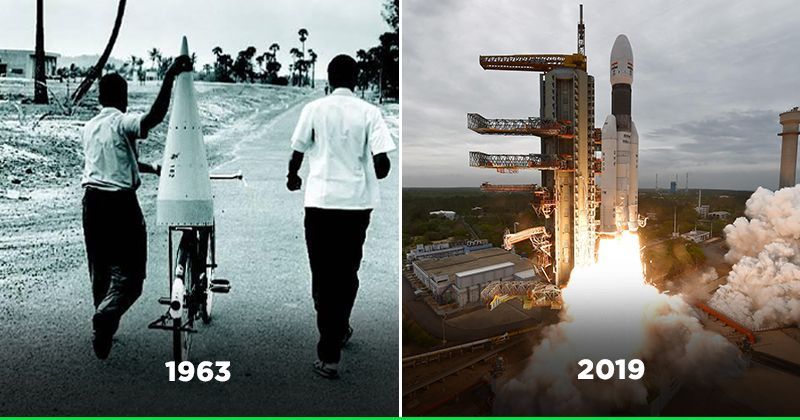
This semi-cryogenic engine, powered by cleaner liquid oxygen (LOX) and purified kerosene (Isrosene) , is designed to be cheaper, more efficient, and less toxic than existing propellants . Its integration will power the SC120 stage, designed to replace the current L110 core stage of the LVM3 launch vehicle, significantly enhancing its payload capacity . This advancement is critical for India’s future needs, including launching heavier satellites, supporting the Gaganyaan mission, and building a space station . From launching a gifted seven-kilogram rocket in 1963 to developing such sophisticated propulsion systems, India’s space program has demonstrated an unwavering commitment to self-reliance and excellence, turning past restrictions into future achievements .