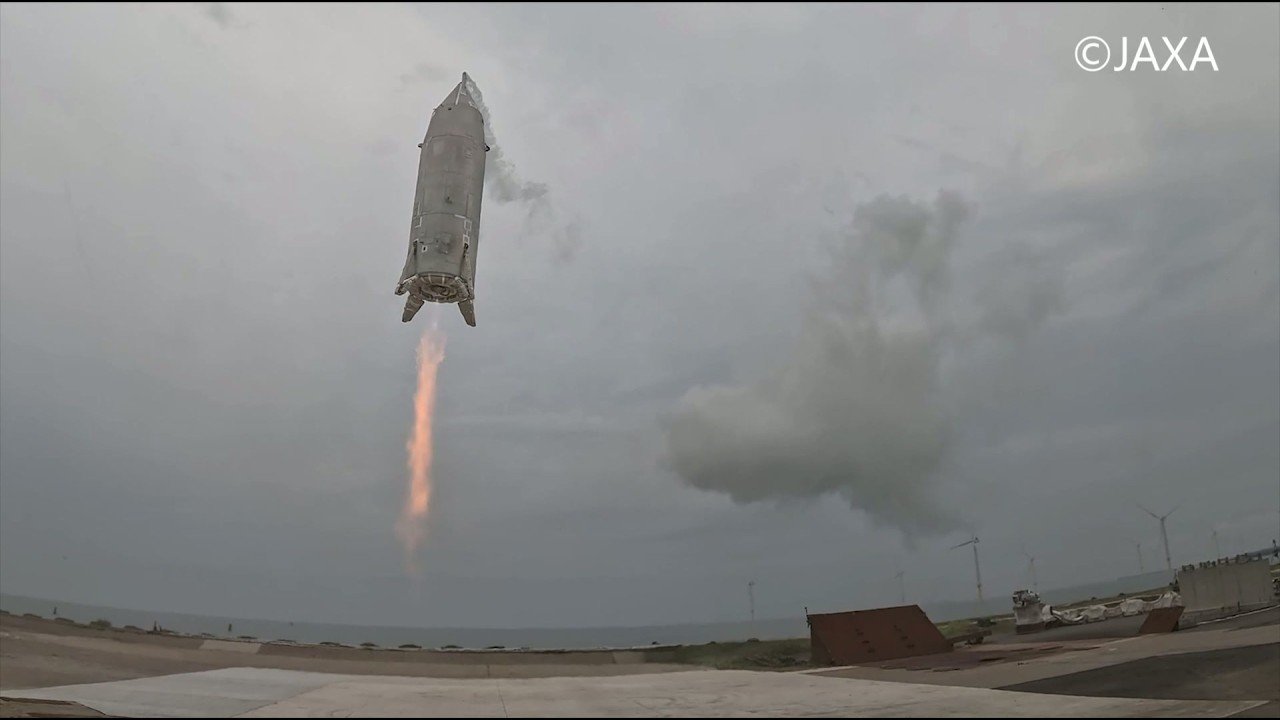
July 11, 2026, the Japan Aerospace Exploration Agency (JAXA) achieved a significant milestone in its quest for cost-effective space travel by successfully completing the first flight test of its experimental reusable rocket, the RV-X (Reusable Vehicle eXperiment) . The test, conducted at JAXA’s Noshiro Rocket Testing Centre in Akita Prefecture, saw the 7.3-meter-long, 1.8-meter-diameter vehicle perform a controlled vertical take-off, climb, hover, and a precise horizontal translation before executing a safe, powered landing . The entire flight, from liftoff to touchdown, lasted approximately 40 seconds, during which the rocket ascended to an altitude of about 11 meters (36 feet) and moved 16 meters (52 feet) sideways, all while maintaining a perfectly upright attitude . This successful demonstration is a pivotal step for Japan, as it validates the complex guidance, navigation, and control technologies essential for vertical take-off and vertical landing (VTVL) systems, a capability that has been primarily pioneered by commercial entities like SpaceX .
While the hover test was relatively low-altitude and brief, its success is monumental for Japan’s space program, marking a transition from expendable rockets to a future of reusable launch vehicles . The primary goal of developing such technology is to drastically reduce the cost of launching satellites and other payloads, as the first stage of a rocket is typically its most expensive component and is usually discarded after a single use . By mastering the art of recovery and reuse, JAXA aims to make space access more frequent and economically viable, directly enhancing the competitiveness of Japan’s space industry on a global scale . The RV-X is equipped with a highly durable engine that has proven its reliability by withstanding 165 combustion tests prior to this flight, along with four shock-absorbing landing legs to cushion its return . The success of this test brought a sense of relief and validation to the project team, with JAXA’s project manager, Takashi Ito, stating that they had “completed the test flight properly and obtained data that we had wanted” .
The RV-X is not merely a standalone project but is a crucial technology pathfinder for Callisto, a more advanced reusable launch vehicle demonstrator being jointly developed by JAXA, France’s CNES, and the German Aerospace Center (DLR) . The data and operational experience garnered from the RV-X’s 40-second flight will directly inform the design and flight profile of Callisto, which is expected to undergo more demanding tests in the future, potentially reaching altitudes of up to 100 meters . This collaboration highlights the international effort to achieve rocket reusability and positions Japan as a key player in this technological race . The success of RV-X is a testament to the engineering capabilities developed through years of research, with JAXA and its industrial partner, Mitsubishi Heavy Industries, working to establish operational methods for a new generation of launch systems that can fly multiple missions with a short turnaround time .
This achievement comes at a time when the global race for reusable rocket technology is intensifying, and it serves as a direct statement of Japan’s intent to remain competitive. The demonstration occurred just one day after China announced the successful recovery of a rocket booster, underscoring the rapid advancements in the field and the growing competition with established leaders like the United States . For Japan, the development of a reusable rocket is seen as essential not only for commercial launch services but also for national security, with a stable and cost-effective transport capability being a key governmental priority . JAXA’s ultimate aim is to create a launch system that operates with the frequency and reliability of an aircraft, fundamentally changing the economics of space exploration and marking a significant departure from the country’s current mainstay, the single-use H3 rocket .