
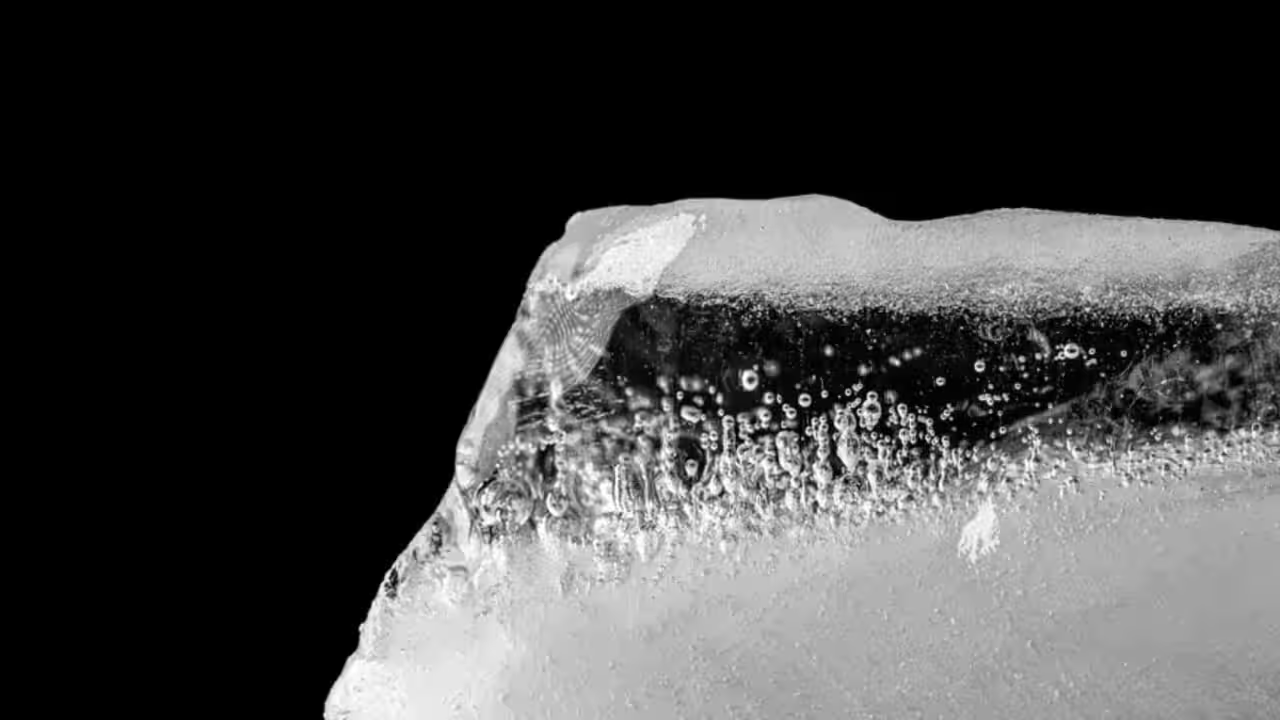
Throughout human history, ice has been recognized as an abundant, naturally occurring substance with a wide array of practical uses, yet it has always suffered from severe physical limitations. Traditional ice is notoriously brittle, structurally weak, and prone to rapid, catastrophic failure under even moderate mechanical stress. When a microscopic crack forms within regular ice, it propagates through the crystal lattice with alarming speed, causing the entire structure to shatter unpredictably. However, a groundbreaking scientific breakthrough led by Prof. Ido Braslavsky at the Hebrew University of Jerusalem’s Robert H. Smith Faculty of Agriculture, Food and Environment has fundamentally transformed our understanding of frozen water. By pioneering an advanced bio-composite approach, the Israeli research team has successfully developed a revolutionary material commonly referred to as “Super Ice” or BioPykrete. This innovative substance is 10 times stronger than regular ice and boasts load-bearing capabilities that rival the strength of concrete, opening up entirely new horizons for cold-weather engineering, construction, and materials science.
To truly appreciate the significance of this modern breakthrough, it is helpful to look back at previous historical attempts to reinforce frozen water. During World War II, a visionary British inventor proposed a unique material called Pykrete, which was a frozen mixture of ordinary ice and about fourteen percent wood pulp or sawdust. Famous for its surprising durability and slow melting rate—a concept famously demonstrated by proposals to build massive aircraft carriers out of ice during Project Habakkuk—Pykrete proved that reinforcing ice with fibrous additives could dramatically improve its structural integrity. Nevertheless, traditional Pykrete suffered from major drawbacks, including heavy weight, inconsistent composition, and a lack of precise control over how the wood fibers bonded with the surrounding ice crystals. The new research led by Professor Braslavsky bypasses these primitive mechanical mixing techniques by introducing precision nanoscale engineering and molecular-level integration, elevating reinforced ice from a historical wartime curiosity into a sophisticated, high-performance modern material.
The core secret behind the extraordinary performance of Super Ice lies in its meticulously designed molecular architecture. Instead of simply dumping raw plant fibers into liquid water before freezing, the Israeli research team sought to control how different microscopic components connect at the fundamental molecular level. To achieve this, the scientists integrated plant-derived cellulose nanocrystals alongside a bespoke engineered protein carefully synthesized for this specific purpose. This specialized protein acts as an ingenious molecular bridge within the composite matrix. One distinct end of the engineered protein is chemically programmed to bind specifically and tightly to ice crystal surfaces, while the opposite end attaches firmly to the cellulose reinforcement fibers. This dual-action binding mechanism ensures that the foreign plant material does not just float passively inside the ice, but rather forms an unbreakable chemical liaison that unifies the entire frozen structure from the inside out.
When comparing normal ice to Super Ice, the most striking distinction lies in how the materials respond to mechanical stress and fracture mechanics. In regular ice, stress concentrates sharply at the tips of microscopic flaws, causing cracks to tear through the brittle structure almost instantaneously and resulting in sudden, violent shattering. Super Ice completely alters this failure mode through its unique internal composition. Because the cellulose nanocrystals and engineered proteins distribute applied forces evenly across the entire matrix, Super Ice can absorb up to 70 times more energy than untreated ice before failing. Crucially, when subjected to extreme loads that exceed its structural limits, Super Ice does not shatter abruptly; instead, it deforms and fractures gradually. This ductile-like behavior in a frozen substance represents a monumental leap forward in safety and reliability for any potential structural application in freezing environments.
In terms of raw mechanical metrics, the performance gains are nothing short of astounding. Laboratory testing conducted by the Hebrew University research team revealed that the new composite material achieves a compressive strength approximately 10 times higher than that of regular ice. This dramatic enhancement elevates the mechanical profile of the ice to a tier where it rivals the structural strength of traditional concrete. For decades, engineers operating in extreme cold regions like the Arctic, Antarctic, or high-altitude mountain ranges have had to rely on heavy, energy-intensive shipments of concrete, steel, and synthetic polymers to build temporary infrastructure, runways, roads, and research platforms. Super Ice introduces an eco-friendly paradigm shift where abundant local water combined with small quantities of sustainably sourced plant cellulose and specialized proteins can be utilized to manufacture high-strength temporary building materials directly on-site.
The environmental implications of this development are profound and deserve careful consideration. Modern construction and civil engineering are major contributors to global carbon emissions, driven heavily by the energy-intensive production of cement and concrete. By contrast, Super Ice is predominantly composed of water and biodegradable, plant-derived components, making it an exceptionally sustainable and environmentally friendly alternative for temporary infrastructure. Once a temporary cold-weather project, ice road, or seasonal exploration platform has served its purpose, Super Ice can simply melt away harmlessly into the natural environment without leaving behind toxic waste, permanent synthetic residues, or ecological scars. This aligns perfectly with modern global efforts to achieve net-zero carbon footprints and adopt circular, bio-based economic models in industrial engineering and remote logistics.
Despite the overwhelming promise of this new material, the researchers emphasize that further comprehensive testing and development lie ahead before commercial deployment can become widespread. Future phases of the research program will focus heavily on examining how the material performs over extended periods of time, particularly under the influence of environmental weathering, sublimation, and varying humidity levels in sub-zero climates. Additionally, scientists must rigorously analyze how Super Ice responds to repeated freezing and thawing cycles, which represent the ultimate durability test for any ice-based construction material exposed to fluctuating seasonal temperatures. The team also aims to investigate whether further optimizations can be achieved by refining freezing techniques, experimenting with alternative plant-based reinforcements, and engineering even more efficient variants of the binding proteins.