
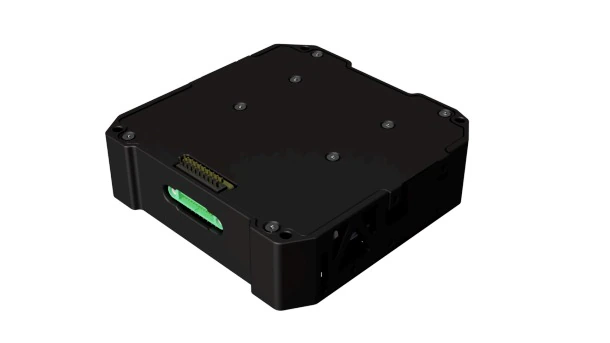
In a landmark achievement for India’s burgeoning private space sector, the Hyderabad-based spacetech startup TakeMe2Space has successfully demonstrated its indigenously developed satellite battery pack, the PowerBank-50, in orbit, marking a significant step towards self-reliance in critical space technologies . The battery was a key component of the historic Vikram-1 mission, dubbed ‘Aagaman’, which was launched from the Satish Dhawan Space Centre in Sriharikota on July 18, 2026 . This mission was itself a watershed moment, as Skyroot Aerospace’s Vikram-1 became the first privately developed Indian rocket to successfully reach orbit, placing India in an elite group of nations—alongside the United States and China—where a private entity has achieved this feat . During this flight, the PowerBank-50, a compact unit weighing just 380 grams and roughly the size of a paperback book, successfully powered an experimental payload from Cosmoserve Space onboard the rocket’s Orbital Adjustment Module (OAM) at an altitude of approximately 450 kilometers .
The successful in-orbit operation of the PowerBank-50 is a monumental step forward, as it officially grants the product “flight heritage”—a critical credential in the satellite industry that signifies a component has been proven to operate reliably in the harsh environment of space . “Every satellite mission lives or dies by its power system,” stated Ronak Kumar Samantray, founder and CEO of TakeMe2Space, emphasizing why achieving flight heritage is so vital . In the satellite industry, a single subsystem failure can jeopardize a multi-crore mission, making satellite builders, launch providers, and insurers deeply reluctant to fly components that have never been tested in space. This creates a well-known barrier for new suppliers, as a product cannot gain heritage without flying, and it cannot fly without heritage. By performing flawlessly under actual orbital conditions, the PowerBank-50 has effectively broken through this barrier, moving from a ground-qualified product to a space-proven component . The battery, designed to keep satellites operational during the dark periods of their orbit when solar panels cannot generate power, successfully validated its performance through launch vibrations, shock, vacuum, radiation, and extreme temperature swings experienced in low-Earth orbit .
The PowerBank-50 is not just a technological success but also a commercial milestone, poised to transform the Indian satellite manufacturing landscape. Priced at just over Rs 1 lakh (Rs 1,04,900), the battery offers a significantly more affordable alternative to expensive imported systems, which often come with long and uncertain procurement timelines . This cost-effectiveness is expected to be a game-changer, making space more accessible for Indian startups, universities, and student researchers who are often constrained by budget limitations . The battery stores more than 50 Wh of energy and is designed with some of the highest energy-density lithium-ion cells available for small satellites . It features a sophisticated onboard battery management system for cell balancing and health monitoring, and includes cell heaters and an aluminium enclosure for thermal management . The units can be stacked together to power a wide range of small satellites, from CubeSats to microsatellites, and are designed to support missions in low-Earth orbit for up to five years .
This achievement represents more than a single product success; it signals the growing maturity and capability of India’s private space ecosystem. By providing domestic satellite builders with a reliable, off-the-shelf, and “space-proven” power solution, TakeMe2Space is helping to reduce India’s dependence on foreign suppliers and build a more resilient supply chain for its space industry . The availability of a domestically manufactured, flight-proven component is expected to accelerate innovation, reduce satellite development costs, and enable more frequent and ambitious space missions from India. As the country celebrates this milestone, the success of the PowerBank-50 aboard the Vikram-1 underscores the pivotal role of Indian spacetech startups in driving the nation’s next generation of space exploration and commercial satellite deployment, with potential benefits for everyday services like weather forecasting, navigation, and disaster management .