China’s Tianwen-3 mission, which aims to become the first in human history to successfully return samples from Mars, has entered a critical phase as scientists narrow down the selection of its landing site, with the primary scientific objective being the search for traces of past or present life. The mission, scheduled for launch around 2028 with samples expected to return to Earth by approximately 2031, is currently evaluating a refined list of candidate locations that meet both strict engineering constraints and profound scientific criteria. At the heart of this selection process is the need to identify a location that once possessed the key ingredients for habitability. As Hou Zengqian, chief scientist of the Tianwen-3 mission, explained, Mars is considered the most likely place in the solar system to have harbored extraterrestrial life because it once had liquid water, a denser atmosphere, and a magnetic field, creating conditions analogous to early Earth.
The mission’s leadership has emphasized the necessity of landing in a “very precisely targeted area” that is theoretically and evidentially the most promising for preserving biosignatures. To ensure the highest chance of success, scientists are focusing on regions with a long history of water activity, significant geological diversity, and the presence of minerals that are known to preserve organic material. Preliminary work has narrowed the field to eight candidate landing sites, taking into account factors like geological age, water activity history, and the potential for biosignature preservation, with a final decision expected by the end of 2026.
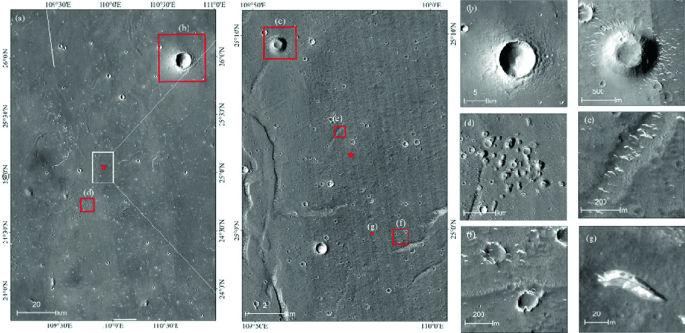
Among the most promising regions under consideration are the northern lowlands of Chryse Planitia and Utopia Planitia, as well as the ancient terrains of northwest Arabia Terra, each offering unique geological windows into Mars’ past. Studies have highlighted the scientific value of the northern Chryse Planitia region, specifically a zone characterized by a complex interplay of fluvial, periglacial, and tectonic processes. This area, shaped by ancient flooding and subsurface volatile activity, shows evidence of olivine exposures, conical landforms potentially associated with mud volcanism, and polygonal terrains indicative of volatile loss, suggesting a prolonged history of water and subsurface material movement that is relevant to understanding past habitability.
A separate study identified 46 potential paleolakes in the northwest Arabia Terra, with 37 being reported for the first time, which are considered ideal targets due to their prolonged aqueous history and the detection of sedimentary deposits and possible aqueous minerals like clays and sulfates. Based on this, three high-value candidate landing regions have been proposed in this area to better understand Mars’ habitability. Utopia Planitia has also been emphasized as a key candidate, due to its extensive traces of ancient liquid water activity and abundant life-indicating minerals, making it a scientifically valuable target. Furthermore, scientists are investigating impact craters as potential landing sites, as they can serve as “drills” that expose deep subsurface material. For instance, McLaughlin Crater in northwest Arabia Terra offers strong evidence for impact-induced hydrothermal activity, a process that creates conditions favorable for thermophilic life and the preservation of biosignatures, although distinguishing between pre-impact and post-impact alteration in samples poses a challenge.
Beyond the scientific allure of these ancient lakebeds and hydrothermal systems, engineering constraints and planetary protection protocols are paramount in the final site selection. The mission must land within a specific latitude range (17°–30°N) that is feasible for the spacecraft’s engineering capabilities, and the terrain must be safe for landing, requiring slopes of less than 15 degrees. A major operational consideration is the threat of Martian dust storms, as the tentative landing areas in Chryse and Utopia are primary dust storm source regions in the northern hemisphere, which could jeopardize the landing, sampling, and ascent phases of the mission. To mitigate this, scientists are analyzing the spatio-temporal patterns of dust storms to prioritize sites with lower risk. Perhaps most critically, the mission is preparing for a rigorous approach to planetary protection to maintain the integrity of the samples.
China plans to build the world’s first planetary protection laboratory, which will implement a two-way biosecurity protocol: preventing Earth microorganisms from contaminating Mars and ensuring the returned Martian samples are safely isolated and not contaminated by terrestrial biology. This is essential for the mission’s ultimate goal: to distinguish between genuine Martian biosignatures and Earth-based contamination. The mission also plans to drill up to about two meters below the Martian surface to collect samples that have been shielded from the harsh radiation and oxidation that alter surface materials, thereby increasing the chance of finding well-preserved traces of life or pristine geological records. The selection of the final landing site is a delicate balance of scientific potential and engineering safety, aiming to bring back a sample that could answer one of humanity’s oldest questions: are we alone in the universe?