
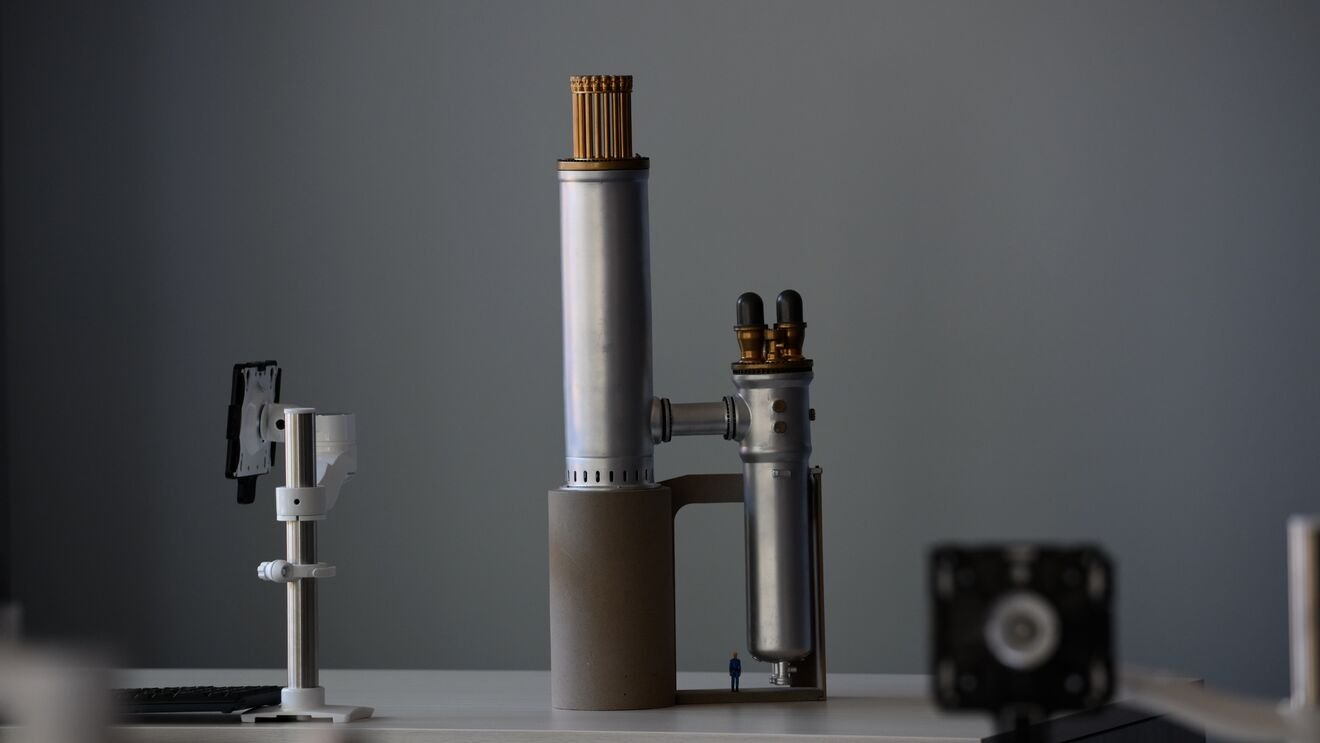
As energy systems worldwide shift away from fossil fuels, the search for continuous, zero-carbon baseload electricity has brought Small Modular Reactors (SMRs) into center stage. Generating up to 300 Megawatts electrical (MWe) per unit—roughly one-third the capacity of traditional gigawatt-scale facilities—SMRs represent a structural paradigm shift in nuclear engineering. Rather than constructing custom, massive infrastructure projects on-site over a decade, modular designs rely on standardized, factory-manufactured components that are transported by truck or rail and assembled on location. This promise of reduced financial risk, rapid deployment, and enhanced safety has sparked immense excitement across global markets. However, whether these advanced systems genuinely represent the future of nuclear energy or simply an expensive transitional luxury depends on resolving lingering economic, technological, and regulatory hurdles.
The standard arguments favoring SMRs stem from the economic failures of traditional legacy nuclear plants. Conventional gigawatt reactors are notoriously plagued by multi-billion-dollar budget overruns and lengthy decade-long construction delays. In contrast, factory mass production allows manufacturers to benefit from economies of series rather than economies of scale. Proponents emphasize that prefabricated construction drastically cuts high capital upfront costs and enables step-by-step additions as regional electricity demand grows. Furthermore, SMRs are uniquely suited to replace legacy coal power stations, as they can reuse existing transmission line infrastructure and cooling water connections, preserving local jobs while decarbonizing heavy industries.
Beyond basic electricity generation, SMRs unlock applications previously inaccessible to traditional nuclear reactors. Advanced designs operating at high temperatures can generate industrial process heat required for hydrogen production, oil refining, chemical manufacturing, and large-scale seawater desalination. According to energy market analysts, “The ability of modular reactors to operate close to industrial centers and provide high-temperature heat alongside continuous power makes them a crucial Swiss Army knife for hard-to-abate sectors.” This versatility has attracted massive private capital, particularly from tech giants and data center operators who urgently require unyielding, round-the-clock clean energy to fuel rapidly expanding artificial intelligence infrastructure.
Safety mechanisms built into modular systems mark another substantial technical evolution. Traditional nuclear units require active cooling systems powered by external electrical grids to prevent catastrophic core meltdowns. SMR designs overwhelmingly rely on passive safety systems that utilize basic physical laws, such as gravity, natural convection, and pressure differentials, to cool the core without human intervention or electrical power. Nuclear engineers point out, “By reducing the thermal inventory and incorporating passive cooling, these reactors can shut down and remain safe indefinitely during off-grid emergencies without operator action.” This dramatically reduces the physical footprint required for emergency planning zones around the installation.
Despite the overwhelming enthusiasm, significant industrial and academic skepticism persists. Critics argue that the theoretical economic advantages of SMRs remain largely unproven in commercial real-world conditions. First-of-a-kind projects have frequently encountered cost escalations that rival traditional plants, primarily because factory production lines require high volume orders to achieve genuine unit cost reductions. Independent energy researchers note, “Without hundreds of standardized orders lined up globally, SMRs risk suffering from high initial capital costs per megawatt without achieving the promised factory savings.” Without serialized manufacturing, smaller outputs mean higher electricity costs per unit generated compared to massive conventional reactors.
The global waste and fuel supply chains add further complexity to the modular narrative. Certain scientific studies suggest that particular SMR designs could produce more radioactive waste per unit of energy generated than optimized large-scale reactors due to neutron leakage characteristics. Furthermore, advanced Generation IV modular reactors frequently require High-Assay Low-Enriched Uranium (HALEU), a specialized fuel enriched up to 20%. Materials scientists emphasize, “Deploying advanced high-temperature SMRs globally requires establishing entirely new, secure fuel supply pipelines for HALEU to prevent severe bottlenecks prior to widespread adoption.” Developing these enrichment capabilities outside concentrated supply regions remains a critical commercial prerequisite.
Regulatory bodies worldwide are currently adapting to evaluate these novel designs. Traditional nuclear regulatory framework is notoriously slow and tailored specifically to massive light-water facilities. Standardizing safety reviews across international jurisdictions is essential so that a single reactor design approved in one nation can be manufactured and shipped to another without costly redesigns. Policy experts highlight, “Regulatory harmonization is the linchpin of the SMR movement; if every country demands unique design modifications, factory-line efficiency is entirely dismantled.” Major regulatory authorities, including those in North America and Europe, have begun modernizing licensing pathways to streamline approvals for modular platforms.
Government support and international momentum demonstrate that modular nuclear systems are shifting rapidly from theoretical proposals to operational deployment. Major economies are deploying significant public funds, such as multi-hundred-million-dollar federal allocation programs and designated energy missions, to de-risk private investment and build pioneer units. Landmark developments—including early commercial grid connections in China, pilot projects progress in North America, and growing state initiatives in Eastern Europe—prove that project momentum is tangible. These early demonstration units serve as crucial technical baselines for verifying performance, safety, and construction timelines.
In conclusion, Small Modular Reactors represent a vital evolutionary leap in the nuclear sector, but they do not immediately render large-scale reactors or renewable energy sources obsolete. Instead, SMRs serve as a flexible, high-density partner within a diversified clean energy portfolio. Their ability to provide resilient, carbon-free power directly to industrial sites, remote grids, and energy-dense facilities positions them as a critical tool for future energy security. While widespread commercial realization depends heavily on establishing standardized global supply chains and demonstrating long-term cost competitiveness, SMRs are undoubtedly set to play an indispensable role in the future of world energy infrastructure.