
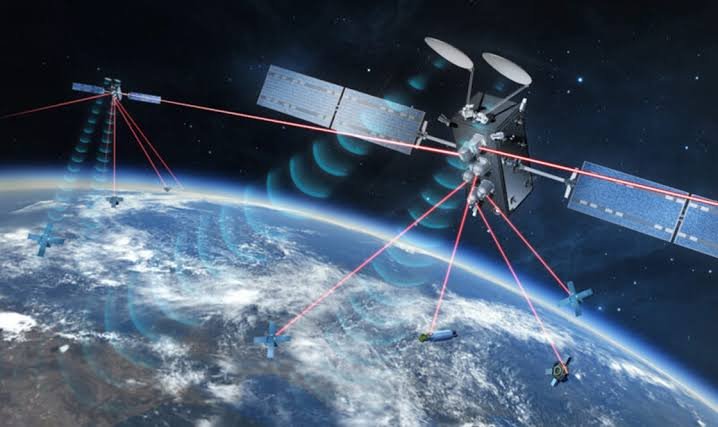
NATO countries are rapidly synchronizing their military satellite networks in a coordinated push to counter emerging threats from Russia and China, enhance battlefield intelligence, and reduce dependence on American space assets. This synchronization—often called “satellite interoperability” or “space domain integration” —involves sharing orbital data, linking national reconnaissance satellites into a common NATO network, and standardizing ground stations and communication protocols. The move marks one of the most significant shifts in Western military space policy since the Cold War.
The primary driver is Russia’s and China’s development of anti-satellite (ASAT) weapons, including ground-based lasers, jammers, and kinetic interceptors. In 2021, Russia destroyed its own defunct satellite with a missile, creating thousands of debris pieces that threatened the International Space Station. China has tested similar capabilities. NATO planners fear that in a future conflict, individual national satellites could be blinded or destroyed one by one. By synchronizing their fleets—sharing early-warning data, interlinking imaging satellites, and creating redundant communication paths—NATO hopes to ensure that if one country’s satellite is knocked out, others can fill the gap.
A second major reason is the war in Ukraine. Since 2022, NATO has relied heavily on commercial and military satellites for intelligence, surveillance, and reconnaissance (ISR). Ukraine’s military has used satellite imagery and Starlink communications to target Russian forces. But NATO’s space assets were not designed to work together seamlessly. For example, U.S. satellites, French optical satellites, and German radar satellites operated on different frequencies and data formats. Synchronization allows near-real-time sharing of targeting data across allies, cutting the “sensor-to-shooter” cycle from hours to minutes.
Key institutional steps have accelerated this trend. In 2020, NATO established a Space Centre at Ramstein Air Base in Germany to coordinate allied space operations. In 2022, NATO’s leaders declared space as a “fifth operational domain” alongside land, sea, air, and cyber. In 2023, NATO launched the “Alliance Persistent Surveillance from Space” (APSS) initiative, which pools national and commercial satellite imagery into a shared database. Seventeen NATO members plus Finland and Sweden have joined APSS. The program aims to reduce Europe’s reliance on U.S. space intelligence, which currently provides the bulk of NATO’s high-resolution imagery.
France is a key player. Its “CSO” (Composante Spatiale Optique) military satellites are being integrated with Germany’s “SARah” radar satellites and Italy’s “COSMO-SkyMed” system. These three systems—optical, radar, and infrared—complement each other: optical satellites need daylight and clear skies, while radar satellites can see through clouds and at night. By synchronizing their tasking schedules, NATO can maintain 24/7 coverage of critical areas like the Baltic Sea, Black Sea, and Arctic. The U.S. Space Force is also sharing its Space-Based Infrared System (SBIRS) early-warning data with NATO allies, though at a lower resolution than what Washington keeps for itself.
Another important point is standardization. NATO is pushing for common ground station architectures and data link standards so that a French ground station can receive data from a U.S. satellite and vice versa. This requires encryption compatibility, frequency deconfliction, and common operating software. The goal is a “virtual constellation” —a network of national satellites that behaves like a single system. By 2027, NATO aims to have 50+ military and dual-use satellites synchronized under this framework.
Why now? Several factors converge. First, commercial space has exploded—companies like SpaceX, Planet Labs, and Maxar offer cheap, high-revisit imagery. NATO wants to integrate commercial data with military satellites to increase resilience. Second, China’s space program has grown rapidly: it now has hundreds of military satellites, including advanced reconnaissance and electronic warfare platforms. Third, Russia’s invasion of Ukraine showed that space is not a sanctuary—jamming and cyberattacks on satellite links are now routine. Synchronization is a force multiplier that costs less than building new satellites from scratch.