
In the rapidly evolving theater of modern warfare and global connectivity, Elon Musk’s SpaceX has fundamentally altered the landscape of orbital technology. For years, the public has associated the company’s satellite constellation with Starlink, a consumer-grade internet service that has connected remote villages, provided crucial links in war zones, and disrupted the global telecommunications market. However, a quieter, more secretive sibling has emerged from the shadows: Starshield. While both rely on SpaceX’s reusable rocket technology and low Earth orbit (LEO) architecture, they represent two vastly different missions: one focused on commercial global connectivity, and the other designed for classified government espionage and national security.
The fundamental difference between the two lies in their primary customer base and overarching purpose. Starlink is a commercial product designed for civilian use, private enterprises, and standard military communications. It aims to provide high-speed, low-latency broadband internet to anyone on Earth, from a rural homeowner in Montana to a hospital in Ukraine. Starshield, conversely, is a government-focused, defense-oriented platform. It is not sold to consumers. Instead, it is tailored specifically for the U.S. Department of Defense (DoD), intelligence agencies, and allied nations, providing secure, dedicated capabilities for surveillance, reconnaissance, and secure communications that Starlink cannot guarantee.
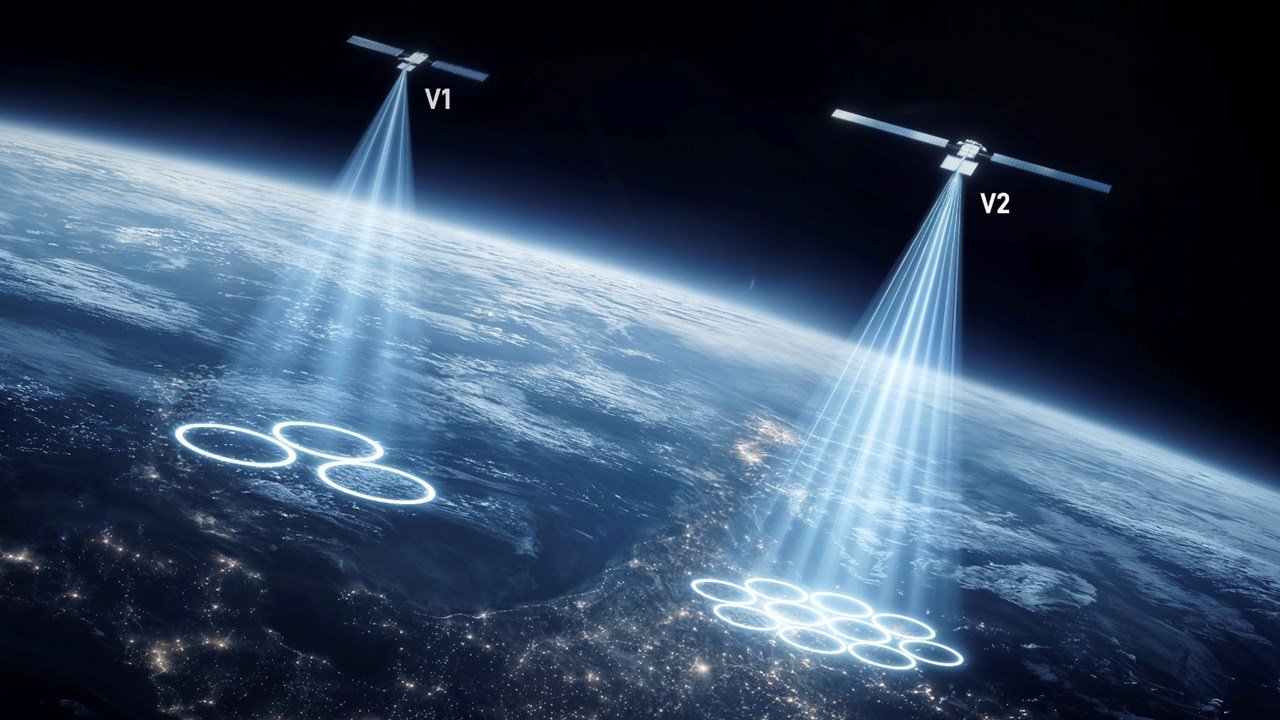
This divergence begins with the physical hardware and payload integration. Starlink satellites are essentially flying routers. They are equipped with phased-array antennas and laser inter-satellite links to beam internet data down to user terminals. While Starlink has demonstrated military utility—most notably in Ukraine—it lacks the specialized sensors required for intelligence gathering. Starshield satellites, however, are modular platforms capable of hosting a variety of classified payloads. According to SpaceX, Starshield is designed to support Earth observation, sensing, and advanced communication. This means these satellites can be equipped with high-resolution optical or radar imaging sensors, signals intelligence (SIGINT) equipment, and other spy-grade technology to monitor foreign militaries, track missile launches, or observe ground movements in real-time.
Another critical distinction is the level of control and data ownership. When a consumer or a foreign government uses Starlink, the data travels through SpaceX’s commercial network. While encrypted, the network management and routing remain under SpaceX’s purview, leading to controversies such as Musk’s decision to restrict Ukrainian drone attacks on Crimea. Starshield, however, is designed for “government-owned” architecture. The U.S. Space Force and the National Reconnaissance Office (NRO) want to own the satellites and the data they produce. Under the Starshield model, SpaceX acts as a manufacturer and launch provider, but the government operates the payloads and controls the intelligence. This distinction is vital for national security; the U.S. cannot rely on a commercial CEO’s whims for critical wartime intelligence.
The scale and orbit of the two systems also differ, though they share the same launch infrastructure. Starlink is a mega-constellation consisting of thousands of satellites in low Earth orbit (LEO) —approximately 340 miles up—to minimize latency for internet users. Starshield satellites are also in LEO, but they are fewer in number and positioned in specific orbital planes to maximize coverage over areas of geopolitical interest. Notably, SpaceX has partnered with the NRO to build a classified spy satellite network under the Starshield banner, reportedly consisting of hundreds of satellites. This network is designed to provide persistent surveillance of global hotspots, a capability traditionally held by expensive, few-in-number government satellites.
The security protocols and resilience of the two systems are markedly different. Starlink uses commercial-grade encryption to protect user data, but its signals are susceptible to jamming and cyber-attacks, as seen in the conflict in Ukraine. Starshield is built with hardened cybersecurity, anti-jamming technology, and proprietary encryption standards that meet the strict requirements of the U.S. military. Furthermore, Starshield satellites are designed to be “disaggregated” —meaning the failure of one satellite does not cripple the entire network—and are equipped with laser communication terminals that allow them to transmit data to each other without relying on vulnerable ground stations. This makes Starshield a more resilient asset in a peer-to-peer conflict against adversaries like China or Russia.