
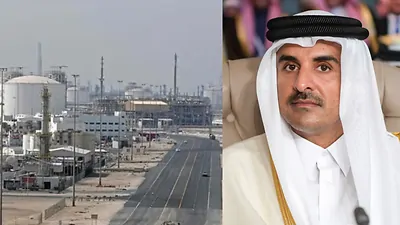
Qatar has issued a stark and unusually blunt warning to its citizens, telling them to “be prepared for the worst” as the wider region remains on a knife-edge amid the continuing war in Gaza and escalating tensions between Israel, Hezbollah, and Iran. The advisory, circulated through Qatar’s Ministry of Foreign Affairs and its diplomatic missions, marks one of the most serious public safety alerts issued by a Gulf state in recent months and signals deep concern that the conflict could spiral into a broader regional war.
The warning urged Qatari nationals abroad to exercise extreme caution, maintain close contact with embassies, and prepare contingency plans in case airspace closures, border shutdowns, or sudden military escalation leave them stranded. Citizens were advised to avoid non-essential travel to high-risk areas, keep documents and emergency supplies ready, and monitor official channels for rapid updates. The message was chilling in its directness: Doha does not typically use language like “prepare for the worst,” and its use now reflects a growing belief that the situation may deteriorate quickly and unpredictably.
The alert comes as the region remains on edge more than a year after the October 7, 2023, Hamas-led attacks on Israel and the devastating Israeli military campaign in Gaza. Diplomatic efforts to secure a ceasefire and hostage-release deal have repeatedly stalled, while fighting has continued across multiple fronts. Israel has been engaged in near-daily exchanges of fire with Hezbollah along the Lebanon-Israel border, and it has carried out strikes targeting Iranian-linked assets in Syria and elsewhere. Iran and Israel have also traded direct blows, including missile and drone attacks, raising fears of a full-scale confrontation that could draw in the United States and other powers.
Qatar has played a central role in mediation efforts, hosting Hamas’s political office and helping broker previous pauses in fighting. That role has given Doha unique leverage and insight into the negotiations, but it has also exposed Qatar to pressure from multiple sides. The fact that Doha is now warning its own citizens to prepare for the worst suggests that its leadership sees a real possibility that diplomacy could fail and that the conflict could expand beyond Gaza. The warning may also be intended to shield Qatar from blame if a wider war erupts, by showing that it publicly cautioned its people in advance.
The timing of the warning is significant. It follows a series of escalations that have unsettled even the most seasoned regional observers. Israel’s military operations in Lebanon have intensified, with airstrikes hitting areas near Beirut and ground incursions targeting Hezbollah infrastructure. Hezbollah has responded with rocket and drone attacks on Israeli military sites and communities. Iran, meanwhile, has warned of “crushing” responses to any Israeli attack on its territory or allies, and its proxies in Iraq, Syria, and Yemen have continued to launch attacks on U.S. and Israeli-linked targets. The Houthis in Yemen have disrupted Red Sea shipping, prompting Western military responses. Every one of these fronts carries the risk of miscalculation or unintended escalation.
For ordinary Qataris and residents, the warning is a reminder that the Gulf, despite its relative stability and wealth, is not insulated from the region’s turbulence. Qatar hosts the largest U.S. military base in the Middle East, Al Udeid Air Base, which makes it a potential target in any wider conflict. Its airspace is used by both military and civilian aircraft, and any regional war could quickly close major routes through the Gulf. Qatari citizens traveling in Europe, Asia, or neighboring Arab states could face sudden flight cancellations, border closures, or worse if hostilities spread.
The advisory also reflects a broader pattern of Gulf states quietly updating their emergency plans. Saudi Arabia, the United Arab Emirates, and Kuwait have all issued travel warnings or updated security guidance in recent months, though few have used language as stark as Qatar’s. The message to citizens is clear: do not assume that embassies can evacuate you quickly, and do not assume that commercial flights will continue operating normally. In a crisis, governments may be overwhelmed, and individuals may need to rely on their own preparations for days or longer.
Diplomats and security analysts say the warning should not be dismissed as alarmist. “When a state like Qatar—which has been deeply involved in mediation and has strong ties to both Hamas and the United States—says ‘prepare for the worst,’ it is signaling that its intelligence and diplomatic channels are picking up serious risks,” one regional security analyst said. “This is not routine travel advice. It is a hedge against a scenario in which the region goes dark.”
The human dimension is equally important. Qatar’s warning affects not only its own citizens but also the large expatriate population that lives and works in the country, as well as Qatari students, patients, and businesspeople abroad. Families are being told to discuss emergency plans, keep passports and medications accessible, and stay informed through official sources rather than social media rumors. The psychological impact of such a warning should not be underestimated: it tells people that their government believes the unthinkable is possible.
What happens next depends largely on decisions made in Jerusalem, Beirut, Tehran, and Washington. A ceasefire in Gaza could calm the region; a major Israeli operation in Lebanon or an Iranian retaliation could ignite it. Qatar’s warning is a signal that the window for diplomacy may be narrowing. It is also a reminder that in a region where wars can spread across borders in hours, preparedness is not paranoia—it is prudence. For now, Qatar is telling its people to hope for the best but prepare for the worst, and that message is resonating far beyond Doha.