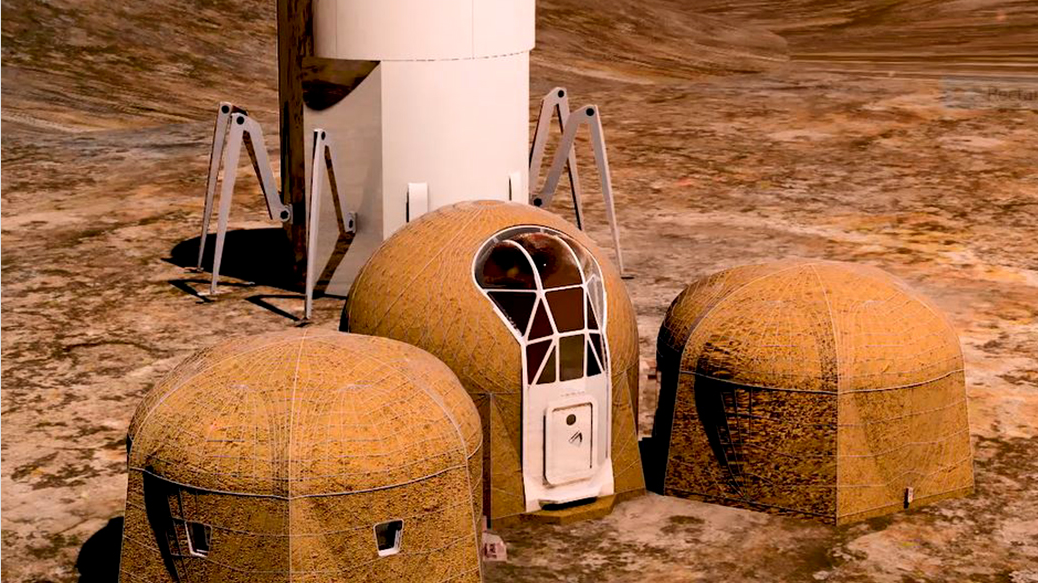
Researchers in Hong Kong are pioneering innovative methods to construct sustainable Martian housing using unique biological materials and advanced manufacturing technologies. Facing the extreme logistical and environmental constraints of the Red Planet, a team of scientists has turned to an unconventional source of inspiration: freeze-dried fruit packaging and preservation techniques. By utilizing locally sourced resources combined with biological agents, this approach aims to bypass the heavy burden of carrying traditional building materials across space.
The core of this breakthrough relies on creating 3D-printable structural blocks composed of Martian sand, gelatin, and genetically engineered yeast. Traditional construction methods on Earth require massive amounts of energy and heavy machinery, luxuries that are practically unavailable for early interplanetary missions. To solve this, the Hong Kong research team engineered specialized yeast cells that actively produce natural adhesive proteins. When mixed with a gelatin hydrogel and Martian soil simulants, these proteins act as an organic bio-cement, binding loose sand particles tightly together into high-strength interlocking blocks.
This novel technique significantly reduces the energy footprint typically associated with extraterrestrial manufacturing. Instead of melting heavy rock or hauling dense concrete modules from Earth, automated 3D printers can process raw Martian dirt on-site to layer durable shelters. Furthermore, the biological building blocks exhibit remarkable structural integrity, matching the compressive strength of standard lightweight concrete while retaining the advantage of being fully recyclable and sustainable. Old or damaged structures can theoretically be broken down, rehydrated, and reprinted into new configurations.
Despite these promising chemical and mechanical advancements, significant logistical obstacles still stand in the way of actual Martian deployment. Engineers are currently testing the endurance of these bio-bricks under strict simulated Martian atmospheric conditions, checking how they hold up against sub-zero temperatures, intense radiation, and low-pressure environments. Additionally, mission planners must overcome the massive economic and physical bottlenecks of heavy equipment transport and continuous surface energy generation. Solving these earthly supply limits remains critical before astronauts can safely inhabit these organic Martian habitats.
Ultimately, transforming alien dirt into reliable shelter bridges the gap between science fiction and tangible human survival. While establishing a permanent colony on Mars is still years away, these bio-inspired engineering methods offer a realistic blueprint for future space exploration. By mastering the chemistry of living building materials, humanity moves one step closer to making multi-planetary living an achievable reality.