
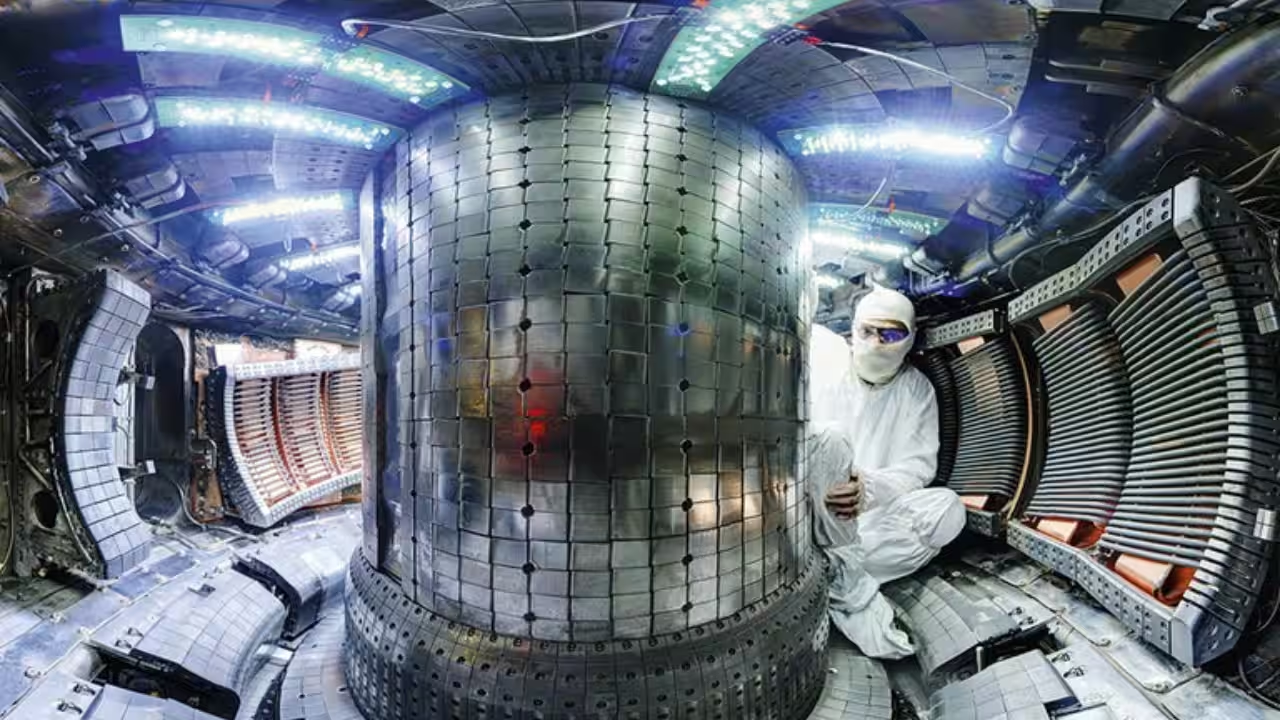
The landscape of nuclear fusion energy has entered a transformative and decisive new phase, transitioning gradually from pure experimental physics into a strategic global priority. Recent global assessments, such as the International Atomic Energy Agency’s (IAEA) World Fusion Outlook, highlight that fusion energy progress is accelerating at an unprecedented pace. Across the globe, more than 160 fusion facilities are currently operational, under construction, or planned, reflecting an intense wave of momentum. This renaissance is largely fueled by surging private investment exceeding $10 billion, drawing capital from sovereign wealth funds, major utility corporations, and forward-thinking energy enterprises eager to secure clean, baseload power for the future.
At the center of this international endeavor remains ITER, the world’s largest magnetic confinement fusion experiment, which unites 33 nations and thousands of scientists to prove the ultimate feasibility of a large-scale, carbon-free tokamak reactor. Alongside traditional tokamak designs, fusion technology is diversifying rapidly through parallel engineering pathways. Researchers and private developers are actively exploring a wide spectrum of configurations, including stellarators, laser-driven inertial confinement systems, magneto-inertial concepts, and field-reversed configurations. This structural diversity is fostering a competitive ecosystem of innovation, allowing startups and public laboratories alike to tackle stubborn plasma stability and containment hurdles from multiple angles simultaneously.
A major milestone steering this acceleration is the integration of advanced computational tools and artificial intelligence, which have revolutionized how scientists predict and control plasma turbulence. Controlling a superheated soup of ionized gas that reaches temperatures hotter than the core of the sun requires microscopic adjustments to magnetic fields thousands of times faster than human reflexes allow. By deploying machine learning models, research teams can now anticipate plasma disruptions before they occur, drastically reducing the risk of damage to reactor walls and dramatically improving continuous operational confinement times. Recent experimental campaigns on premier international devices have successfully maintained power plasmas with extended energy turnovers lasting several minutes, crossing critical operational thresholds that bring steady-state electricity production closer to reality.
Furthermore, the economic and systemic outlook for fusion has shifted dramatically due to comprehensive global modeling conducted by institutions like the Massachusetts Institute of Technology (MIT). These models demonstrate that fusion is projected to play a monumental role in the future electricity mix, potentially capturing anywhere from 10% to 50% of global electricity generation by the year 2100, depending on capital cost reductions and policy adoption. Beyond energy generation, the broader scientific ecosystem is witnessing fascinating cross-disciplinary spin-offs, including pioneering private sector demonstrations in nuclear transmutation and isotope processing—such as high-rate advanced particle reactions capable of converting elements like mercury into stable gold isotopes at scales surpassing prior research benchmarks.
Despite these breathtaking scientific strides, significant engineering and commercial hurdles remain unresolved. Building materials must be engineered to withstand punishing neutron bombardment over decades without degrading, and the overall net electrical efficiency—ensuring the reactor produces substantially more energy than it consumes to run its powerful magnets and heating systems—must be reliably demonstrated on an industrial scale. Nevertheless, with early power purchase agreements signaling profound end-user confidence, bespoke regulatory frameworks taking shape, and robust international cooperation smoothing the path forward, nuclear fusion is no longer viewed as a distant science-fiction dream. It is rapidly crystallizing into the ultimate horizon of clean, limitless, and sustainable baseload energy for human civilization.