
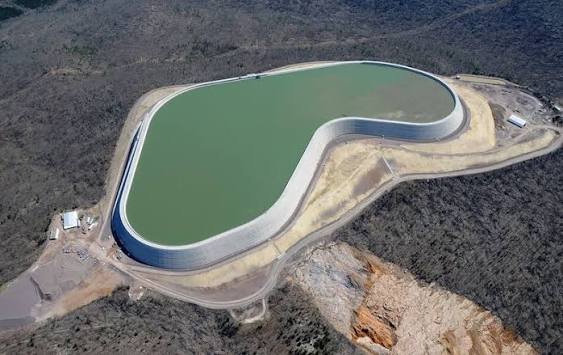
The Taum Sauk reservoir mishap, which occurred in the pre-dawn hours of December 14, 2005, stands as one of the most significant non-fatal dam failures in modern American engineering history. Located in the St. Francois Mountains of southeastern Missouri near Lesterville, the Taum Sauk Hydroelectric Power Station was originally constructed in the early 1960s by the Union Electric Company, which later became AmerenUE. The facility functioned as a pumped-storage hydroelectric plant, essentially operating like a giant rechargeable battery for the regional electrical grid. During periods of low electricity demand, such as overnight, massive reversible pump-turbines drew water from a lower reservoir on the East Fork of the Black River and pumped it up a 7,000-foot tunnel carved through granite into an Upper Reservoir perched atop Proffit Mountain. When peak electricity demand arrived during the day, the water was released back down the tunnel to spin the turbines and generate up to 440 megawatts of clean, immediate power.
Unlike conventional dams that block a natural river valley, the Taum Sauk Upper Reservoir was a completely artificial, kidney-shaped basin formed by blasting the top off a mountain and encircling the perimeter with a 100-foot-tall compacted rockfill embankment. Because loose rockfill cannot hold water on its own, the interior slope was lined with concrete panels, and a 10-foot concrete parapet wall crowned the top of the dike to prevent waves from splashing over. Crucially, the original designers made a fateful decision: because the upper reservoir had no natural watershed draining into it and relied entirely on controlled pumping from below, they omitted an emergency overflow spillway. Engineers believed that automated controls and pump shutoff switches would make overfilling impossible, leaving the earthen and rockfill structure completely vulnerable if water ever rose above the parapet wall.
Over four decades of operation, the facility’s operational profile shifted dramatically, placing unprecedented stress on aging infrastructure. Originally designed to cycle about 100 days a year, deregulation of the energy market in the late 1990s and early 2000s led AmerenUE to run the plant almost daily—sometimes cycling twice in a single day—to capitalize on fluctuating electricity prices. Furthermore, persistent water leakage through the concrete liner prompted the utility to install a geomembrane liner in 2004. During this renovation, contractors mounted the primary water-level pressure sensors inside plastic pipes anchored along the reservoir floor and wall. However, these anchorages were inadequately secured against the violent, turbulent currents created by daily filling and draining. Sometime after spring 2004, the conduits broke loose and floated upward, causing the sensors inside to register artificially low water levels.
Warning signs appeared well before the final catastrophe. On September 27, 2005, water actually overtopped the parapet wall during a pumping cycle, sending a cascade down the outer rockfill slope before operators noticed and switched to generation mode. Rather than shutting down the plant for a thorough mechanical overhaul, management attributed the incident to wind-driven waves from the remnants of Hurricane Rita. Although a subsequent dive inspection revealed that the sensor conduits had detached and shifted, operators implemented only a temporary software adjustment—lowering the programmed shutoff point by a few feet—while scheduling permanent repairs for a later outage. Compounding this vulnerability, emergency high-water backup probes mounted near the top of the parapet wall had been placed slightly too high and lacked proper calibration, stripping the automated system of an independent fail-safe.
At approximately 5:15 a.m. on December 14, 2005, the automated pumping cycle neared completion. Because the dislodged sensors falsely reported that the reservoir still had room, the giant pumps continued driving water into the basin at thousands of cubic feet per second. Water rose past the brim of the concrete parapet wall and began pouring over the top. For roughly six to seven minutes, an uncontrolled sheet of water cascaded down the unprotected outer face of the rockfill embankment. The rushing water rapidly scoured away the underlying rock and soil, undermining the foundation of the concrete parapet wall until a massive section tipped over. Once the crest gave way, the breach expanded catastrophically, unleashing 1.3 billion gallons (nearly 6 billion liters) of water down the steep western flank of Proffit Mountain in less than twelve minutes.
The resulting wall of water, carrying millions of tons of boulders, uprooted trees, twisted rebar, and shattered concrete, tore a 700-foot-wide scar straight down the mountainside and plowed directly into Johnson’s Shut-Ins State Park. The surge obliterated the park’s campgrounds, visitor facilities, and ancient geological formations, stripping soil down to bare bedrock before emptying into the East Fork of the Black River and the lower reservoir. Miraculously, no lives were lost. Because the disaster struck in mid-December during freezing weather, the campgrounds were empty. The only people in the flood’s path were park superintendent Jerry Toops, his wife, and their three young children, whose house was swept completely off its foundation. Though injured and suffering from severe hypothermia, all five family members were rescued from the debris and survived.
The aftermath of the Taum Sauk failure triggered sweeping regulatory, legal, and engineering reforms across the United States. Investigations by the Federal Energy Regulatory Commission (FERC) and independent engineering panels concluded that the disaster was entirely preventable, citing flawed sensor installation, inadequate management oversight, dismissal of prior warnings, and the absence of a physical overflow spillway. AmerenUE paid over $177 million in settlements, fines, and environmental restoration costs to rebuild Johnson’s Shut-Ins State Park. Missouri overhauled its state dam safety laws, which had previously exempted hydroelectric dams from state inspection, and FERC instituted strict nationwide mandates requiring independent redundancy in water-level instrumentation, physical spillways or fail-safe shutoffs, and rigorous root-cause investigations for any operational anomaly. Ameren eventually demolished the remains of the failed embankment and reconstructed the Upper Reservoir using roller-compacted concrete, incorporating a massive, un-gated emergency spillway—ensuring that if the pumps ever overfill the basin again, gravity alone will safely channel the excess water away without threatening the dam.