China is set to launch its most ambitious lunar mission to date this weekend, as the Chang’e 7 probe prepares to embark on a groundbreaking expedition to the Moon’s south pole. The spacecraft and its Long March-5 Y14 carrier rocket were vertically transferred to the launch pad at the Wenchang Spacecraft Launch Site in Hainan on August 19, finalizing preparations for a launch scheduled for August 24, 2026 . This uncrewed mission represents a monumental step in China’s space ambitions, aiming to achieve technological breakthroughs in high-precision soft landing, legged movements, and the exploration of the solar system’s most extreme environments . Scientists and space agencies worldwide have described the Chang’e 7 as the “most ambitious” robotic mission to the Moon ever attempted, primarily due to its singular and challenging objective: to search for frozen water ice in permanently shadowed craters that have not seen sunlight for billions of years .
The mission’s primary target is the lunar south pole, a region of immense scientific and strategic interest that has become the focal point of a new international space race. Unlike most of the Moon, which experiences 14-day-long nights, the high peaks and crater rims near the south pole receive near-continuous sunlight, providing a stable environment and a reliable source of solar power for future bases . More critically, the deep craters in this region are among the coldest known locations in the solar system, with temperatures plunging to a staggering minus 203 degrees Celsius . Scientists believe these conditions act as a natural deep freezer, potentially preserving ancient deposits of water ice and other volatile compounds for billions of years . The presence of accessible water is crucial for the future of human space exploration, as it could be converted into drinking water, breathable oxygen, and even rocket propellant, drastically reducing the need for costly resupply missions from Earth .
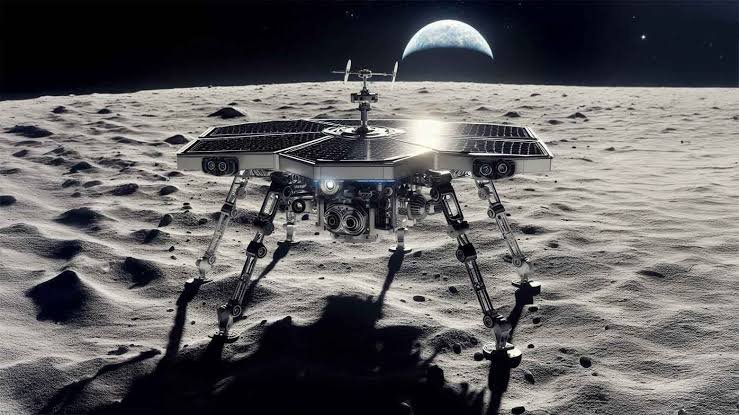
To conquer these treacherous, sunless craters, Chang’e 7 will deploy a highly innovative component: a novel “hopping” probe . While traditional wheeled rovers struggle with the steep, jagged terrain of crater rims, this specialized robot is designed to use small thrusters to fly directly into the pitch-black interiors . Once inside, it will land on six articulated legs, using its onboard water molecule analyzer to hunt for signs of ice and volatile compounds beneath the surface regolith . After completing its survey, the probe is designed to hop back out into the sunlit areas to recharge its power systems, with Chinese state media reporting that it is expected to complete at least three such jumps during its mission . This four-part spacecraft—comprising an orbiter, a lander, a wheeled rover, and the hopping probe—will work in concert to conduct a comprehensive environmental and resource survey of the lunar south pole, marking the first time a mission has attempted to explore such a variety of lunar terrain simultaneously .
The Chang’e 7 mission is not merely an act of scientific discovery but a critical stepping stone in China’s long-term strategic goal of establishing a permanent human presence on the Moon . Data gathered by Chang’e 7 and its planned successor, Chang’e 8, expected around 2029, are intended to lay the groundwork for a crewed Chinese lunar landing, targeted for before 2030 . This effort is part of a broader plan, which includes the development of a permanent international lunar research station near the south pole in collaboration with Russia, with a target completion date of 2035 . Consequently, China’s ambitious timeline places it in direct alignment with NASA’s Artemis program, which aims to return humans to the Moon and establish a sustainable presence there in a similar timeframe, highlighting the intensifying international competition to explore and utilize lunar resources . With India’s successful Chandrayaan-3 landing in 2023 and missions planned by NASA, the European Space Agency, and others, the race for the Moon’s frozen water is well and truly underway .