
The convergence of a major military conflict and the strategic vulnerability of the world’s most critical oil chokepoint has created one of the most severe energy crises in decades. The ongoing war involving the United States, Israel, and Iran has effectively transformed the Strait of Hormuz from a bustling maritime highway into a high-risk war zone, sending shockwaves through global energy markets and forcing immediate, dramatic changes in oil supply dynamics. The situation, which escalated rapidly after the conflict began on February 28, 2026, has seen oil prices briefly touch $120 per barrel, major producers like Iraq slash output by millions of barrels, and world leaders exchange threats of unprecedented retaliation .
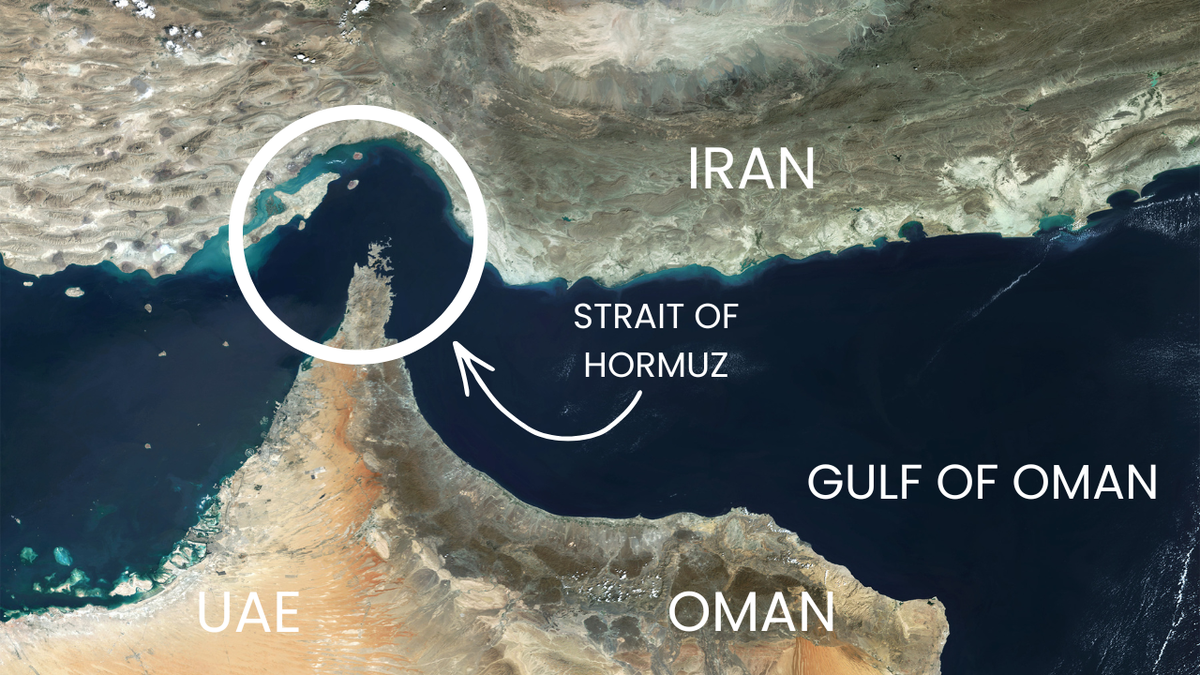
At the heart of the crisis is the Strait of Hormuz itself, a narrow waterway bordered by Iran to the north and Oman and the UAE to the south. At its narrowest point, it is just 33 kilometers wide, but its depth allows the world’s largest crude oil tankers to pass . Its strategic importance cannot be overstated. In 2025, an estimated 20 million barrels of oil per day flowed through the strait, representing nearly one-fifth of the world’s total oil supply and about 31% of global seaborne oil flows . This energy trade is valued at nearly $600 billion annually, with the crude originating from major Gulf producers including Saudi Arabia, Iran, Iraq, Kuwait, Qatar, and the United Arab Emirates . The bulk of this oil, roughly 82%, is destined for Asian markets, powering the economies of China, India, Japan, and South Korea .
The current turmoil began when US and Israeli forces launched strikes against Iran, prompting immediate retaliation. In a dramatic escalation, Iran’s General Sardar Jabbari issued a stark warning that Tehran would “not let a single drop of oil leave the region” . This threat quickly materialized into action, with Iranian attacks on merchant vessels near the strait, which have, according to the International Maritime Organisation, resulted in the deaths of at least seven mariners . By the first week of March, commercial tanker traffic through the strait had all but ceased. Only Iran-linked tankers and a couple of vessels claiming Chinese ownership were seen transiting, as shipowners and charterers deemed the risk to their vessels and crews too high, despite US promises of naval escorts and new maritime reinsurance . For all practical purposes, analysts declared the strait “de facto closed” .
The immediate consequence of this blockade has been a forced and dramatic curtailment of oil production from Gulf nations unable to export their crude. Storage tanks onshore quickly filled to capacity, leaving producers with no choice but to shut in wells. The most severe impact has been felt in Iraq, OPEC’s second-largest producer. Industry sources reported that production from the country’s main southern oilfields collapsed by a staggering 70%, falling from approximately 4.3 million barrels per day before the war to just 1.3 million bpd . Iraqi oil exports plummeted to an average of around 800,000 bpd, with loading operations at southern terminals grinding to a halt as no new vessels arrived . A senior Iraqi oil ministry official described the situation as “the most serious operational threat Iraq has faced in more than 20 years,” a crisis that directly jeopardizes the state’s finances, which rely on oil sales for over 90% of its income .
Other Gulf giants were forced to follow suit. Both the United Arab Emirates and Kuwait began reducing oil production as their storage ran down, joining Iraq in an involuntary supply cut . Even Saudi Arabia, which has the capacity to divert some crude to its Red Sea coast ports via pipeline, felt the pressure. The cumulative effect of these disruptions has removed millions of barrels from the global market daily, creating a supply shock not seen in years. Beyond crude oil, the crisis ensnared natural gas supplies, with Qatar, the world’s largest liquefied natural gas (LNG) exporter, declaring force majeure on its gas shipments, warning that normal production could take at least a month to resume .
In response to the tightening market and soaring prices, the OPEC+ group, which includes the Organization of the Petroleum Exporting Countries and its allies, announced a decision in early March to increase production. The cartel agreed to add 206,000 barrels per day to the market starting in April . However, this move was widely criticized as wholly inadequate and largely symbolic. Analysts from Rystad Energy pointed out that the increase represents less than 0.2% of global supply and does little to address the core problem. “It’s a signal, not a solution,” remarked Jorge Leon of Rystad Energy. “If oil cannot transit through Hormuz, an additional 206,000 barrels per day does very little to ease the market” . The real spare capacity to significantly boost production remains concentrated in Saudi Arabia and the UAE, nations themselves grappling with the export logjam.
The geopolitical rhetoric accompanying the supply crunch has been fierce. US President Donald Trump issued a series of stark warnings to Iran, using social media and interviews to project American strength. In a phone interview with CBS News, Trump cautioned Tehran not to “try anything cute” in the strait, ominously adding that he was “thinking about taking it over” . In a subsequent post on Truth Social, his warning was even more pointed: “If Iran does anything that stops the flow of Oil within the Strait of Hormuz, they will be hit by the United States of America TWENTY TIMES HARDER than they have been hit thus far” . He characterized the potential US intervention as a “gift” to oil-importing nations like China . However, he also attempted to calm markets by suggesting the war would end “very soon,” a “short-term excursion” after which oil prices would “come down very fast” .
Iranian officials have projected equal defiance, pushing back against the notion of a quick resolution. Ali Mohammad Naini, a spokesperson for Iran’s paramilitary Revolutionary Guard, asserted that “Iran will determine when the war ends,” dismissing US narratives of a swift conclusion . A spokesperson for Iran’s Ministry of Foreign Affairs further escalated tensions by warning that oil tankers transiting the strait “must be very careful,” maintaining a climate of fear and uncertainty over the waterway .
The tug-of-war between the physical disruption of supply and political signals has created extreme volatility in oil markets. In the initial days of the conflict, prices spiked dramatically. Brent crude briefly touched $119.50 a barrel, its highest level since the summer of 2022 following Russia’s invasion of Ukraine . Other regional benchmarks soared even higher, with Abu Dhabi’s Murban crude and Oman futures both closing above $100 a barrel . However, the market reversed sharply following President Trump’s comments that the war could be short-lived. On Tuesday, March 10, oil prices plunged, with Brent crude falling as much as 10% to below $90 a barrel in a single session . Despite the dramatic drop, prices remained significantly elevated—over 20% higher than before the conflict began—underscoring the market’s fragile state and persistent risk premium .
The crisis has prompted a flurry of international diplomatic and economic activity aimed at stabilizing the situation. The Group of Seven (G7) nations announced they were ready to take “necessary measures” to address the global energy supply . Energy ministers from the G7 scheduled a virtual meeting to discuss a potential coordinated release of emergency oil reserves. Sources indicated that the US was advocating for a substantial joint release of between 300 million and 400 million barrels, representing about a quarter of the group’s combined strategic stocks . UK Chancellor Rachel Reeves expressed support for a “co-ordinated release of collective IEA [International Energy Agency] oil reserves,” signaling a unified Western approach to tempering prices . The US also took steps to facilitate other supply avenues, such as allowing India to access Russian oil currently held in floating storage in the region .
The impact of the Strait of Hormuz closure is being felt acutely around the world, particularly in Asia, which is most dependent on Gulf oil. In Japan, which sources over 90% of its crude from the Middle East, refiners began requesting access to national oil reserves . South Korea considered reinstating an oil price cap for the first time in three decades . China, the world’s largest oil importer, curbed its fuel exports to preserve domestic supply and maintain price stability . Even in India, which has successfully diversified its import sources—reducing its reliance on Strait of Hormuz routes from 60% to 70% from other regions—the government was forced to issue public assurances that petrol and diesel prices would not rise, as the first cargoes through the tense waterway finally began moving . In Europe, the pain was most pronounced in the jet fuel market, where prices in northwest Europe soared to an all-time high of $1,528 a ton (over $190 a barrel), as half of the EU’s imports of this critical fuel typically pass through the strait .
Looking ahead, the outlook for world oil supply remains deeply uncertain and hinges entirely on the duration of the conflict and the status of the Strait of Hormuz. Analysts have sketched out a range of alarming scenarios. Strategists at Macquarie Research warned that if the strait remains closed for just a few weeks, oil prices could soar to $150 per barrel or more . A more dire projection from a Wall Street Journal report suggested that a prolonged blockade could see inflation-adjusted prices reach an astonishing $215 per barrel . ING Groep NV’s base case scenario involves four weeks of disruption, but their most dramatic forecast posits a three-month, full disruption to both oil and LNG flows, which they believe would likely send oil prices spiking to record highs through the second quarter . As former trader Stefano Grasso noted, “Every additional day of disruption adds pressure, and in that scenario there is effectively no ceiling to prices in the short term” . The world now watches and waits, hoping for a de-escalation that will allow the vital lifeblood of the global economy to once again flow freely through the Strait of Hormuz.