
May 3, 2026
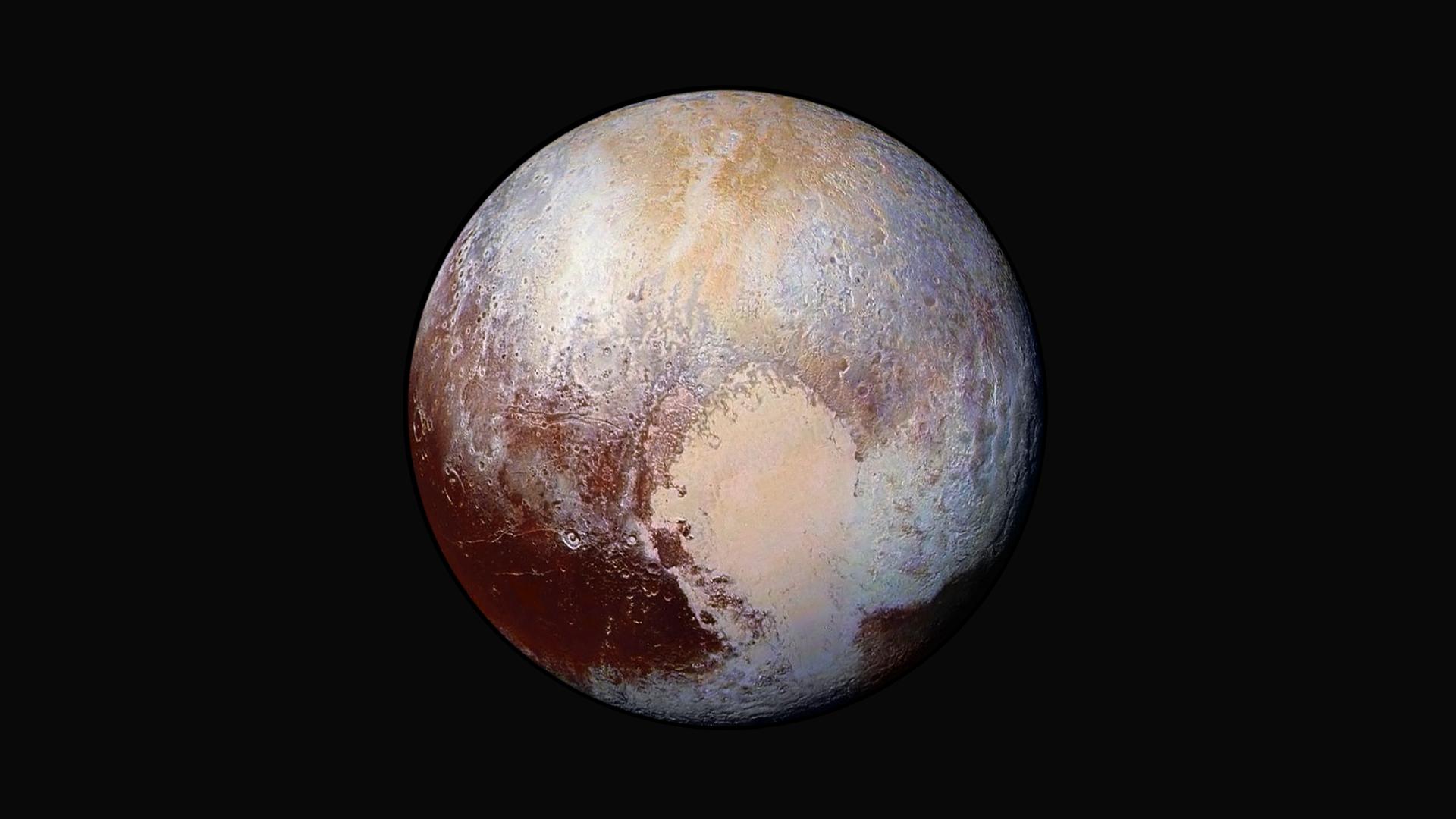
The long-dormant debate over the classification of the ninth world has erupted into a full-scale scientific and political movement this week. Following a high-profile U.S. Senate hearing on April 28, 2026, the phrase “Make Pluto a Planet Again” has transitioned from a nostalgic internet meme into a serious policy discussion led by the highest levels of the American space establishment. NASA Administrator Jared Isaacman, who took office in late 2025, sparked the controversy by formally declaring his support for the restoration of Pluto’s status during a session of the Senate Committee on Appropriations. Isaacman argued that the 2006 reclassification by the International Astronomical Union (IAU) was not only scientifically limiting but also failed to honor the legacy of American astronomer Clyde Tombaugh, who discovered the icy world in 1930.
The core of the “Why” behind this movement rests on two pillars: geological complexity and definitional fairness. Supporters of the restoration argue that the current IAU definition—which requires a body to “clear its neighborhood” of other debris—is flawed. They point out that even Earth, Mars, and Jupiter share their orbital paths with thousands of asteroids, yet they are not disqualified from planethood. Furthermore, data from the New Horizons mission revealed that Pluto is not a dead rock; it possesses towering water-ice mountains, nitrogen glaciers, a complex atmosphere, and five moons, making it more geologically active than some recognized planets like Mars. Isaacman confirmed that NASA is currently preparing scientific papers to present to the global community to formally revisit the definition of a planet.
However, the scientific community remains deeply divided. While some welcome the re-evaluation, others view it as a regression that ignores the reality of the Kuiper Belt, a vast region of space containing thousands of objects similar to Pluto. Critics argue that if Pluto is a planet, then dozens of other nearby objects like Eris, Haumea, and Makemake must also be granted that title, potentially ballooning the number of planets in our solar system to over 100. This “classification fatigue” was one of the primary reasons the IAU created the “dwarf planet” category two decades ago. Despite the push from NASA’s leadership, the IAU remains the only body with the international authority to officially name and categorize celestial objects, and they have yet to signal a willingness to change their 2006 resolution.
Voices from the Frontier
The debate is best captured by the conflicting viewpoints of leading experts in the field:
-
“I am very much in the camp of, ‘Make Pluto A Planet Again.’ We are doing some papers right now on a position that we would love to escalate through the scientific community to revisit this discussion and ensure that Clyde Tombaugh gets the credit he rightfully deserves.” — Jared Isaacman, NASA Administrator.
-
“Pluto is round, has an atmosphere, active geology, and five moons. What more does a planet need? The current definition is sun-centric and outdated; it’s time we recognize planets based on what they are, not where they are located.” — Dr. Bill McKinnon, Director of the McDonnell Center for the Space Sciences.
-
“While NASA administrators are free to wax nostalgic for the days when Pluto was a planet, the actual scientists working in the field will continue to try to explain and classify objects in the way that actually helps us understand the world in which we live.” — Dr. Mike Brown, Professor of Planetary Astronomy (often called the “man who killed Pluto”).
-
“Of course Pluto’s a planet, but it is a dwarf planet, a subspecies of planet. The argument seems to swirl about those who wish to say whether dwarf planets are or are not planets.” — Dr. Bill McKinnon, (clarifying the taxonomic distinction).
At present, the movement continues to gain momentum on social media and within certain academic circles. Whether this leads to a formal vote at the next IAU General Assembly remains to be seen, but for the first time in twenty years, the “Pluto problem” is no longer just a footnote in history books—it is a live mission objective for the world’s most powerful space agency.