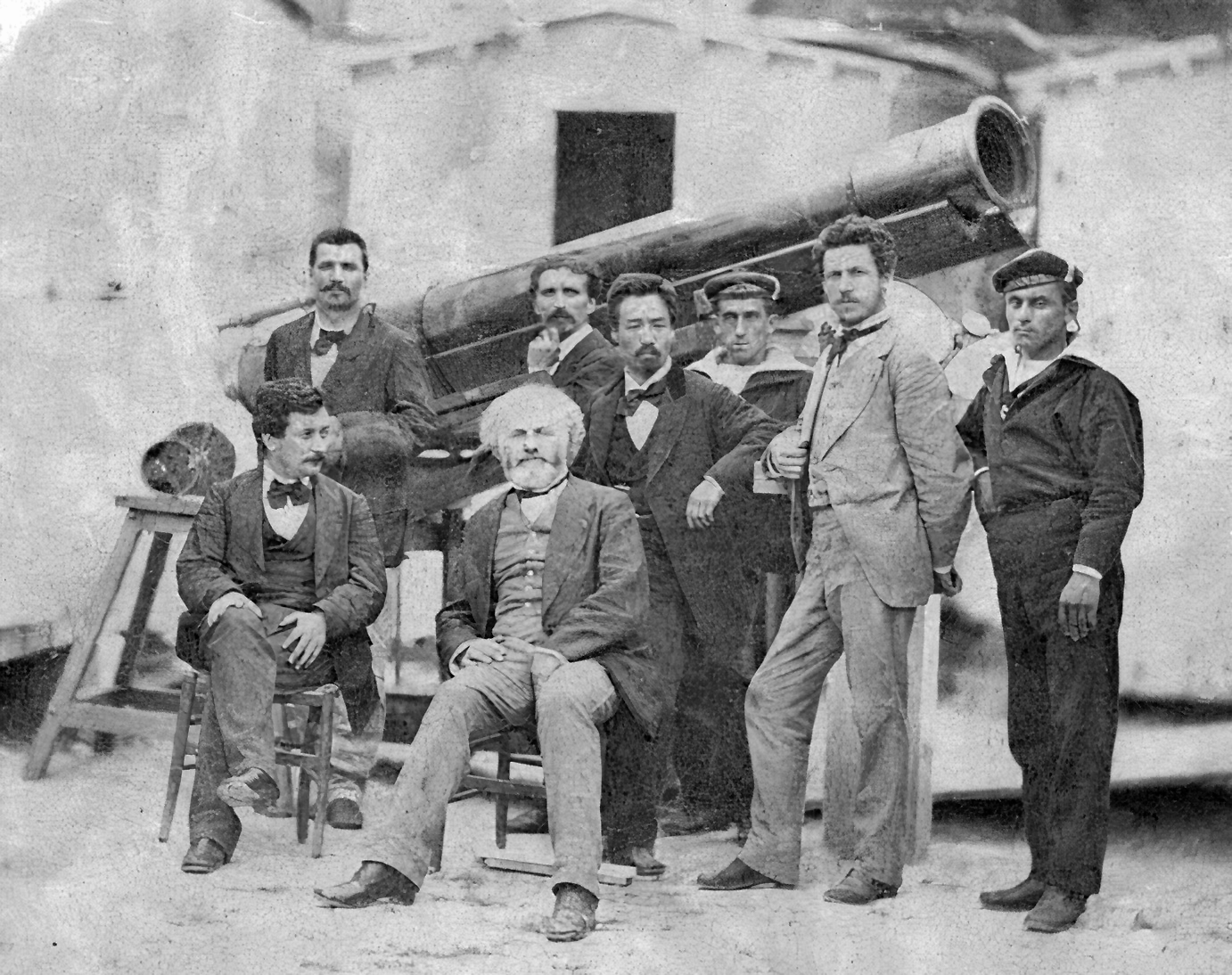
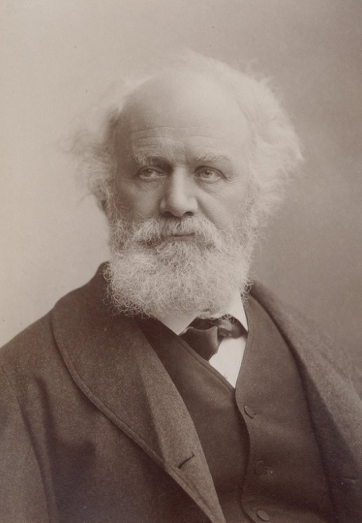
In 1873, the French astronomer Pierre Jules César Janssen invented the “photographic revolver,” a pioneering device designed to automatically capture a sequential series of photographs, an innovation now recognized as a crucial precursor to modern cinema and chronophotography. Janssen, a renowned astrophysicist, developed this instrument primarily to solve a long-standing astronomical problem: accurately measuring the precise moment of contact between Venus and the Sun during a rare transit.
The need for such a device stemmed from the scientific importance of the transit of Venus, a rare celestial event where the planet crosses the face of the Sun. By observing this transit from different locations on Earth, astronomers could calculate the mean distance from the Earth to the Sun, a fundamental unit of measurement. However, previous visual observations had proven unreliable due to human error and a phenomenon known as the “black drop effect,” which made precise timing difficult. Janssen proposed an automatic system to register a series of successive pictures, aiming for an objective and permanent record.
The resulting “photographic revolver” was a remarkable piece of engineering. It consisted of a rotating circular photographic plate onto which a series of images were captured in rapid succession. The mechanism used a clockwork system to stop the plate for each exposure before advancing it to the next unexposed section. Janssen worked with instrument makers, ultimately enlisting Redier father and son to construct a device where a platform carrying an annular daguerreotype plate turned through 1/48 of a complete circuit while a disc with radial shutter slits rotated continuously. This synchronization allowed the device to take 48 successive pictures on a single plate in just 72 seconds.
In 1874, Janssen took his instrument to Japan to observe the highly anticipated transit of Venus. In England, the Astronomer Royal, Airy, had similar instruments built, dubbed “Janssens,” and equipped British expeditions with them. Despite the widespread use of the device during the 1874 event, the scientific results were largely disappointing. The images captured were often diffuse and distorted, making them no more reliable than the best visual reports. The Earth’s atmosphere caused significant blurring, and the black drop effect remained prominent, undermining the goal of achieving more accurate measurements.
The astronomical campaign of 1874 failed to significantly improve the value of the solar parallax, with the error bar still being six times greater than hoped. Consequently, visual observations were preferred by many for the 1882 transit, and the revolvers were largely abandoned for astronomical use. However, Janssen’s invention found a new purpose. He adapted the principle, later working with Étienne-Jules Marey, who used similar chronophotographic techniques to study animal movement, such as the flight of birds. The photographic revolver is now widely considered the earliest cinema precursor and the first practical device for sequential photography, marking a pivotal step on the road to motion pictures.