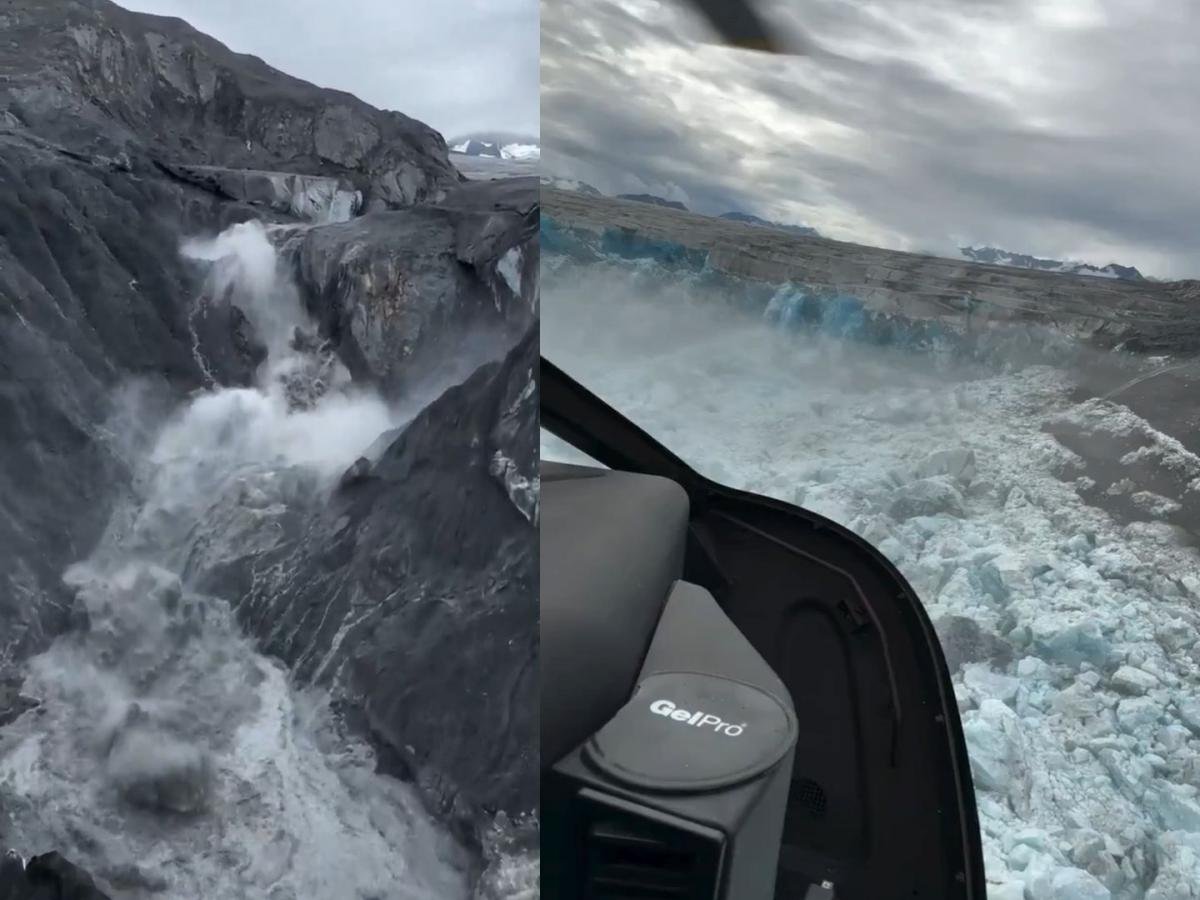
The catastrophic floods that recently devastated Nepal, caused by a glacial lake outburst flood (GLOF) in the Himalayas, stand as a stark and tragic illustration of climate change’s escalating impact on the world’s most fragile mountain ecosystems. These events are fundamentally driven by a confluence of factors: long-term global warming, the rapid physical transformation of the Himalayan landscape, and the specific vulnerability of downstream communities and infrastructure. At its core, the disaster was triggered when a glacial lake, formed by meltwater from a retreating glacier and held back by a natural dam of moraine (rock and debris), suddenly breached. This event, known as a GLOF, released a massive volume of water, sending a catastrophic torrent of mud, rock, and debris surging down the mountain valleys, destroying everything in its path. While the specific event in question shares the common characteristics of the dozens of GLOFs that have occurred in the region, the scale and timing highlight the increasing danger of a warming planet.
The root cause of this disaster is global warming, which has dramatically accelerated the melting of Himalayan glaciers. As temperatures rise, glaciers are retreating at an unprecedented rate, and the meltwater accumulates in depressions left behind by the ice, forming new glacial lakes or causing existing ones to expand rapidly. Research published in Advances in Climate Change Research indicates that in the China-Nepal Himalayas, the number and size of glacial lakes have been in a state of “rapid expansion” since at least 1992. This process is particularly dangerous because these lakes are often dammed by unstable piles of rock and debris, known as terminal moraines, which are naturally weak and prone to failure. A study on flood properties in the mountainous catchments of the Nepal Himalayas has also observed a clear shift, noting that future floods are projected to have significantly increased peaks and volumes compared to historical records, underscoring the growing intensity of such events. As the ice melts, the risk of these natural dams collapsing under the pressure of the water increases, setting the stage for a sudden and violent release. This is the primary mechanism through which a glacial lake becomes a direct threat.
The triggering mechanism for a GLOF can be a combination of factors, but the underlying cause is always the instability of the moraine dam. Over time, the ice core within the moraine that helps bind it together melts, weakening its structure. A sudden event can then act as the final straw—this could be a large calving event where a chunk of the glacier breaks off into the lake, generating a massive wave that over-tops the dam, or simply the relentless pressure of the rising water level itself, which can erode the dam from within or cause it to collapse. To assess these risks, researchers have developed sophisticated methods for quantifying the threat, using tools like machine learning algorithms and multi-temporal satellite imagery to identify potentially dangerous glacial lakes and predict their outburst probability.
Dr. Nie Yong and his team at the Chinese Academy of Sciences, who are at the forefront of this research, have emphasized that “the expansion of glacial lakes and associated risks in the region pose a severe threat to downstream infrastructure and populations.” They are working on creating “quantitative risk assessment methods” to map the potential impact zones and calculate the exact hazard index for each lake, a system which is “essential for early warning and infrastructure safety”. The practical application of this research was tragically demonstrated by the recent flood, where the hazard was realized with devastating consequences.
The consequences of a GLOF are catastrophic, transforming a peaceful mountain river into a deadly torrent of debris. The flood surge gains immense power as it moves downstream, collecting rocks, trees, and sediment, becoming a hyper-concentrated flow capable of scouring valleys bare. The immediate impact is the destruction of villages, bridges, and roads that lie in its path. For Nepal, a country heavily dependent on its hydropower for energy, the economic damage is particularly severe, as these floods often destroy hydroelectric plants and the infrastructure that connects them to the national grid. Furthermore, the disaster disrupts the lives of thousands of people, wiping out homes, farmland, and livelihoods. The research in the region has specifically highlighted the vulnerability of “important ports, hydropower stations, bridges, and highways” to these events. The response from the Nepalese government and international aid organizations is typically a massive humanitarian effort involving search and rescue, providing food and shelter, and assessing the scale of the damage to plan for long-term reconstruction.
In conclusion, the Nepal flood is a textbook case of a climate change-driven disaster where the science is increasingly clear and the risks are well-documented. It is the result of sustained global warming causing glaciers to melt and form unstable lakes, which are then prone to catastrophic outbursts. The tragedy underscores the urgent need for increased investment in early warning systems that can provide communities with crucial hours to evacuate, as well as the need for better land-use planning to keep people and critical infrastructure out of harm’s way. As scientists continue to warn that the frequency and intensity of such events are likely to increase, the recent flood serves as a somber reminder that the Himalayan region is on the front line of a global climate crisis. As the research team studying the China-Nepal Himalayas has stated, “the study not only fully demonstrates the unique advantages of machine learning and multi-source remote sensing fusion technology in mountain disaster risk assessment but also provides a solid scientific basis for cross-border disaster early warning, safe layout of infrastructure, and the formulation of climate change adaptation policies”. The need for this science to translate into action has never been more urgent.