
April 16, 2026
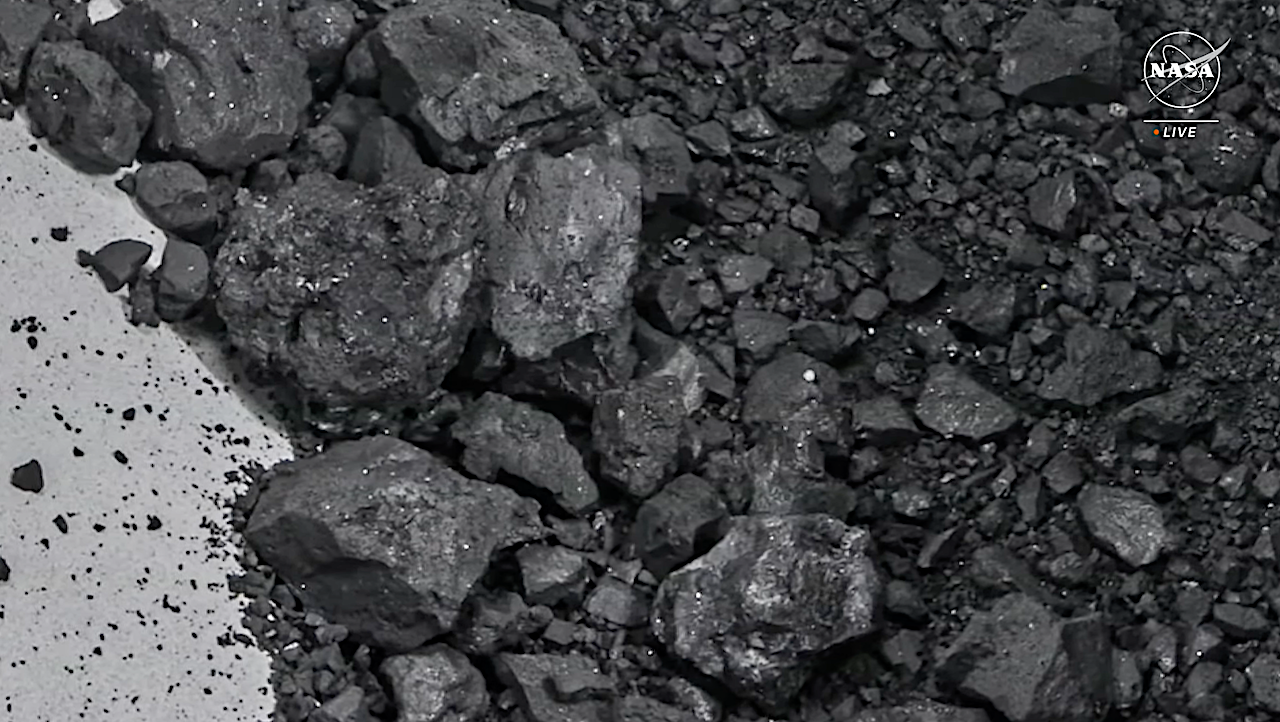
Nearly three years after NASA’s OSIRIS-REx spacecraft successfully delivered pristine samples from the near-Earth asteroid Bennu to the Utah desert, a team of international scientists has announced a groundbreaking discovery that fundamentally rewrites the evolutionary history of the early solar system. While initial analyses in late 2023 confirmed that Bennu was rich in carbon and water, new ultra-high-resolution studies have unveiled an astonishing level of chemical complexity hidden within the dark, powdery regolith. Researchers have discovered that the sample, designated OREX-800066-3, is not a uniform mixture of primordial dust but rather a complex mosaic of three distinct chemical regions . This heterogeneity suggests that liquid water moved through the parent body of Bennu in highly restricted, channelized flows rather than as a global, uniform ocean, creating a patchwork of environments that either fostered chemical reactions or preserved ancient materials untouched for billions of years. The findings, published this month in the Proceedings of the National Academy of Sciences and Communications Chemistry, confirm the presence of all five nucleobases essential to DNA and RNA—adenine, guanine, cytosine, thymine, and uracil—alongside a high abundance of ammonia and unusual salt minerals never before seen in returned extraterrestrial samples .
Using advanced nanoscale infrared spectroscopy and Raman spectroscopy capable of resolving features down to just 20 nanometers (roughly the size of a large molecule), scientists peered into the fragments of the 4.5-billion-year-old asteroid. They found a striking segregation of materials: one region is dominated by aliphatic, chain-like organic compounds; a second is rich in carbonate minerals that typically precipitate out of briny water; and a third contains nitrogen-bearing organic molecules . Dr. Mehmet Yesiltas of Stony Brook University, lead author of the PNAS study, explained the significance of this discovery: “These findings carry broader significance for planetary science and astrobiology. They demonstrate survival of chemically labile, nitrogen-bearing organics through aqueous alteration on a small solar system body has direct implications for long-standing questions about how organic complexity is built up and preserved in primitive planetary materials” . He further noted that the sharp boundaries between these regions imply that water activity was surprisingly brief and localized. “It tells us that the parent body of Bennu did not experience a global melting event,” Yesiltas elaborated in a press briefing, “Instead, water moved through fractures and cracks, altering specific areas while leaving other ‘dry’ regions completely untouched, preserving the most fragile organic molecules” .
The implications of this chemical patchwork are profound for understanding the origins of life on Earth. The presence of pyrimidines (like cytosine and uracil) in higher abundance than purines suggests that these building blocks were synthesized in ammonia-rich ices located in the outer solar system, far from the sun, before being transported inward . Furthermore, the team identified a specific sequence of evaporites—salty minerals that form as liquid water freezes or boils away. This “evaporite sequence” recorded in the Bennu samples mirrors the brines found on icy worlds like Saturn’s moon Enceladus or dwarf planet Ceres, strengthening the hypothesis that the asteroid belt once harbored bodies with ocean-like conditions . Dr. Tim McCoy, a curator at the Smithsonian’s National Museum of Natural History, remarked on the chemical soup they uncovered: “We are looking at the actual ‘recipe’ for the building blocks of life. It’s not just that the ingredients are there; we can see the order in which they were cooked—first water, then evaporation, leaving behind a chemical stew of carbon, nitrogen, and salts that is uniquely favorable for creating complex biology” .
Perhaps the most startling revelation is the confirmation that these delicate organic molecules can survive the harsh vacuum of space and the violent history of asteroid collisions intact. The 121.6 grams of material returned by OSIRIS-REx represents the largest asteroid sample ever brought to Earth, and because it was stored in a nitrogen atmosphere immediately upon landing, it remains uncontaminated by Earth’s reactive biology . This pristine state allowed scientists to definitively rule out terrestrial contamination for the nucleobases, confirming they are truly extraterrestrial in origin. The research, which utilized the Advanced Light Source and Molecular Foundry at Lawrence Berkeley National Laboratory, not only identified these biological components but also mapped their nanoscale distribution, showing that nitrogen-bearing organic functional groups are widely preserved despite extensive aqueous alteration . As NASA prepares for future missions to icy moons like Europa, the Bennu sample serves as a critical analog, proving that the raw chemistry necessary for life is not only common in the solar system but is remarkably resilient. The OSIRIS-REx mission, which cost an estimated $1.16 billion, has thus delivered a conclusion that echoes far beyond the asteroid belt: the solar system is actively seeding its planets with the chemical letters of the genetic code, waiting only for the right environmental conditions to perhaps begin reading them .