April 26, 2026
As the world navigates the complexities of the mid-2020s, uranium enrichment has transitioned from a niche industrial process to the very center of global geopolitical power and energy security. Today, the ability to enrich uranium is no longer just a technical requirement for power generation; it is a “strategic shield” that defines a nation’s independence from volatile foreign supply chains. With the global uranium spot price surging past $100 per pound earlier this year and the recent expiration of the New START Treaty, the stakes for controlling the nuclear fuel cycle have never been higher.
Why Enrichment is Essential
At its core, uranium enrichment is the process of increasing the concentration of the U-235 isotope—the fissile material necessary to sustain a nuclear chain reaction. Natural uranium contains only about 0.7% U-235, which is insufficient for most modern reactors. Through sophisticated gas centrifuge technology, this concentration is raised to between 3% and 5% to create Low-Enriched Uranium (LEU), the standard fuel for the world’s commercial nuclear fleet.
However, 2026 marks a turning point with the rise of Small Modular Reactors (SMRs) and advanced reactor designs. These next-generation systems often require High-Assay Low-Enriched Uranium (HALEU), enriched to between 5% and 20%. “The shift toward SMRs has fundamentally rewritten the demand profile for enrichment,” says Dr. Elena Vance, a senior nuclear fuel analyst. “We are moving from a world of ‘standard fuel’ to one of ‘bespoke enrichment,’ where the precision of the isotope separation directly dictates the efficiency of the carbon-free energy transition.”
The Geopolitical Bottleneck and the “Russian Pivot”
The urgency surrounding enrichment stems from a massive structural imbalance in the global supply chain. For decades, Russia’s Rosatom dominated the market, providing nearly 40% of the world’s enrichment services. However, following the Prohibiting Russian Uranium Imports Act, Western nations have been scrambling to decouple their energy grids from Moscow. This decoupling has been difficult, as building new enrichment capacity—like the $5 billion Orano ‘Project Ike’ facility in Tennessee—takes years of precision engineering and massive capital investment.
The reliance on foreign enrichment is now viewed as a critical national security vulnerability. In the United States, the Department of Energy’s recent $900 million investment into domestic LEU supply chains highlights this shift. “Energy independence is a hollow phrase if you mine the ore at home but have to ship it across an ocean to make it usable,” noted a high-ranking official at the 2026 Nuclear Energy Summit. “Enrichment is the narrowest point of the hourglass in the nuclear fuel cycle; whoever controls the centrifuges controls the light switches of the future.”
The Duel of Dual-Use: Proliferation Concerns
Beyond electricity, the “matter” of enrichment is inextricably linked to international security. The same technology used to power a city can, if pushed further, produce Highly Enriched Uranium (HEU) at 90% concentration for nuclear weapons. With the New START Treaty no longer in effect as of early 2026, the “guardrails” on global nuclear stockpiles have weakened. Monitoring the Separative Work Units (SWU)—the measure of effort required for enrichment—is the primary way the IAEA ensures that civilian programs do not pivot toward military applications.
In the Middle East and East Asia, domestic enrichment programs are often viewed through this suspicious lens. “The technical distance between 5% enrichment for power and 90% for a device is shorter than most people realize,” explains nuclear physicist Marcus Thorne. “In a 2026 landscape defined by ‘sabre-rattling’ and the collapse of traditional arms control, every new centrifuge hall is scrutinized not just for its megawatt potential, but for its strategic intent.”
Economic Frontiers: The 2026 Uranium Bull Market
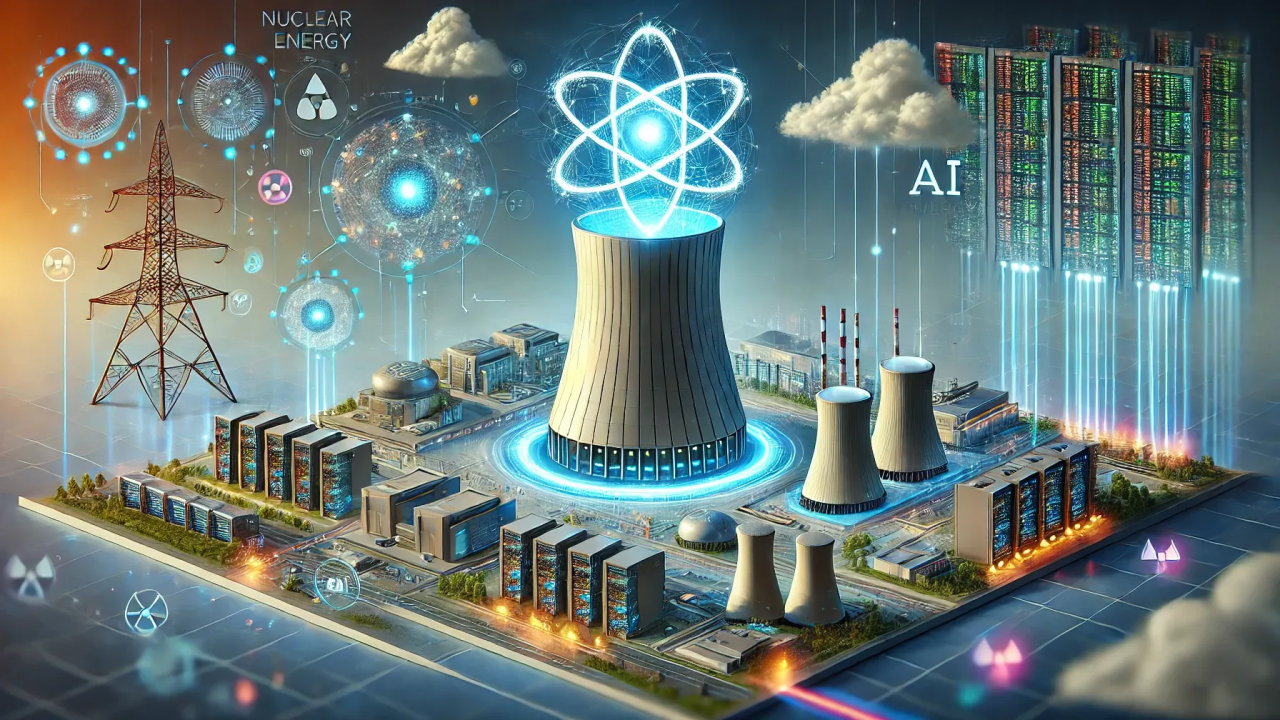
From an economic perspective, enrichment matters because it is the “value-add” stage where the most profit is generated. As AI data centers and massive electrification projects drive up baseload power demand, utilities are racing to secure long-term enrichment contracts. The market for these services is projected to exceed $17 billion this year, with a projected 10% annual growth rate through 2034.