April 25, 2026
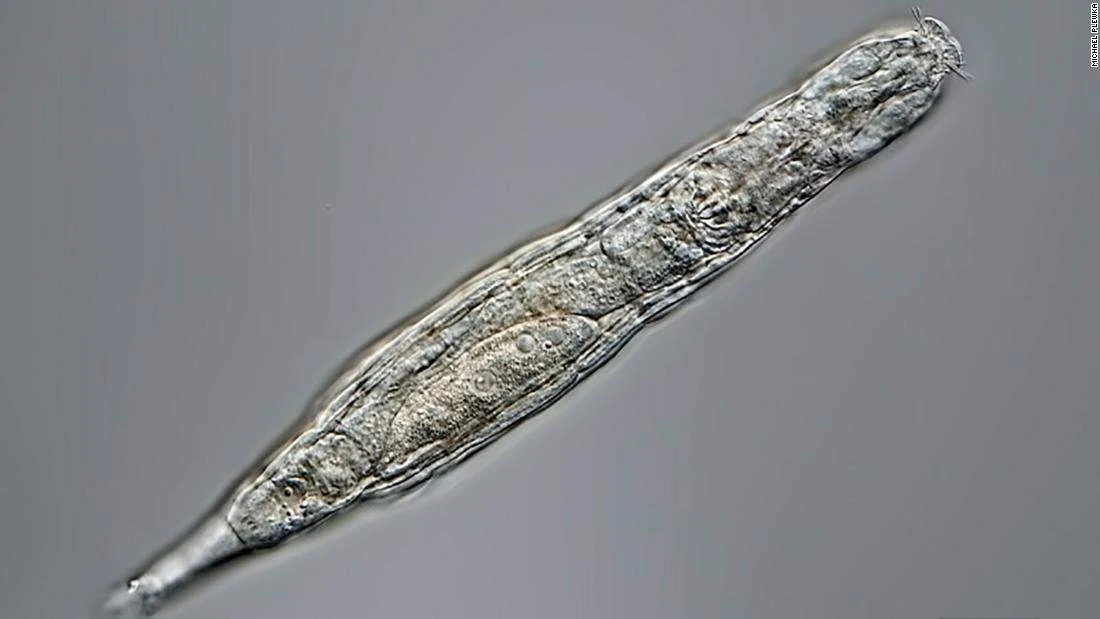
In a discovery that blurs the line between biological reality and science fiction, a microscopic traveler from the Late Pleistocene has officially rejoined the land of the living. Deep within the Siberian permafrost, specifically along the banks of the Alazeya River in northeastern Russia, scientists have successfully revived a bdelloid rotifer that had been frozen for 24,000 years. While the world outside its icy tomb evolved from the Stone Age to the Space Age, this tiny multicellular organism remained in a state of cryptobiosis—a biological “pause button” so profound that its metabolism was nearly undetectable.
The specimen was recovered from a core sample drilled 3.5 meters (11.5 feet) below the surface by a dedicated team from the Soil Cryology Laboratory in Pushchino. Using accelerator mass spectrometry, the researchers dated the surrounding soil to between 23,960 and 24,485 years old. Because the permafrost in this region consists of ice-rich loam from the Yedoma formation, which has remained frozen since it first formed, scientists are confident that the rotifer was trapped at the same time the sediments were deposited, ruling out any modern contamination.
A Master of Survival
The bdelloid rotifer is a freshwater creature known for its extreme resilience. Despite being microscopic—roughly the size of a speck of dust—it is far more complex than the single-celled microbes or viruses often found in ancient ice. It possesses a gut, a rudimentary brain, and a specialized feeding apparatus lined with hair-like cilia. Its ability to survive for twenty-four millennia is attributed to its mastery of cryobiosis, a form of suspended animation where the organism protects its cells from the jagged destruction of ice crystals.
“Our report is the hardest proof as of today that multicellular animals could withstand tens of thousands of years in cryptobiosis, the state of almost completely arrested metabolism,” said Stas Malavin, a lead researcher in the study. “The takeaway is that a multicellular organism can be frozen and stored as such for thousands of years and then return back to life—a dream of many fiction writers.”
Life After Thaw
The revival process occurred in a controlled laboratory environment where the ancient soil was slowly thawed. To the amazement of the team, once the temperature reached a favorable level, the rotifer began to move, feed, and eventually reproduce. Because bdelloid rotifers utilize obligate parthenogenesis, a form of asexual reproduction, the revived creature began to create clones of itself without needing a mate. These “zombie” clones are genetically identical to their 24,000-year-old parent, effectively establishing a living colony of Ice Age organisms in the 21st century.
This feat far exceeds previous records for rotifers, which were thought to survive only about 10 years in sub-zero temperatures. It also places the rotifer in an elite class of “time travelers,” alongside nematodes (roundworms) previously revived from 42,000-year-old Siberian ice and ancient mosses that have been regenerated after centuries of burial.
Implications for the Future
The success of this revival has profound implications for cryobiology and the future of human medicine. Scientists are now eager to decode the genetic mechanisms that allow these creatures to repair their DNA and protect their cell membranes during such prolonged periods of dehydration and freezing. “Of course, the more complex the organism, the trickier it is to preserve it alive frozen and, for mammals, it’s not currently possible,” Malavin noted cautiously. “Yet, moving from a single-celled organism to an organism with a gut and brain, though microscopic, is a big step forward.”
Experts believe that the “tricks” used by the rotifer could one day lead to better methods for preserving human organs for transplant or even improving the longevity of cells in long-duration space travel. If a tiny creature can endure the weight of 24,000 years of frozen history and wake up as if only a night had passed, the limits of biological endurance may be far beyond what we once imagined.
Environmental Warnings
However, the discovery also serves as a stark reminder of the effects of global warming. As the Siberian permafrost continues to melt at an unprecedented rate, more than just rotifers are being released. Ancient bacteria and viruses, some of which have been dormant for even longer, are re-entering the modern ecosystem. While the rotifer poses no threat to humanity, the “reanimation” of the Arctic serves as a clear signal that the past is no longer staying buried.