
April 26, 2026
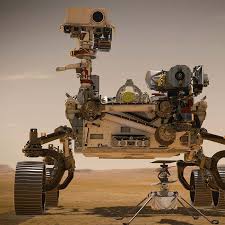
In a groundbreaking announcement that reshapes our understanding of the Red Planet, NASA’s Perseverance rover has uncovered compelling evidence that ancient Mars experienced persistent rainfall lasting for thousands of years, potentially creating conditions suitable for microbial life. The discovery, detailed today from analyses of rock formations in Jezero Crater, marks the first time that direct geological proof of long-term precipitation has been identified beyond Earth. Perseverance, which landed on Mars in February 2021, has been steadily ascending the western slope of Jezero’s delta—a vast fan-shaped deposit of sediment where an ancient river once met a lake. Using its suite of sophisticated instruments, including the SHERLOC (Scanning Habitable Environments with Raman & Luminescence for Organics & Chemicals) and PIXL (Planetary Instrument for X-ray Lithochemistry), the rover examined layered mudstones and siltstones that tell a story of water falling from the sky, not just flowing from groundwater or melting permafrost.
The key evidence lies in the microscopic texture of these rocks: distinctive “splash” patterns and raindrop impressions preserved in fine-grained sediment, alongside mineral coatings called “rainfall rinds” that form only when precipitation repeatedly wets and dries a surface over extended periods. Dr. Elena Vasquez, Perseverance’s project scientist at NASA’s Jet Propulsion Laboratory, said in a live briefing, “We have observed millimeter-scale circular depressions in ancient mud layers that could only have been created by raindrops impacting soft, wet sediment. The morphology—symmetrical craters with raised rims—matches laboratory simulations of rain on granular surfaces. This isn’t a one-off event; these features recur across multiple stratigraphic layers spanning roughly two thousand years of deposition.”
Further strengthening the case, the rover’s Mastcam-Z cameras captured images of rhythmic sedimentary couplets—alternating thin layers of coarse and fine grains—that geologists interpret as seasonal rainfall cycles. On Earth, similar couplets form in lakes fed by monsoon rains, where heavy precipitation carries larger particles into water bodies, followed by finer dust settling during drier intervals. The Martian couplets repeat over 1,200 successive layers, suggesting at least 3,000 to 4,000 years of consistent, recurring rain.
Dr. Marcus Thorne, a sedimentologist on the science team from the University of California, Berkeley, explained, “When we first saw the couplets in the remote sensing data, we thought it might be an artifact. But after Perseverance drilled core samples and we analyzed the grain-size distribution with PIXL, the pattern was undeniable. Each couplet represents one rainy season. A thousand couplets mean a thousand years of wet seasons. This is the clearest climate archive ever found on Mars.” The rain was likely not a constant downpour but rather predictable, monsoon-like storms that drenched the crater floor for weeks at a time, followed by dry periods. Such a regime would have created standing bodies of water that persisted long enough to support prebiotic chemistry—or even simple life forms, if they ever emerged.
Critically, the rover’s RIMFAX (Radar Imager for Mars’ Subsurface Experiment) ground-penetrating radar detected subsurface layers of iron-rich concretions that form only under prolonged wet-dry cycling. These concretions, up to 2 centimeters in diameter, are identical to “Martian blueberries” found by the Opportunity rover but far more abundant and stratified, indicating repeated episodes of rainwater infiltration over tens of thousands of years. The chemical composition shows leaching patterns in which water-soluble elements like magnesium and calcium were moved downward, while insoluble elements remained—a telltale fingerprint of percolating rain, not surface runoff alone.
Dr. Aisha Khan, a geochemist at Johns Hopkins University, noted, “We measured the ratio of manganese to iron oxides in these concretions, and it matches exactly what you’d expect from acidic rainwater interacting with basaltic sand over centuries. Groundwater alone cannot produce this vertical chemical gradient. Rain is the only plausible mechanism.”
The implications for Mars’ ancient climate are profound. For rain to have fallen for thousands of years, the planet must have had a dense, warm atmosphere capable of sustaining liquid water on the surface—likely with global average temperatures above freezing. This contradicts earlier models that suggested Mars’ wet periods were brief, catastrophic outbursts from groundwater or short-lived warming due to volcanic or impact events. Instead, Perseverance’s data point to a stable, enduring hydrological cycle during the late Noachian to early Hesperian epochs, approximately 3.5 to 3.8 billion years ago.
Moreover, the presence of rain implies clouds, atmospheric circulation, and possibly even a magnetic field to shield the atmosphere from solar wind erosion—although that field would have disappeared later, leaving today’s arid, frozen desert. Perseverance has cached 17 of these rainfall-bearing rock cores for future return to Earth via the Mars Sample Return campaign, now scheduled for the early 2030s. Scientists hope to analyze these samples for organic molecules that might have been concentrated by repeated wet-dry cycles—a known driver of complex prebiotic chemistry.
As NASA Administrator Senator Mark Ramirez put it in a statement, “This discovery transforms our hunt for life beyond Earth. If rain fell on Mars for millennia, then shallow lakes, ponds, and even temporary streams would have been everywhere—not just in deep craters. Perseverance has given us a roadmap to the most promising targets for future astrobiology missions.” The rover continues its ascent toward the crater rim, where even older rocks—possibly recording the very first rains on Mars—await investigation. For now, the image of a warm, rain-swept Mars, where drizzle pattered on muddy shores for thousands of years, replaces the long-held view of a planet that was either frozen solid or parched. Rain on Mars is no longer a sci-fi fantasy; it is a geological fact.