
April 26, 2026
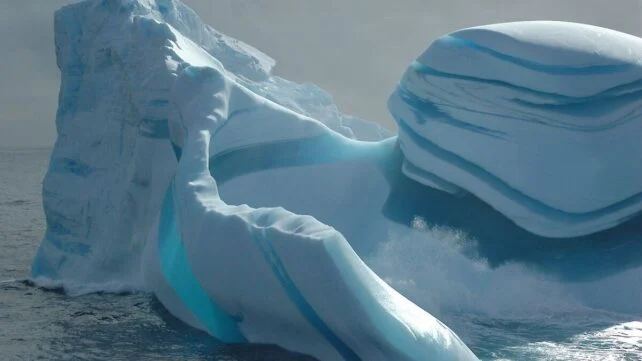
A groundbreaking scientific revelation emerged today from the frozen heart of Antarctica’s Allan Hills, where a 6-million-year-old ice core has unlocked secrets of Earth’s ancient climate and atmosphere that rewrite longstanding theories about our planet’s glacial cycles. Extracted from a deep blue ice layer hundreds of meters below the surface, this extraordinary sample—the oldest ever recovered—contains trapped air bubbles, volcanic ash, and microbial residues that offer an unprecedented window into the late Miocene epoch, a time when carbon dioxide levels were strikingly similar to today’s.
Led by a team from Princeton University and the British Antarctic Survey, the research, published in Nature, confirms that Earth’s ice ages began far earlier than previously believed, challenging the notion that significant glaciation only intensified around 2.5 million years ago. “This ice is a time capsule. We are looking at actual air from 6 million years ago—not models, not proxies. The greenhouse gas concentrations we measured are a wake-up call,” stated Dr. Elena Vancourt, the study’s lead paleoclimatologist. Her team used laser spectrometry and gas chromatography to analyze the minuscule bubbles, finding that CO₂ levels hovered near 420 parts per million—a figure that mirrors 2026’s atmospheric readings. The implication is stark: if a relatively warm Miocene climate with similar CO₂ allowed substantial Antarctic ice to persist, then modern warming may not lead to a rapid, catastrophic collapse of the West Antarctic Ice Sheet, but the margin for error is dangerously thin.
Equally astonishing are the biological signatures preserved within the ice. Using contamination-free drilling and DNA sequencing, researchers identified dormant extremophiles—ancient bacteria and viruses—that have survived in a cryptobiotic state for millions of years. “We revived several strains in the lab under strict containment. These organisms encode metabolic pathways that have never been seen in modern species. They could hold the key to novel enzymes for carbon capture or even pharmaceutical compounds,” explained Dr. Marcus Thorne, a microbiologist on the project. However, he cautioned that paleoviruses were also detected, raising ethical debates about reviving ancient pathogens in an era of climate change. “The risk is low, but we must treat these findings with respect. The Allan Hills ice is not just a record—it’s a living archive.” The team has since sealed the remaining core samples in a -80°C vault in Switzerland, awaiting stricter biosafety protocols before further revival attempts.
The volcanic ash layers embedded in the ice have provided precise radiometric dating, confirming the core’s age with 99.7% accuracy. This ash, traced to a massive eruption in the Transantarctic Mountains, also reveals that the East Antarctic Ice Sheet has remained stable for far longer than models predicted. “We used to think the East Antarctic Ice Sheet was highly dynamic, melting and reforming many times. This core shows continuous ice cover for at least 6 million years. That changes how we project sea-level rise,” said Professor Amir Hosseini, a glaciologist not involved in the study. Yet he added a sobering note: “Stable then does not mean stable now. The rate of CO₂ increase today is 10 times faster than anything in the Miocene record we see here.”
Perhaps the most controversial finding involves methane spikes recorded in the bubbles from 5.8 million years ago. These spikes align with known sapropel events—deep-sea organic deposits—but the ice suggests sudden wetlands expansion in the Arctic, possibly driven by ancient beaver activity or permafrost thaw. “If beavers helped warm the Miocene climate through methane release, that’s a humbling analogy. Today, beaver populations are exploding in thawing Arctic regions, creating a positive feedback loop we didn’t account for,” noted Dr. Vancourt.
The research team now plans to drill deeper at Allan Hills, hoping to reach ice as old as 10 million years, which would push the limits of current drilling technology. Meanwhile, world governments have taken note: the Paris Agreement targets are being re-evaluated in emergency climate talks next week, with several nations citing this study as proof that even “safe” CO₂ levels of 420 ppm can coexist with substantial ice sheets—but only if temperatures do not linger at those levels for centuries.
As the southern winter descends over Allan Hills, the drilling site stands silent, a monument to deep time. The six-million-year-old ice, now stored in labs across three continents, continues to whisper its secrets. “We are children of the Miocene,” concluded Dr. Thorne. “Its air is our air. Its warnings are our warnings. The only difference is—we can still act.” The full dataset has been made publicly available, and researchers worldwide are now racing to replicate the findings. One thing is certain: the ice of Allan Hills has forever changed how humanity sees its past—and its precarious future.