
April 26, 2026
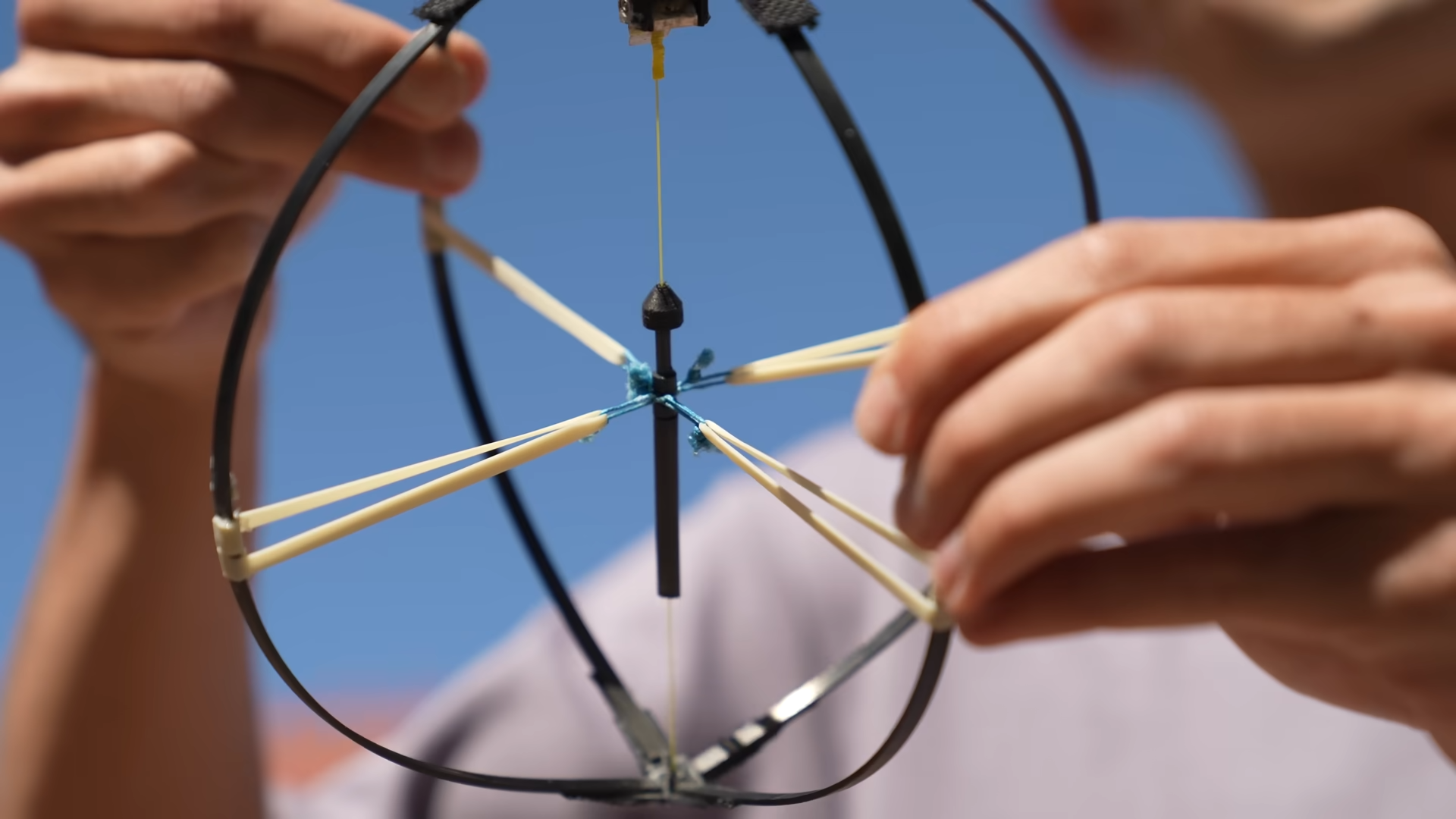
In a breakthrough that redefines the boundaries of robotics and material science, engineers at the Massachusetts Institute of Technology’s Bioinspired Robotics Lab have unveiled a miniature robot, no larger than a coffee mug, that can leap to a height of over 110 feet (33.5 meters) — higher than a 10-story building. The feat, achieved during a live demonstration at MIT’s Walker Memorial Gymnasium, shatters previous records for robotic jumping, which topped out around 30 feet. Named “HyperJump-1,” the 230-gram robot—about the size and weight of a tennis ball—employs a novel combustion-driven, multi-stage elastic actuator that mimics the explosive power of a grasshopper’s leg but on a radically re-engineered scale. The team, led by Professor Elena Vasquez, published their findings simultaneously in Nature Robotics, revealing that HyperJump can release nearly 9 kilojoules of energy per kilogram of its mass in under 12 milliseconds. To put that in perspective, that’s roughly 20 times the specific energy density of the best pneumatic or spring-driven jumpers previously developed.
The robot’s design is deceptively simple: a carbon-fiber exoskeleton houses a miniaturized hybrid combustion chamber that mixes propane and oxygen in a precisely controlled ratio. A silicon carbide piezoelectric igniter triggers the explosion, which expands a custom multilayer polymer bellows—a material that withstands pressures up to 3,500 psi without rupturing. Unlike traditional jumping robots that rely on slow-winding springs or motors, HyperJump’s binary-fuel micro-explosion delivers a near-instantaneous impulse. The critical innovation, however, lies in its self-righting, passive aerodynamic fin system. During ascent, the robot folds its three legs flush against its body to reduce drag; at the apex, it deploys a toroidal parachute made of graphene-reinforced mylar, allowing a controlled descent at under 5 mph—safe enough to survive multiple jumps. In the lab demonstration, HyperJump successfully repeated the 110-foot jump 14 consecutive times without mechanical failure, landing on a cushioned platform with millimeter-precision targeting thanks to an onboard accelerometer and tiny steering flaps.
Why does this matter? According to Professor Vasquez, “This is not just a stunt. We are proving that small robots can overcome terrain barriers that have always required large, wheeled or flying platforms.” Potential applications are immediate and staggering: search-and-rescue operations in collapsed high-rises or after earthquakes, where HyperJump’s descendants could hop from floor to floor through elevator shafts; planetary exploration on low-gravity bodies like Mars’ moon Phobos, where a similar robot could leap kilometers; and military reconnaissance over walls or into fortified compounds without the noise of a drone. The US Army Research Office, a co-funder of the project, has already requested a swarm variant capable of coordinated, communicating jumps. The robot’s energy efficiency is equally stunning: each 110-foot jump consumes less than 0.2 grams of propane, meaning a small cartridge the size of a lipstick tube provides over 500 leaps. Furthermore, the bellows material recovers its shape within 0.3 seconds, enabling an impressive jump rate of three per second if fuel flow is continuous, though the current prototype is limited to one jump every four seconds for thermal management.
However, challenges remain. The combustion chamber’s outer temperature reaches 400°F after a series of jumps, posing a risk to flammable surroundings—the team is now testing a phase-change cooling jacket filled with a waxlike material. Moreover, the sharp acceleration—from 0 to 60 mph in just 8 milliseconds—subjects onboard electronics to over 200 Gs, requiring specially hardened circuits. Yet the most profound implication may be in bioinspiration: analyzing HyperJump’s recoil dynamics, the MIT team realized that several prehistoric insects could have jumped nearly twice as high as modern analogues if atmospheric oxygen levels were higher—a hypothesis they now plan to test with fossil evidence. For now, the tiny robot sits in a glass case at MIT’s Media Lab, alongside the first transistor and the Apollo guidance computer, as a symbol of how far miniaturization has come.