
July 1, 2026
The landscape of solar energy is undergoing its most significant transformation in decades, with perovskite solar cells finally making the leap from laboratory breakthroughs to commercial reality. As the world grapples with the urgent need for decarbonization, this revolutionary photovoltaic technology is poised to redefine the possibilities of solar power, offering a path to efficiencies that were unimaginable just a few years ago. Today, the industry stands at a pivotal moment where the immense potential of perovskites is being rigorously tested against the practical demands of durability, manufacturing, and real-world deployment, signalling a new era for renewable energy .
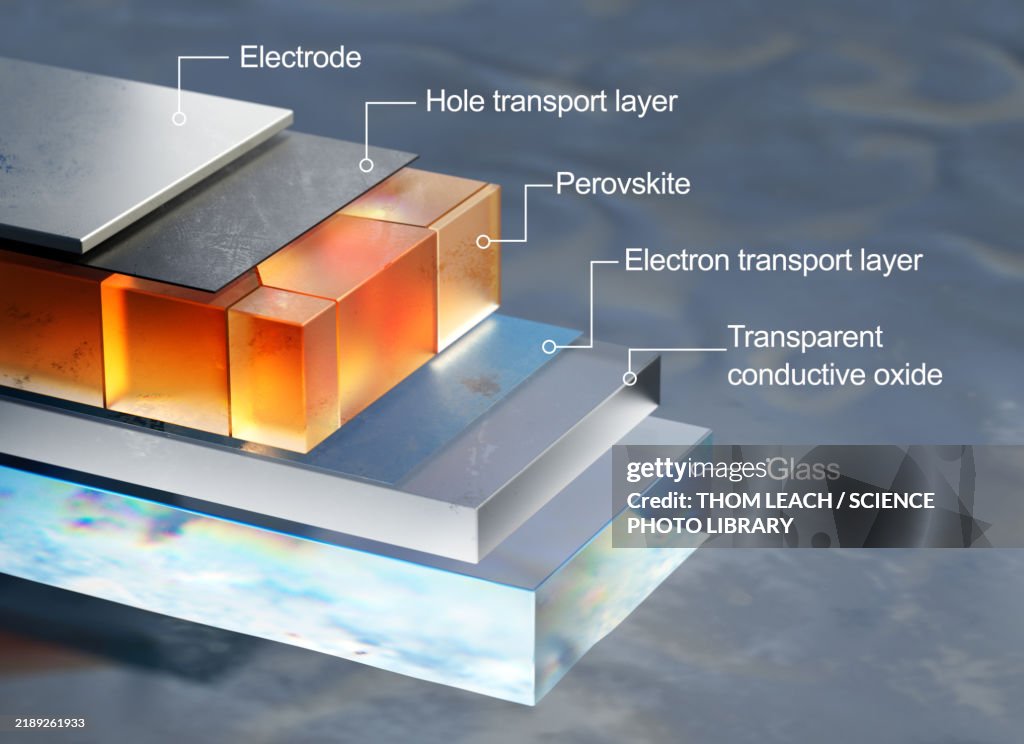
The core of the excitement lies in the unprecedented efficiency gains achieved by perovskite-silicon tandem cells. By stacking a perovskite cell, which can be tuned to absorb high-energy blue and green light, on top of a traditional silicon cell that captures red and infrared light, researchers have shattered the theoretical efficiency limit of single-junction devices . This approach has culminated in a remarkable certified efficiency of 35.0% for a perovskite-silicon tandem cell, a record set by LONGi Green Energy and the National Renewable Energy Laboratory (NREL) in early 2026 .
This represents a staggering 50% jump in potential energy yield per square meter compared to the best commercial silicon modules available today, which typically operate at 22-24% efficiency . Other architectures are also advancing rapidly; in a complementary development, researchers have achieved a 29.1% efficiency for an all-perovskite tandem solar cell by engineering a new, more stable interconnection layer between the two perovskite subcells, demonstrating that the technology’s promise extends beyond silicon combinations .
However, the narrative in 2026 is no longer confined to laboratory records. The primary focus has decisively shifted towards commercial viability and the resolution of the technology’s Achilles’ heel: stability. For years, perovskite solar cells have been notoriously susceptible to degradation from moisture, heat, and prolonged exposure to ultraviolet light . This year, a wave of innovations is directly tackling these weaknesses, providing more durable materials and robust device architectures. For example, in a landmark achievement for longevity, one group has reported a device that retained 90% of its initial efficiency after an astonishing 2,000 hours of continuous operation under illumination, a stability milestone that begins to align perovskite technology with the long-term requirements of the energy industry . These advances are being driven by a deeper scientific understanding of degradation mechanisms, such as lattice strain and ion migration at critical interfaces within the device, and applying sophisticated solutions like interface engineering to mitigate these fundamental instabilities .
This progress has propelled perovskites out of the lab and onto rooftops and power grids. The year 2026 is being hailed as the dawn of commercial perovskite photovoltaics, with major manufacturers like GCL aiming to start shipping perovskite modules by the end of the third quarter of this year . The company is targeting the commercial market with a 4-terminal tandem architecture, which they believe is a more stable and scalable route to market, and has already deployed about 1 MW of its systems, with expectations to reach tens of MW in 2026 .
This is complemented by other industry leaders: Hanwha Qcells has achieved 28.6% efficiency on full-area M10-sized perovskite-silicon tandem cells using processes compatible with mass production, while Oxford PV is already delivering commercial 24.5% efficiency tandem modules to customers, with plans for a more efficient line later this year . While current commercial module efficiencies lag behind lab records, with key players like Sekisui Chemical reporting a 15.0% efficiency for its flexible panels and a 10-year outdoor durability equivalent, the gap is closing rapidly as manufacturing processes mature .
The unique physical properties of perovskite materials are also unlocking new applications that silicon cannot address. Because they can be fabricated as lightweight, flexible films, perovskite solar cells are ideal for building-integrated photovoltaics (BIPV) and for retrofitting on structures with load-bearing restrictions, where heavy glass-and-aluminium silicon panels are impractical . A prime example of this real-world application is Kyocera’s ongoing testing of Sekisui Chemical’s flexible perovskite modules across six of its facilities in Japan, a trial supported by the Japanese government, which has set an ambitious target to deploy around 20 GW of perovskite-based systems by 2040 . This governmental backing underscores the strategic importance of perovskite technology for national energy security and decarbonization goals.
Despite these advances, the road ahead is not without its challenges. Manufacturing at scale remains a hurdle, with total global perovskite production capacity sitting at approximately 1.5 GW, a minuscule fraction of the over 540 GW of total solar installed in 2025 . Furthermore, while stability is improving, the industry has yet to deliver perovskite panels with the standard 25-year warranties that consumers and project financiers demand from silicon products, with most commercial offerings currently providing 10 to 12-year product warranties . Scientists are also intensely focused on improving the performance of wide-bandgap perovskite cells, which are crucial for multi-junction tandems but have suffered from voltage losses and instability due to issues like halide segregation .