
July 8, 2026
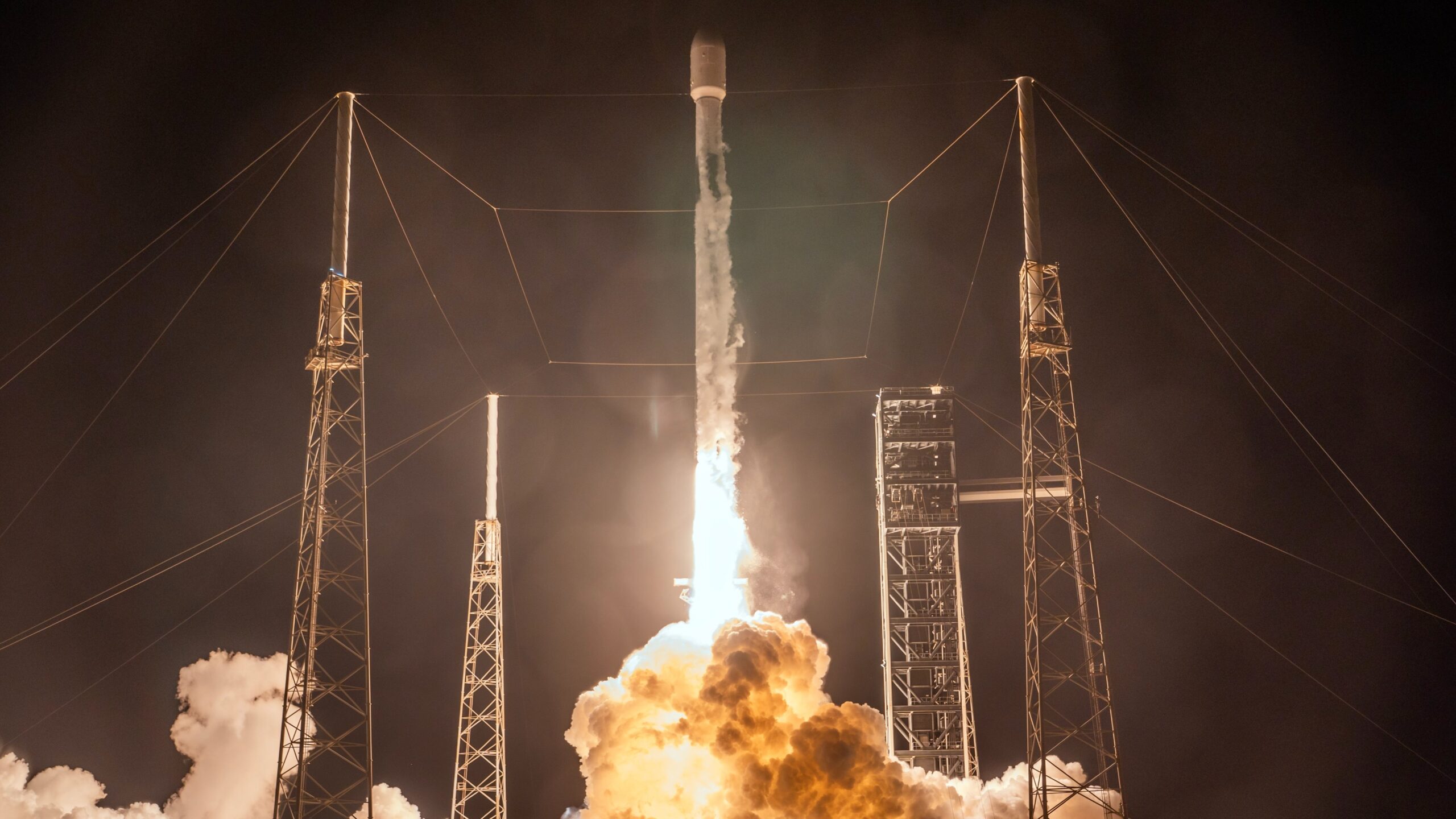
A landmark event in aerospace history unfolded as SpaceX successfully launched the world’s first commercially built and operated nuclear-powered satellite, the BOHR (Betavoltaic Orbital High-Reliability) satellite, into orbit from Vandenberg Space Force Base in California. This pioneering mission was part of SpaceX’s Transporter-17 rideshare, which saw a Falcon 9 rocket carrying a total of 81 payloads lift off and begin deploying them to their diverse orbits approximately fifty minutes later . The achievement, while a technical demonstration, represents a paradigm shift in how spacecraft might be powered in the future, moving nuclear energy from the exclusive domain of government-led deep-space probes like NASA’s Voyager to the commercial sector, with the potential to enable entirely new classes of missions .
The BOHR satellite is a cubesat built by Florida-based company City Labs, and its primary objective is to test the company’s proprietary “NanoTritium” betavoltaic micropower source in the harsh environment of space for the first time . This is a significant step, as the technology harnesses the beta particles emitted from the radioactive decay of tritium, a radioactive isotope of hydrogen, and converts them directly into electricity using a semiconductor, a process that is distinct from the heat-based systems used on missions like Voyager .
The CEO of City Labs, Peter Cabauy, described the launch as “a historic step for commercial nuclear power in space,” and it is crucial to understand the exact nature of this first step . The BOHR satellite still relies on conventional solar panels for its general operations, as the tritium power source is a small, experimental payload rather than the satellite’s primary power system. The core innovation lies in demonstrating that a commercial nuclear power source can be safely launched, integrated, and operated in orbit, paving the way for more ambitious applications. The current power output from the NanoTritium battery is measured in microwatts, a testament to its early developmental stage, yet it boasts a theoretical operational lifespan of over 20 years without any need for maintenance or recharge, a capability that solar panels cannot match in certain environments .
The ultimate goal for City Labs is to scale this technology to provide power for missions in areas where sunlight is scarce or non-existent, such as the permanently shadowed craters at the Moon’s poles . These regions are of immense interest to NASA’s Artemis program due to the presence of water ice that could be a vital resource for future lunar bases, and the BOHR mission is a direct response to the challenge of providing power in such extreme and dark environments . While the tiny BOHR satellite’s power source is far too weak to power a lunar base, it is seen as a “pathfinder” that could eventually lead to larger systems capable of such a task .
One of the key factors that enabled this commercial first is the relatively benign nature of tritium compared to other nuclear materials. City Labs emphasizes that its tritium-based power systems are engineered for safe handling, transportation, and integration within standard commercial launch environments, thanks to their extremely low radiation levels. This safety profile made it possible for the BOHR satellite to become the first nuclear-powered mission to be greenlit by the Federal Aviation Administration (FAA) for a commercial launch, a process that was streamlined following the issuance of the National Security Presidential Memorandum-20 (NSPM-20) in 2019 .
The successful completion of this rigorous regulatory process is arguably as significant as the technology itself, as it establishes a pathway and a precedent for future commercial nuclear-powered missions . This regulatory milestone, combined with the technical demonstration, is exactly what City Labs and its supporters, including the Department of Defense, which funded the project under contract, are hoping for: to prove that nuclear power is a viable, safe, and regulatory-approved option for routine commercial space applications. Peter Cabauy highlighted this dual significance, stating that “the innovation here is not just in the technology, it’s in the regulatory part,” and that BOHR demonstrates that “safe, compact, and regulatory-approved nuclear power systems are ready for routine commercial deployment” .
While this historic launch has been met with excitement from the space industry, it has also sparked valid concerns regarding the precedent it sets. The mission represents a significant shift in the use of nuclear power in space, moving it from a capability reserved for a few government space agencies to a potential commodity available to private companies . This opens up tremendous possibilities for commercial deep-space exploration, lunar development, and national defense, but it also raises crucial questions about safety protocols, orbital debris, and the long-term risks of proliferating nuclear materials in orbit . Critics have noted that although this specific satellite contains a very small amount of tritium and poses minimal risk, it could create a “bad precedent” that leads to a future where many nuclear-powered spacecraft are launched, increasing the potential for accidents or collisions .
This concern is coupled with the fact that the BOHR satellite is the first commercial nuclear mission launched since the Trump administration’s 2019 directive, which was designed to streamline the approval process for such missions, suggesting that more are likely to follow . The mission therefore represents not just a technical milestone but also a critical policy moment, as the world’s spacefaring nations and commercial actors grapple with the rules and regulations for the coming era of commercial nuclear power in space. For now, the BOHR satellite is in orbit, and its success will determine the pace at which this new, powerful, and controversial technology moves from demonstration to common use in the commercial space industry .