July 5, 2026
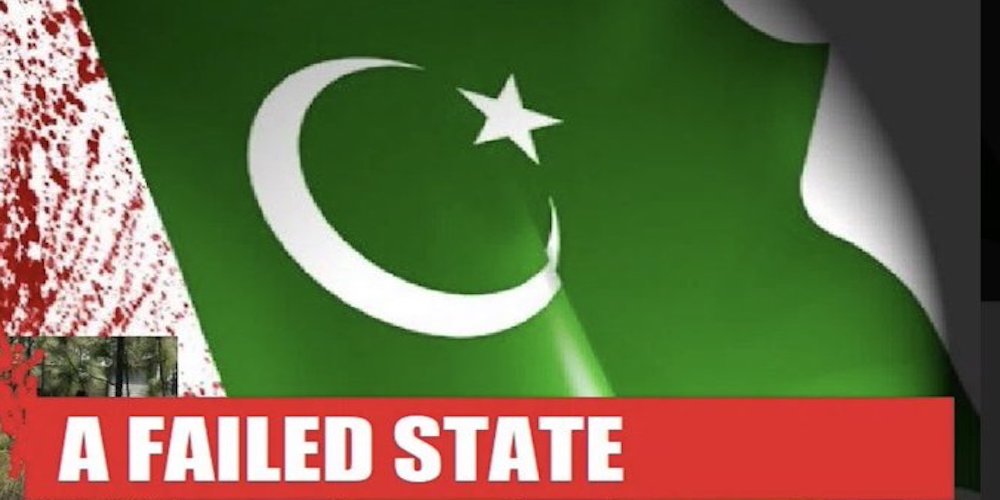
Today, Pakistan stands at a critical juncture, yet it would be a profound analytical error to characterize the nation as being on the “brink of failure” in the sense of imminent state collapse. The reality is more complex; Pakistan is navigating a severe, multi-dimensional crisis that has pushed its socio-economic and political systems to a breaking point, but the state retains mechanisms to endure. The country is currently grappling with a perfect storm of economic fragility, political polarization, and security challenges, creating an environment of deep uncertainty. However, rather than a total failure, what is unfolding is a high-stakes stress test of the nation’s resilience and the competency of its institutions. The situation demands a nuanced analysis that moves beyond binary outcomes of success or failure, recognizing that Pakistan’s trajectory remains deeply contingent on near-term policy decisions and external factors.
The most immediate and palpable threat to Pakistan’s stability is its precarious economic condition, which has become the central axis around which all other crises revolve. While the nation has narrowly avoided sovereign default on several occasions since 2023, the underlying fiscal imbalances remain unresolved. On this date in 2026, the country is likely still heavily dependent on the latest tranche of an International Monetary Fund (IMF) bailout program, with negotiations over fiscal discipline and structural reforms creating immense social pressure. The core of the economic malaise lies in a chronic balance of payments crisis, where the cost of servicing external debt, coupled with stagnant export growth, continues to drain foreign exchange reserves.
Furthermore, inflationary pressures, although potentially moderated from peak levels seen in previous years, are expected to remain persistently high, eroding the purchasing power of the middle and lower classes. This economic strain is not an abstract statistic; it is translating into tangible hardship for the populace, forcing households to make difficult choices between basic necessities like food, energy, and healthcare. The state’s limited fiscal space has also constrained its ability to invest in critical infrastructure and human capital, hampering long-term growth prospects. Consequently, the government finds itself in a bind, needing to implement tough austerity measures demanded by lenders while simultaneously trying to appease a restive public.
Compounding the economic distress is a state of deep and entrenched political instability, which has fractured the traditional power structures. Since the tumultuous events of 2022 that led to the ouster of former Prime Minister Imran Khan, the political landscape has remained polarized, with the current administration facing relentless challenges to its legitimacy. By mid-2026, this polarization has likely intensified, manifesting in continuous street-level agitation and a breakdown of trust between the ruling coalition and the opposition. The civil-military establishment, which has historically played a significant role in Pakistani governance, is also navigating this volatile environment, attempting to balance its institutional interests with the demands of a populace that is increasingly skeptical of its influence.
This political disunity is not merely a distraction; it is actively undermining the government’s ability to formulate and execute coherent economic policies. The lack of consensus on critical reforms creates policy paralysis, discouraging foreign investment and complicating negotiations with international financial institutions. This fractious environment is sapping the energy of the state, diverting attention from structural reforms to short-term political survival, which in turn exacerbates the economic crisis.
While the economic and political spheres capture the most attention, the security environment presents a persistent, low-level, but significant challenge that could easily escalate. The resurgence of militant activity, particularly in the western provinces like Khyber Pakhtunkhwa and Balochistan, poses a threat to internal stability and the viability of the China-Pakistan Economic Corridor (CPEC). These insurgent and terrorist groups have exploited the porous border regions, and their ability to stage attacks on security forces and economic targets serves as a constant reminder of the state’s vulnerabilities.
Furthermore, the situation in the wider region, especially concerning Afghanistan, continues to have a profound impact on Pakistan’s security calculus. A destabilized Afghanistan can act as a sanctuary for groups hostile to Pakistan, forcing Islamabad to allocate significant military resources to its western border. While the state security apparatus remains robust and has demonstrated the capability to conduct counter-terrorism operations, the persistence of these threats imposes a heavy economic burden and creates an atmosphere of insecurity that deters business activity and investment. This security threat, combined with the country’s dire economic straits, creates a feedback loop where instability hinders economic recovery, and poverty fuels social unrest.
In the final analysis, describing Pakistan as on the “brink of failure” is a perilous oversimplification of a deeply intricate situation. The state is unquestionably facing an existential crisis, but it is a crisis of governance and resource allocation, not a collapse of the national idea. The nation possesses several latent strengths, including a young and increasingly tech-savvy population, a strategic geographic location, and a resilient private sector that has historically adapted to severe hardships. The outcome on July 5, 2026, depends almost entirely on whether the political leadership can set aside partisan differences to undertake painful but necessary economic reforms, and whether the powerful military establishment chooses to support a stable democratic transition rather than complicate the political calculus.
The path forward is a tightrope walk; the risk of a disorderly economic adjustment or a severe political explosion is palpable. However, the state has weathered severe storms in the past, and while the current challenges are among the most severe in its history, they represent a tipping point rather than a predetermined endpoint. The next year will be crucial in determining whether Pakistan can successfully manage this transition, or whether it succumbs to a period of prolonged stagnation and instability.