The Soyuz spacecraft, a testament to Soviet engineering and Russian spacefaring heritage, stands as the world’s longest-serving and most-flown crewed vehicle, with over 150 missions since its debut in 1967 . Far more than a historical artifact, it remains a vital, active component of international space operations, most notably as the reliable “workhorse” for transporting astronauts and cosmonauts to the International Space Station (ISS) . Its continuing relevance was powerfully underscored in July 2026 when the Soyuz MS-29 mission successfully launched from the Baikonur Cosmodrome, carrying two Russian cosmonauts, Pyotr Dubrov and Anna Kikina, alongside NASA astronaut Anil Menon, to the ISS .
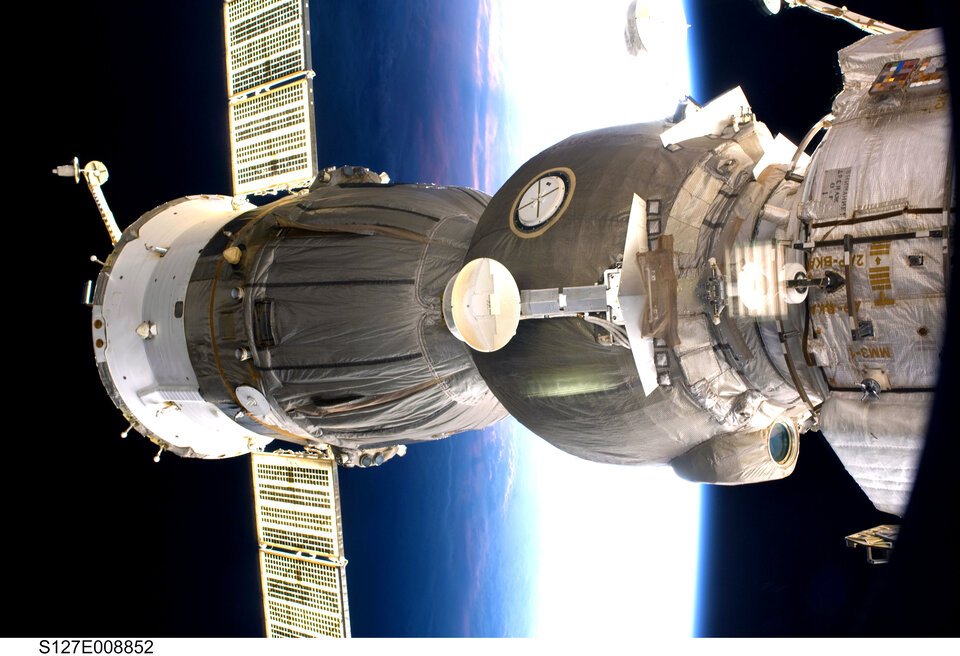
This mission serves as a prime example of the spacecraft’s enduring role in fostering international collaboration, a relationship further cemented by a seat-exchange agreement between Roscosmos and NASA, ensuring a continuous and multinational presence on the ISS . The Soyuz’s foundational design, centered on a modular architecture, is the key to its versatility and functionality. It is comprised of three distinct modules: the Orbital Module, the Descent Module, and the Instrumentation/Service Module, each serving a critical, dedicated purpose . The Orbital Module, situated at the front, is a spherical section that functions as the crew’s primary living quarters, providing additional habitable volume during their time in orbit and housing the critical docking mechanism that connects the Soyuz to the space station . This module, along with the service module, is jettisoned and burns up in the atmosphere before reentry, making it an expendable component of the craft .
The Descent Module is the central, and most robust, section of the Soyuz, and is the only part of the spacecraft that returns to Earth . This compact capsule, approximately 2.17 meters in diameter, is where the three crew members sit during the arduous phases of launch and the fiery, high-G reentry into the Earth’s atmosphere . Designed to survive these extreme conditions, it is equipped with a heat shield, parachutes, and small retro-rockets that fire just before touchdown to cushion the final impact on the steppes of Kazakhstan, providing a safe albeit famously rough landing . Finally, the Instrumentation/Service Module is located at the rear of the spacecraft and houses all the critical systems necessary for its operation in the vacuum of space . This section is populated with the craft’s avionics, attitude control thrusters, and steering engines; it is also equipped with the large, deployable solar panels that provide electrical power and the batteries that store it .
The journey of a Soyuz from launchpad to space station follows a meticulously choreographed sequence that has been refined over decades. The spacecraft is launched atop a powerful Soyuz rocket, which, in less than nine minutes, propels the capsule to its preliminary orbit . Upon reaching orbit, the Soyuz spacecraft separates from the rocket’s upper stage and autonomously deploys its solar arrays and communications antennas . For most of its history, the Soyuz utilized a two-day, multi-orbit rendezvous profile to catch up to the ISS, but modern iterations can now achieve the feat in a matter of hours . The docking process is almost entirely automated, with the spacecraft’s Kurs rendezvous system guiding it to a precise connection with the station’s docking port, though the crew commander can take manual control if necessary .
Once a hard seal is achieved and leak checks are completed, the hatches are opened, and the new crew floats into the ISS, beginning their long-duration mission . The current generation, the Soyuz MS, represents the culmination of this continuous evolution, incorporating significant upgrades like improved solar panels for greater power, a modern digital flight control system, and a modified docking system . This evolution is crucial as the Soyuz has often been the only lifeline to the ISS; following the retirement of the Space Shuttle, it was the sole means of crew transportation until the advent of commercial US crew vehicles . To this day, at least one Soyuz capsule is always docked to the ISS, serving as an emergency escape pod, or “lifeboat,” that can evacuate crew members quickly if a critical situation arises onboard the station . This dual role as both primary transport and crucial safety measure ensures that the Soyuz, with its robust design and proven legacy, will remain an indispensable pillar of human spaceflight for the foreseeable future.