
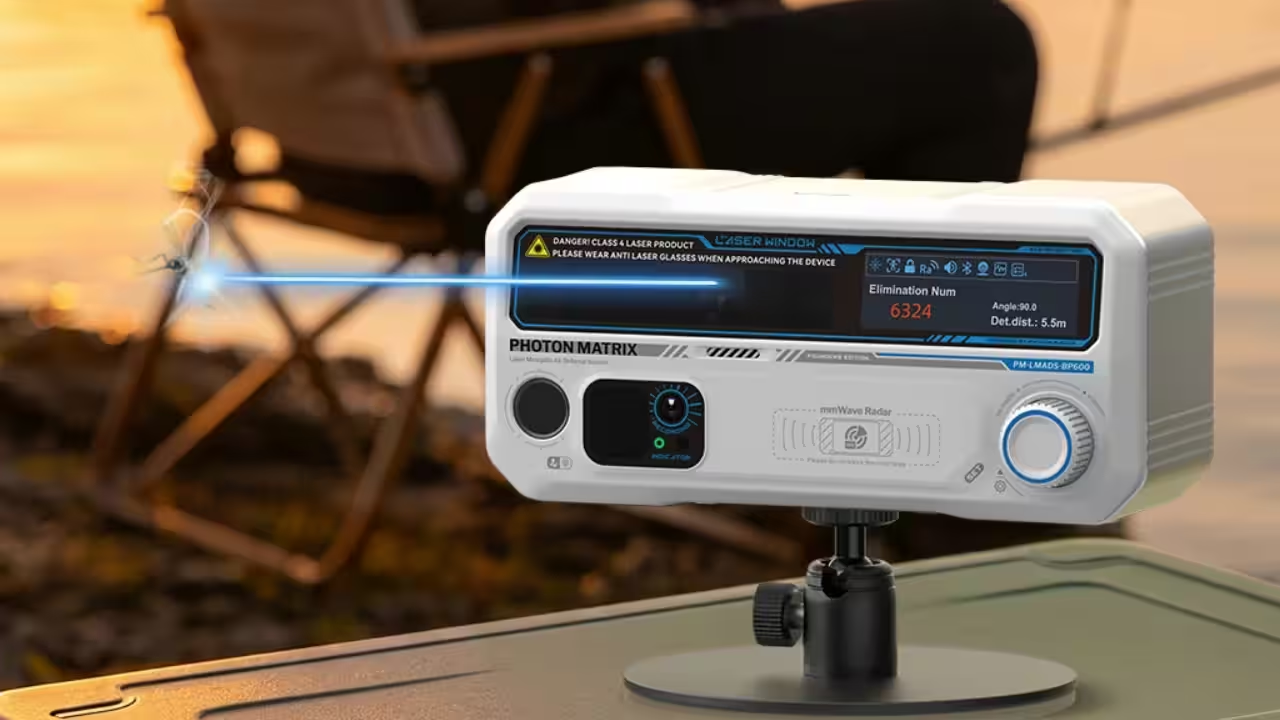
Forget the acrid smell of burning mosquito coils and the constant buzz of electric zappers; a new, high-tech solution to humanity’s age-old battle against the mosquito has arrived. A Chinese company has begun mass-producing a portable, AI-powered laser device that actively hunts and eliminates mosquitoes in mid-air, turning a science-fiction concept into a consumer reality. Developed by Changzhou-based startup Photon Matrix Lab, this innovative device has captured global attention, raising over $2.5 million on crowdfunding platform Indiegogo, far exceeding its initial $20,000 target. The product’s journey from a frustrating summer problem to a mass-produced gadget exemplifies China’s growing strength in consumer technology and its ability to transform complex industrial systems into practical home-use solutions.
The technology behind this “mosquito-killing laser” is a sophisticated blend of military-grade sensing and artificial intelligence. The system operates through a combination of LiDAR, millimeter-wave radar, and an AI-powered vision module to detect, track, and eliminate its tiny targets with remarkable precision. The process begins with the device scanning its surroundings using a fan-shaped laser grid, while the radar and AI work together to identify and lock onto flying insects as small as 2 millimeters. Once a target is confirmed, the system fires a high-energy pulse laser that can disable a mosquito within an astonishing 0.003 seconds, a process that is nearly invisible to the human eye. The device is exceptionally effective, boasting a stable detection rate of over 95% within a six-meter radius and capable of neutralizing up to 30 mosquitoes per second. To ensure it only targets pests, the AI can distinguish mosquitoes from beneficial insects like bees by analyzing their size, wingbeat frequency, and flight speed.
The development of this device, which its founder describes as a “home-use micro defense system,” represents a significant engineering challenge overcome by leveraging China’s robust supply chains. While the concept of a laser mosquito killer was proposed in overseas laboratories over a decade ago, it remained a pipe dream due to limitations in photonics, real-time algorithms, and miniaturization. The breakthrough for Photon Matrix came from integrating these technologies into a compact consumer device. As the company’s CTO noted, “In Silicon Valley, it’s hard to find a supplier who can prototype a high-precision fiber laser module in two weeks. But in Changzhou, the supply chain is right downstairs”. This ecosystem allowed the team, founded in September 2025, to compress industrial-grade laser systems into a portable unit, effectively turning a “cannon into a sniper rifle”. The product is now entering mass production, with the first batch of units expected to ship in August 2026. It is offered in two versions: an infrared model for home use priced at $988 and a blue-laser industrial version for $1,088.
The device’s popularity is not solely due to its “cool” factor but is driven by a genuine need for more effective and safer mosquito control. Mosquitoes are not just a nuisance; they are a major global health threat, responsible for killing more than 700,000 people annually by transmitting diseases like malaria and dengue. This new device offers a chemical-free alternative, addressing concerns associated with traditional methods like coils and sprays, which release potentially harmful substances. A crucial aspect of its design is safety. The Photon Matrix device includes multiple safety mechanisms; millimeter-wave radar monitors the area for humans and pets, and the laser automatically shuts off if a person or animal enters the scanning zone. This is a significant improvement over traditional electric traps, which can pose shock risks, especially to children. This safety-first approach has made the device particularly appealing to “mom armies” and families seeking a reliable, non-toxic way to protect their homes.
The demand for this new technology has been overwhelming, reflecting a broader trend in the mosquito-control market. After a demonstration video went viral on TikTok, attracting millions of views, the campaign attracted over 3,500 backers from more than 70 countries. Orders from the United States and Europe account for 60% to 70% of the total, though significant interest has also come from other regions. This international success is a testament to the product’s appeal and its potential to solve a global problem. The mass production of the Photon Matrix laser mosquito killer marks a significant shift in pest control, moving from passive repellents to active, automated elimination. While its advertised performance awaits independent verification, its entry into the market signals a new era in the fight against mosquitoes. The company’s ambition extends beyond residential use, with plans to adapt the technology for agriculture and other areas requiring precise, chemical-free pest management.