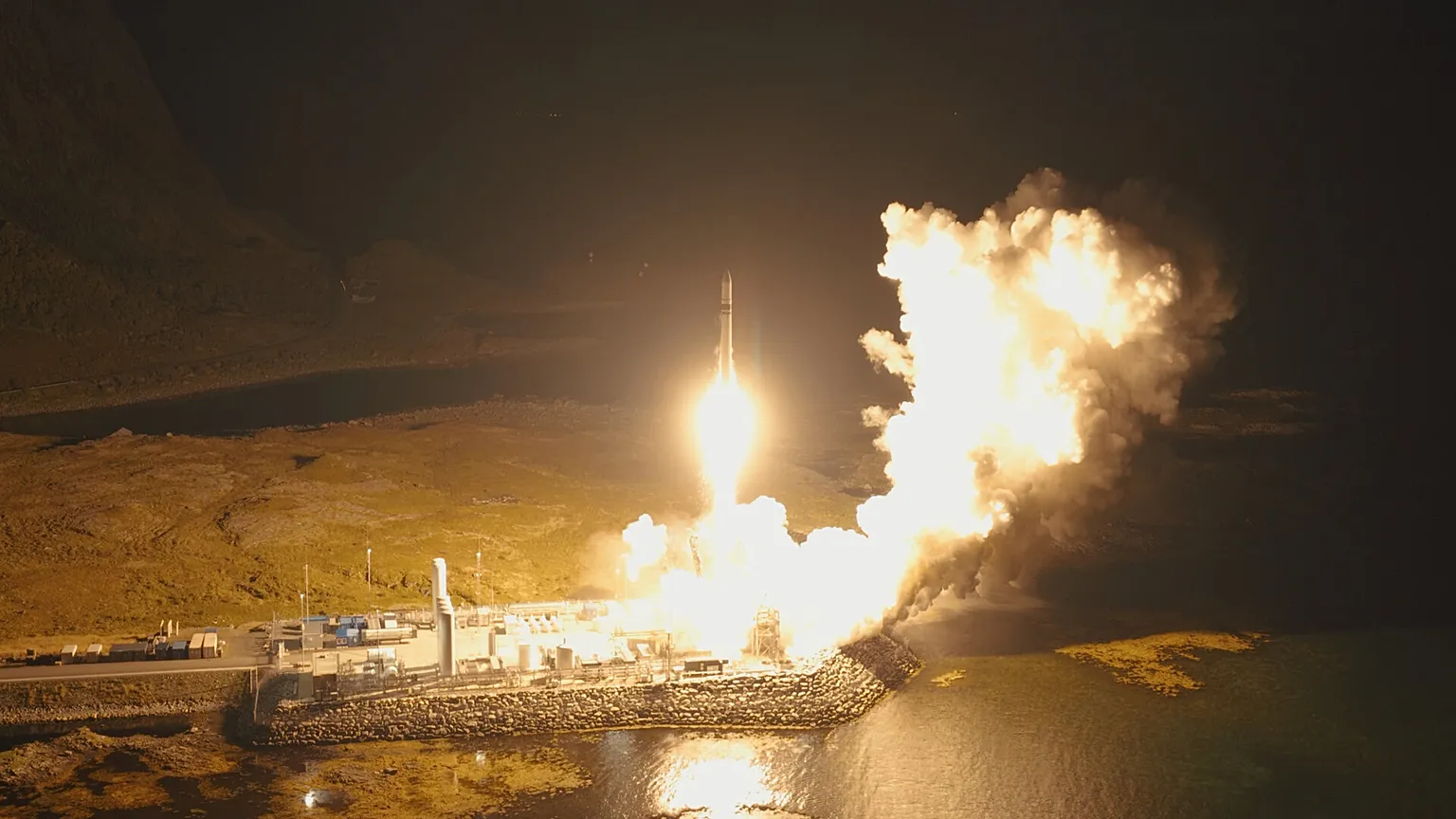
On September 5, 2026, a pivotal moment in aerospace history unfolded as German startup Isar Aerospace successfully launched its Spectrum rocket into low Earth orbit from the Andøya Spaceport in Norway, marking the first-ever successful commercial orbital launch from continental European soil . The uncrewed Spectrum rocket lifted off at 10:12 p.m. CEST, carrying a payload of five small satellites and an in-flight technology experiment, and settled into orbit approximately seven minutes later, a dramatic redemption arc following its first, ill-fated attempt 18 months prior when the rocket plunged into the sea and exploded shortly after takeoff .
This historic achievement represents far more than a single company’s success; it constitutes a monumental breakthrough for Europe’s long-standing ambition to secure independent, autonomous access to space, reducing its reliance on other global powers and establishing a sovereign launch capability right on its own continent . The mission, aptly named “Onward and Upward,” not only served as a qualification flight for the vehicle but also successfully deployed its first commercial and educational payloads, including several CubeSats from European universities and an experiment designed to test new technologies in space .
This landmark event was hailed across the political and industrial spectrum, with German Chancellor Friedrich Merz calling it “the beginning of a new era” and EU Defence and Space Commissioner Andrius Kubilius stating that “Europe’s independent access to space just got a major boost” . The successful launch has profound implications for Europe’s strategic positioning and its commercial space sector, with Isar Aerospace’s CEO Daniel Metzler highlighting that “launch capability is right now the biggest bottleneck in the entire industry,” a bottleneck his company has now demonstrably helped to alleviate .
The 28-metre-tall, two-stage Spectrum rocket, designed to carry payloads of up to 1,000 kilograms to low Earth orbit, is a testament to Europe’s burgeoning private space industry and its capability to innovate rapidly . Powered by ten engines, nine on the first stage and one on the second, the vehicle’s successful deployment of its payloads on only its second flight represents an extraordinary technical achievement for a company founded just eight years ago . This mission was strongly supported by the European Space Agency’s (ESA) Boost! programme and is the first to hit a key milestone of the European Launcher Challenge, an initiative requiring providers to achieve an orbital launch before 2027 .
The importance of this success is amplified by the context of a shifting global order and the urgent need for Europe to strengthen its strategic autonomy, as underscored by Chancellor Merz’s visit to the launch site earlier in the year and his subsequent statement that Europe has been “dependent on other supply chains and other countries in the world for far too long” . With this launch, Isar Aerospace has proven that a European commercial entity can deliver satellites to orbit, paving the way for a more diverse, competitive, and independent European space sector that can compete in the fast-growing global market for satellite launches .
This historic achievement marks the beginning of a new chapter for European spaceflight, with the success laying the foundation for a major scaling of operations across the continent. Isar Aerospace has already announced it has five more rockets in production and has set a long-term goal of conducting around 40 launches a year to meet rising demand from both civilian and military clients, a significant step towards closing the launch gap with the United States, which conducted nearly 200 launches in 2025 . Furthermore, the company is actively expanding its global footprint by developing a second launch site in Nova Scotia, Canada, which is expected to be ready for liftoffs by 2028 .
This expansion is backed by significant financial commitment from European institutions, with the company having secured approximately €200 million ($232 million) from the European Space Agency just last week to fund new rocket development and expand its testing and launch infrastructure . The successful launch has been widely celebrated as a pivotal step for European security, with Norway’s Minister of Industry and Commerce, Cecilie Myrseth, emphasizing that “the fact that we can now launch satellites from Andøya strengthens Norwegian and European security in the turbulent times we live in” . This sentiment was echoed by ESA Director General Josef Aschbacher, who described the launch as historic and praised it as an important step towards a more diverse and autonomous European launch service sector . As Isar Aerospace moves from a successful test flight to full-scale production and commercial operations, the “Spectrum” rocket has not just reached orbit; it has successfully launched a new era of European space independence, innovation, and strategic capability.