
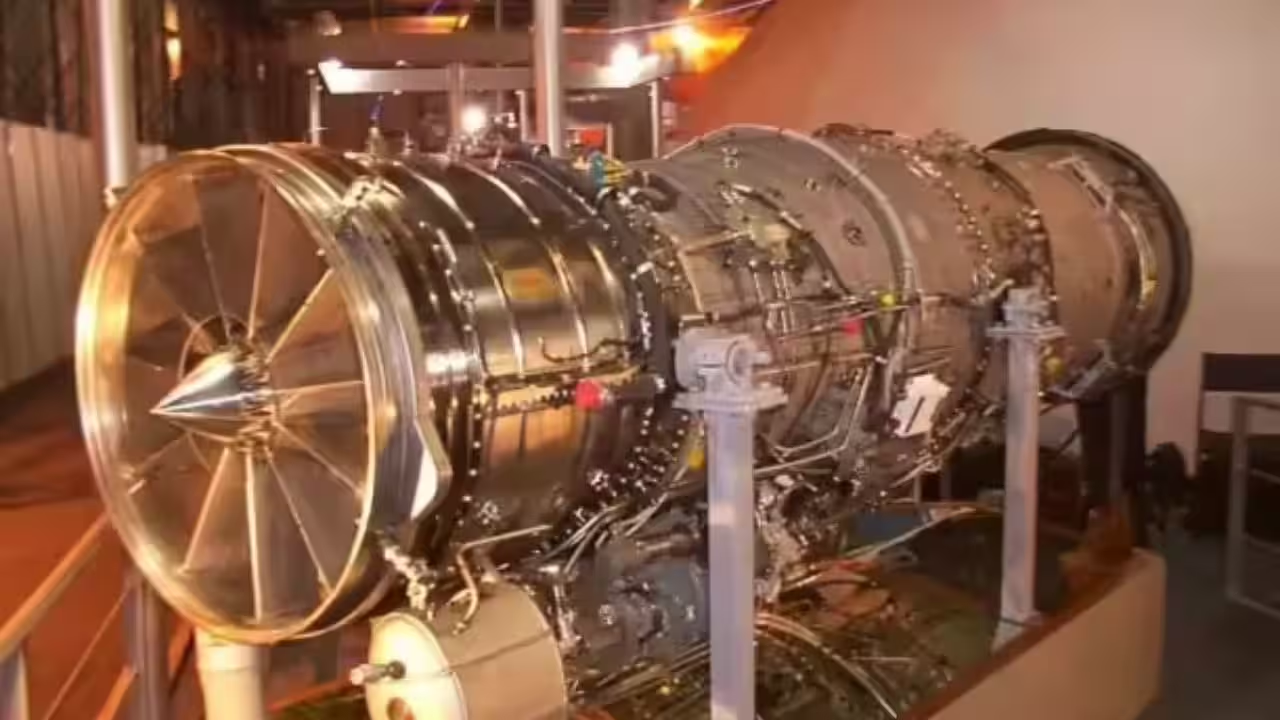
Building a modern aircraft gas turbine engine is widely regarded as one of the ultimate pinnacles of human technological achievement, rivaled only by advanced spacecraft engineering and semiconductor manufacturing. At its core, a jet engine is a controlled, continuous explosion housed within a lightweight, highly stressed metallic structure that must operate reliably for thousands of hours thousands of feet in the air under punishing environmental conditions. The fundamental challenge lies in managing extreme thermodynamic cycles where components are forced to function under conditions that push the absolute physical limits of known matter. Only a handful of nations and corporate entities—such as General Electric, Rolls-Royce, Pratt & Whitney, and Safran—possess the sophisticated technological ecosystem required to design, test, and mass-produce these high-bypass powerplants. The difficulty is not merely a matter of mechanical assembly; rather, it is an intricate nexus of advanced metallurgy, fluid dynamics, electronic control systems, precision manufacturing, and astronomical financial investment where a single microscopic flaw can lead to catastrophic failure.
One of the most formidable barriers in jet engine design is the extreme operational temperature inside the turbine section. Inside a modern high-bypass turbofan engine, gases exiting the combustion chamber reach temperatures that far exceed the melting point of the very superalloys used to construct the turbine blades. To put this into perspective, the metal components must maintain their structural integrity, creep resistance, and tensile strength at temperatures where standard steel would melt into liquid. This has forced materials scientists to develop single-crystal superalloys, typically based on nickel, which are grown as a single, flawless metallic crystal to eliminate grain boundaries where cracks normally initiate and propagate under high stress and centrifugal loads. Furthermore, these blades require intricate internal cooling channels that bleed cooler air from the compressor stage to circulate through microscopic laser-drilled holes, creating a protective cushion of air known as film cooling. Coupled with advanced thermal barrier coatings (TBCs) made of specialized ceramic materials like zirconia, these components survive only through a delicate thermal equilibrium that balances intense external heat with internal cooling.
Beyond materials, the internal flow of air and combustion gases presents monumental aerodynamic challenges that require mastery over fluid mechanics. Air enters the engine at subsonic or supersonic speeds, must be slowed down smoothly through the diffuser and compressor sections, compressed to pressures exceeding 40 atmospheres, mixed with precisely atomized fuel, ignited, and then expanded rapidly through multiple turbine stages to extract maximum energy. Maintaining stable airflow across this entire continuum is exceptionally difficult. If the angle of attack on compressor blades becomes too steep due to rapid throttle changes, crosswinds, or turbulent intake air, it can trigger a compressor stall or surge, a violent aerodynamic breakdown where airflow reverses direction, causing loud bangs, uncontained engine vibrations, loss of thrust, and potentially destroying the engine blades. Engineers must design thousands of precisely twisted compressor and turbine blades using advanced computational fluid dynamics (CFD) simulations, balancing pressure gradients, boundary layer separation, and shockwave interactions in three-dimensional space.
The mechanical forces at play inside a jet engine defy everyday intuition and create severe structural hurdles. A typical commercial fan blade rotates at thousands of revolutions per minute, generating colossal centrifugal loads where the outward pull on a single blade can equal the weight of a heavy-duty truck. At the same time, the engine is subjected to severe gyroscopic forces during aircraft banking, vibrational harmonics that can induce high-cycle fatigue, and thermal expansion mismatches between dissimilar materials operating across wide temperature gradients. Ensuring long-term structural integrity and fatigue life requires exhaustive, destructive testing protocols. For instance, manufacturers must perform stringent blade-off tests, where a high-explosive charge deliberately severs a rotating blade at maximum speed, forcing the heavy containment casing around the engine to trap the flying shrapnel rather than allowing it to pierce the aircraft fuselage or fuel tanks. Designing a casing strong enough to contain a catastrophic rotor failure while keeping the engine lightweight enough to be fuel-efficient presents a permanent engineering contradiction.
Even if a jet engine design is theoretically flawless on a computer simulation, translating that design into physical hardware requires unprecedented manufacturing precision. Tolerances within the compressor and turbine are measured in microns, and any deviation can disrupt airflow, reduce aerodynamic efficiency, or cause catastrophic rubbing between stationary and rotating parts. Creating single-crystal turbine blades requires a meticulously controlled investment casting process where molten metal cools at an exact, slow rate inside a complex ceramic mold, seeded by a single crystal starter. Any microscopic impurity, inclusion, or micro-porosity discovered during non-destructive testing, such as X-ray inspection or fluorescent penetrant inspection, results in the immediate rejection of the expensive part. Furthermore, modern techniques like additive manufacturing (3D printing) are being adopted to create complex internal geometries that were previously impossible to machine, yet these powder-bed fusion processes introduce their own quality control challenges regarding residual stresses, micro-structural consistency, and surface finish.
Controlling these complex physical processes in real-time introduces yet another layer of difficulty involving software and electronics. Modern engines rely on a Full Authority Digital Engine Control (FADEC) system, which is essentially a specialized, highly redundant computer brain that monitors thousands of parameters per second—including temperatures, pressures, vibration, and throttle position—to optimize fuel delivery, prevent stalls, and protect the engine from over-temperature events. Developing FADEC software requires extreme software reliability standards, often complying with the most rigorous aviation safety protocols, because a software glitch or sensor failure at cruising altitude could result in engine shutdown. The FADEC must seamlessly coordinate variable stator vanes, bleed valves, and fuel metering valves while adapting to changing atmospheric densities, moisture levels, and flight profiles across the globe.
External environmental hazards further complicate the engineering task, as jet engines must ingest whatever the atmosphere throws at them. Engines must survive foreign object damage (FOD), ranging from ingestion of runway debris and hailstones to massive flocks of birds. Certifying an engine often involves firing dead chickens or synthetic gel projectiles into spinning fan blades at high velocities to ensure the engine can shut down safely without disintegrating. Additionally, operations in environments laden with volcanic ash or sand present severe chemical challenges; microscopic silicate particles melt in the ultra-hot combustion chamber, flow into the turbine section, and resolidify on cooling channels, clogging them and leading to rapid overheating and engine failure. Engineers must continuously reformulate coatings and design advanced particle separation systems to safeguard against these destructive environmental factors.
Finally, the journey from concept to a certified, commercialized jet engine is an economic marathon fraught with existential risk. Developing a brand-new engine family often costs between five to ten billion dollars and takes upwards of a decade of intensive research, prototyping, and testing. Unlike automotive engines, which can be recalled and repaired easily on the ground, an aircraft engine must demonstrate absolute fault tolerance over tens of thousands of grueling flight cycles before receiving certification from regulatory bodies like the Federal Aviation Administration (FAA) or the European Union Aviation Safety Agency (EASA). Engine manufacturers frequently enter risk-sharing partnerships and rely on decades of accumulated proprietary institutional knowledge, often protected by strict international export controls and trade secrets. This steep economic and technical barrier to entry explains why the global aerospace market for large commercial turbofans remains a heavily guarded duopoly or oligopoly.
Ultimately, building a jet engine is an exercise in mastering the outer boundaries of physics, chemistry, and industrial capability. It requires harmonizing conflicting physical demands—making components light yet immensely strong, hot yet heavily cooled, and rigidly precise yet flexible enough to withstand thermal shock and aerodynamic turbulence. Every advancement in fuel efficiency, noise reduction, and thrust-to-weight ratio represents the culmination of generations of relentless engineering refinement. As the aviation industry pivots toward sustainable aviation fuels, hybrid-electric propulsion, and hydrogen combustion, the fundamental challenges of jet engine manufacturing will only multiply, ensuring that crafting these mechanical marvels remains one of humanity’s most demanding and vital technological frontiers.