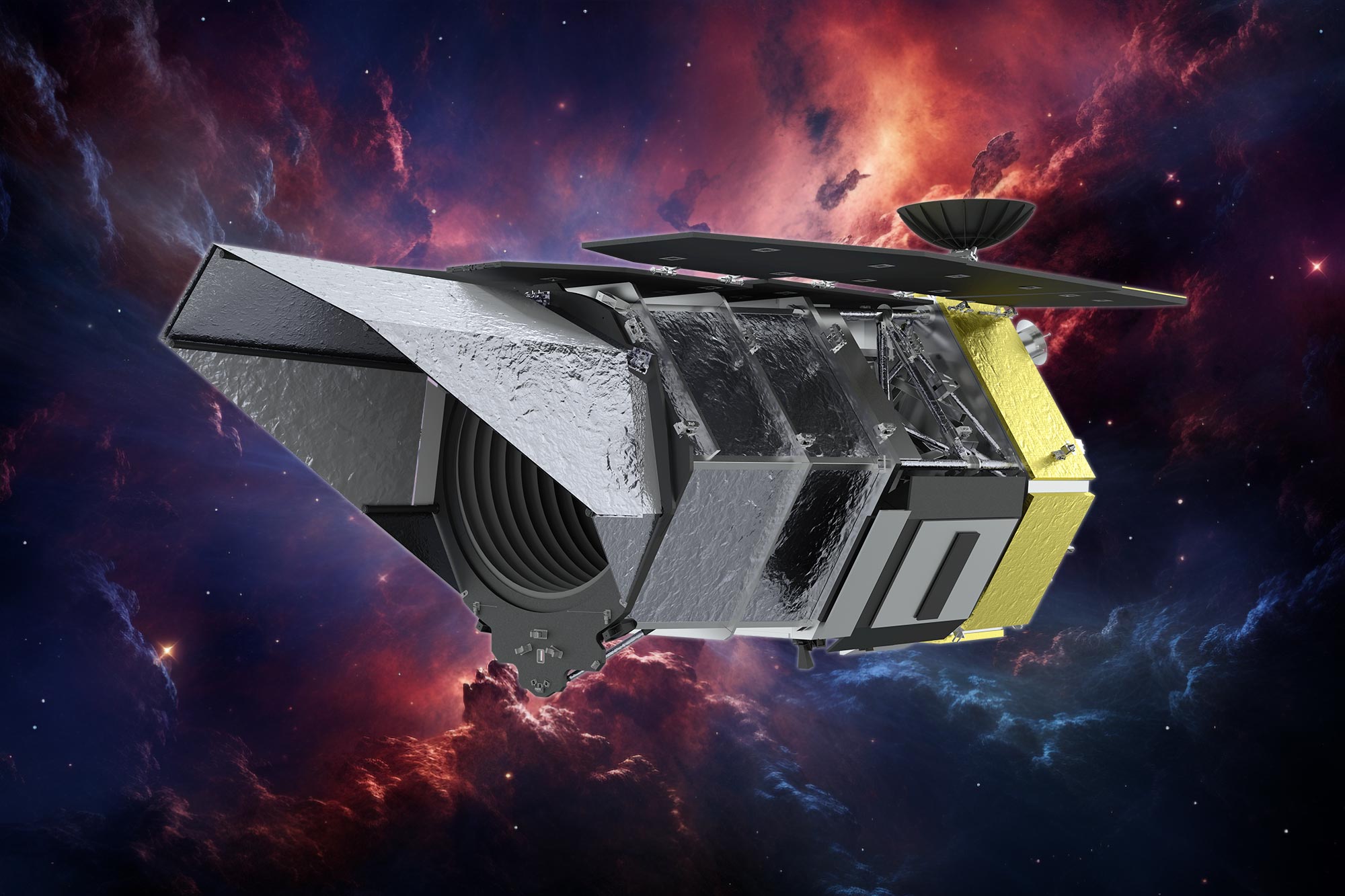
NASA’s Nancy Grace Roman Space Telescope has not yet reached its final observation post, but it has already delivered a stunning engineering surprise: the mission may operate for at least 22 years on its fuel supply, more than double the original ten-year budget. The remarkable fuel savings stem from a near-perfect launch, a highly precise first course correction, and a lighter-than-expected spacecraft that allowed engineers to load extra propellant before liftoff. As a result, NASA now estimates that the observatory could continue science operations into the 2040s, far beyond its planned five-year primary and five-year extended mission.
The original fuel plan was built around a ten-year design life, with a five-year primary mission and a potential five-year extension. Because fuel is the telescope’s primary consumable resource, every kilogram saved translates directly into additional years of observations. The first major break came on August 31, 2026, just one day after Roman launched aboard a SpaceX Falcon Heavy rocket from Cape Canaveral. The mission’s first mid-course correction maneuver, designed to adjust the observatory’s trajectory toward the Sun-Earth Lagrange point 2 (L2), was budgeted to consume up to 200 kilograms (441 pounds) of hydrazine fuel. Instead, Roman used only 18 kilograms (40 pounds)—less than ten percent of the allocation—while completing the burn with more than 99 percent accuracy. That single fuel-efficient maneuver added roughly four years to the mission’s potential lifetime.
A second and equally important factor came from the spacecraft’s actual mass. During design and planning, NASA conservatively budgeted fuel for a maximum launch mass of 9,800 kilograms (21,605 pounds). However, the completed Roman observatory weighed only 8,056 kilograms (17,760 pounds)—approximately two tons lighter than the planning limit. This mass margin allowed ground crews at Kennedy Space Center to fill the propellant tanks to their full capacity with 290 gallons of hydrazine, rather than loading only the amount needed for a ten-year mission. The extra fuel loaded before launch is expected to contribute another four years of operational life.
The remaining years in the 22-year estimate depend on upcoming maneuvers that have not yet been fully executed. A second mid-course correction is planned for later in September 2026, followed by a final orbital insertion burn in early December to place Roman into its permanent orbit around L2, roughly 1.5 million kilometers (about one million miles) from Earth. Because the first burn was so precise, the second correction is expected to be much smaller and require even less fuel than originally planned. NASA projects that both remaining maneuvers will use less propellant than budgeted, potentially saving another four years for future science. Once settled at L2, Roman will need only periodic station-keeping burns roughly every 28 days, a modest and predictable fuel expense.
It is important to note that the 22-year figure is an estimate of potential science operations, not a guarantee. The telescope’s fuel may last that long, but its instruments, electronics, and other hardware will also need to function for decades. NASA has not committed to a 22-year mission; the actual duration will depend on funding, instrument health, and ongoing performance. Even so, the fuel surplus provides enormous flexibility. Roman was specifically designed to be refuelable in space, with a capture point and robotic-compatible refueling interface, though no current servicing vehicle can reach L2.
The fuel savings carry significant scientific implications. Roman is designed to survey vast regions of the sky in infrared light, investigating dark energy, dark matter, and exoplanets with a field of view roughly 100 times larger than Hubble’s. Its Wide Field Instrument, a 300-megapixel infrared camera with 18 detectors, has already been powered on and is undergoing initial checks. The extra years could allow Roman to extend its core surveys, support more guest observer programs, and test its coronagraph technology for directly imaging exoplanets around nearby stars. As Jamie Dunn, director of NASA’s Goddard Space Flight Center, put it, the result reflects “exquisite planning by our orbital dynamics team, brilliant execution by the operations team, and a precise launch from SpaceX”.