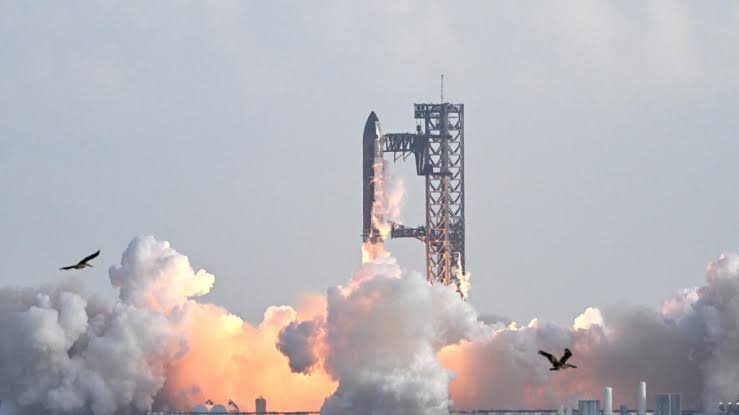
SpaceX has cleared a critical hurdle in its quest to send the Starship megarocket into orbit for the first time, successfully completing a full launch rehearsal that keeps the ambitious test flight on track for early next week. The company announced on September 24, 2026, that it had finished a wet dress rehearsal (WDR) for the upcoming Flight 14, a major step that simulates every aspect of launch day except the actual ignition of the rocket’s engines . During this rehearsal, mission teams loaded the towering 407-foot-tall (124-meter-tall) vehicle with supercooled liquid oxygen and methane propellants and ran through the entire countdown sequence, verifying the complex interplay between the rocket, its ground systems, and the launch pad infrastructure without firing a single one of its Raptor engines . This successful test comes as SpaceX prepares for its 14th integrated flight test of the fully reusable Starship system, a mission that represents a fundamental shift in the program’s trajectory and a critical stepping stone toward NASA’s Artemis moon missions and Elon Musk’s long-term vision of settling Mars .
The upcoming Flight 14, currently scheduled to lift off from SpaceX’s Starbase facility in South Texas on Monday, September 28, during a 75-minute window that opens at 8:15 a.m. EDT (1215 GMT), is significant because it marks the first time Starship will attempt to reach a stable Earth orbit rather than following the suborbital trajectories that defined the program’s first 13 test flights . Since its debut in April 2023, Starship has pushed the boundaries of heavy-lift rocketry, but every mission to date has sent the upper-stage spacecraft, known as Ship, on a brief arc that re-entered the atmosphere without completing a full circuit of the planet . Flight 14 is designed to change that. If all goes according to plan, the 171-foot-tall (52-meter-tall) Ship will accelerate to orbital velocity, circle Earth approximately six times over a nearly 10-hour mission, and then perform a controlled reentry before splashing down in the Pacific Ocean off the coast of Chile . This new splashdown zone represents a shift from previous missions, which targeted the Indian Ocean off Western Australia, and reflects the different energy profile of an orbital trajectory .
A key objective of this mission is the first orbital deployment of SpaceX’s next-generation Starlink Version 3 (V3) satellites. Ship 41 has been loaded with 26 of these advanced spacecraft, which represent a substantial upgrade over the existing Starlink constellation . According to Elon Musk, this V3 network is eventually intended to grow to 100,000 satellites, with the larger and more powerful V3 models expected to completely replace the current operational fleet . Successfully deploying these satellites would be a major commercial and technical milestone, as it would mark the first time Starship has carried operational payloads into orbit and could signal the beginning of the vehicle’s transition from an experimental testbed to a revenue-generating launch system . The deployment sequence will occur once the Ship reaches its target altitude of roughly 275 kilometers, after which the satellites will separate and begin their journey to their operational orbits .
While the upper stage continues its orbital journey, the Super Heavy first-stage booster will follow a separate flight path. After separating from Ship, the booster is expected to perform a controlled descent and splash down in the Gulf of Mexico approximately seven minutes after launch . This differs from some previous test flights where SpaceX successfully caught the Super Heavy booster back at the launch tower using the iconic “chopstick” arms of the launch tower, a feat it has accomplished on three separate occasions . For Flight 14, SpaceX is opting to let the booster splash down rather than attempt a catch, likely to prioritize the primary orbital objectives and reduce risk.