In a groundbreaking development for solar physics and space weather forecasting, ISRO’s Aditya-L1 spacecraft has uncovered that massive solar eruptions do not always expand uniformly, challenging long-held scientific assumptions. India’s premier space-based solar observatory successfully tracked a Coronal Mass Ejection (CME) on August 5, 2024, revealing that the massive burst of plasma expanded asymmetrically and with a distinct tilt rather than forming a symmetrical bubble as previously modeled. This critical finding, spearheaded by researchers at the Indian Institute of Astrophysics (IIA) in Bengaluru—an autonomous institute under the Department of Science and Technology—and published in The Astrophysical Journal Letters, opens up new dimensions in our understanding of space weather dynamics and promises to significantly improve future space-weather prediction models.
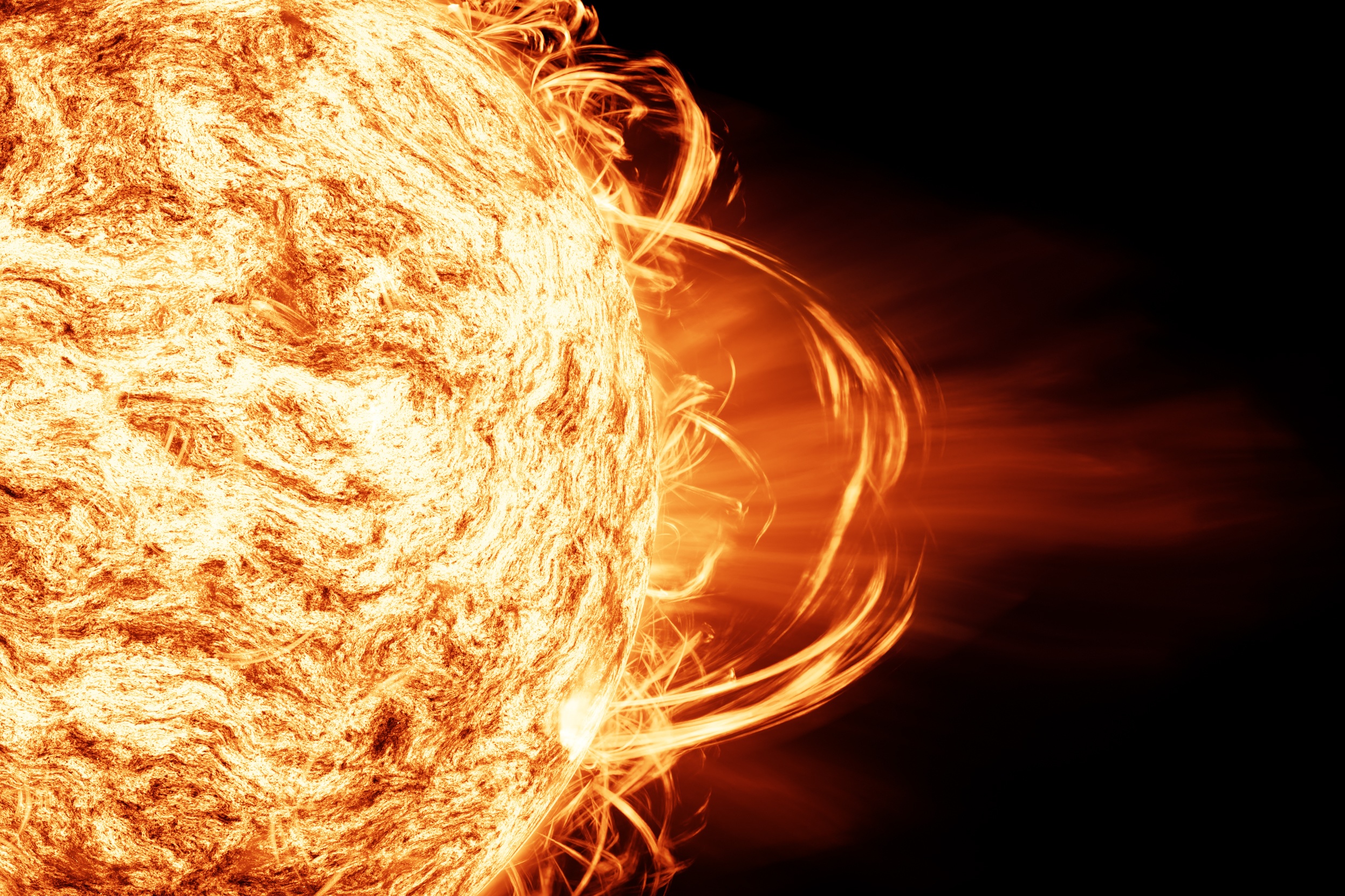
To fully appreciate the gravity of this discovery, it is essential to understand what a Coronal Mass Ejection is and why it poses challenges for scientists. CMEs are enormous bursts of hot, magnetised plasma and energetic particles hurled from the Sun’s outer atmosphere, known as the corona. When these powerful ejections are directed toward Earth, they interact with our planet’s magnetic field, triggering geomagnetic storms that can severely disrupt vital technological infrastructure, including satellites, global navigation systems, high-frequency radio communications, aviation networks, and terrestrial power grids. Furthermore, severe space weather events increase radiation exposure risks for astronauts and spacecraft operating in orbit. Because modern society relies heavily on space-based technology, accurately forecasting when a CME will arrive and how strong it will be is a matter of profound practical importance. Historically, however, predicting CME arrival times has been notoriously difficult because scientists could only observe these phenomena in two dimensions, failing to capture their true complex geometry during the critical early stages of their journey.
The breakthrough was made possible by Aditya-L1’s primary payload, the Visible Emission Line Coronagraph (VELC), working in tandem with NASA’s Solar Dynamics Observatory (SDO) and advanced three-dimensional computer modeling. While standard coronagraph instruments block out the blinding light of the solar disk to capture images of the outer corona against the dark backdrop of space, they typically only show motion across the sky, leaving the line-of-sight motion largely hidden. VELC overcame this limitation by employing Doppler spectroscopy, a technique similar to how police radar guns measure vehicle speed by detecting frequency shifts. By focusing on the green emission line at 530.3 nanometres produced by highly ionised iron atoms (Fe XIV), VELC was able to measure how plasma shifts the wavelength of emitted light as it rushes toward or away from the observer.
During the August 5, 2024 solar event, VELC recorded a striking and unusual spectral pattern featuring two distinct Doppler-shifted emission branches appearing simultaneously on opposite sides of the regular coronal emission line. This clear signature indicated that the plasma within the expanding CME shell was moving dynamically both toward and away from the spacecraft’s line of sight. When the researchers attempted to simulate these observations using traditional models that assumed a uniform, symmetrically expanding bubble, the models failed completely to reproduce the data. Instead, a successful match was only achieved when they incorporated asymmetric lateral expansion and an inclined CME axis, proving unequivocally that the eruption had undergone uneven, non-uniform development in the lower corona.
This discovery of non-uniform lateral expansion and spatial tilting carries profound implications for space weather forecasting. As a CME travels through the heliosphere toward Earth, its precise shape, orientation, and expansion velocity dictate how it interacts with the continuous stream of charged particles known as the solar wind. An asymmetrically shaped CME experiences varying levels of aerodynamic drag and resistance compared to a uniform bubble, which can alter its acceleration and transit time across interplanetary space. Even slight errors in estimating a CME’s speed and arrival time can lead to missed warnings or false alarms for space weather agencies and power grid operators. By providing a window into the hidden third dimension of solar eruptions, the observations from Aditya-L1 enable scientists to refine their simulation codes and construct more robust, physically accurate models of how solar storms evolve.
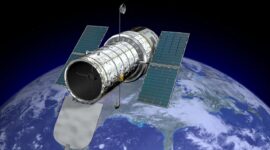
Positioned strategically at the Sun-Earth Lagrange point L1, roughly 1.5 million kilometres from Earth, Aditya-L1 enjoys an uninterrupted view of the Sun without the shadow or atmospheric interference of our home planet. This continuous monitoring capability is indispensable because solar storms develop rapidly and unpredictably, requiring constant vigilance from the earliest ignition moments in the corona. Following this successful demonstration, the research team plans to apply this multi-instrument technique to a wider catalog of solar eruptions, evaluating how consistently VELC can decode their three-dimensional kinematics. Ultimately, unlocking the secrets of these uneven solar explosions bridges a major observational gap, offering a clearer shield for Earth’s interconnected technological networks against the volatile moods of our nearest star.