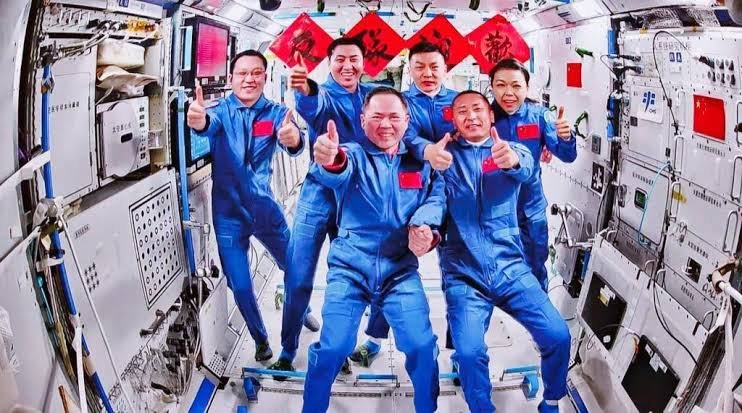
In a landmark development for international space cooperation, the China Manned Space Agency (CMSA) has officially confirmed that a Pakistani astronaut will become the first foreign national to board the Tiangong space station. Scheduled to join the upcoming Shenzhou-24 mission, the selected candidate will travel to Earth’s orbit to serve as a payload specialist during a short-duration stay. This historic flight marks a monumental turning point in geopolitical space alliances, breaking Beijing’s previous convention of exclusively hosting its own domestic taikonauts aboard its sovereign orbital outpost.
The foundation for this cooperative milestone was laid through a formal bilateral space agreement signed in Islamabad in February 2025 between China and Pakistan’s national space agency, SUPARCO. The pact explicitly outlined collaborative frameworks covering astronaut selection, rigorous joint training regimens, and direct payload participation in Chinese crewed missions. Following months of intensive screening, SUPARCO narrowed down the candidate pool in April 2026, officially naming Muhammad Zeeshan Ali and Khurram Daud as the two finalists designated for specialized astronaut training.
Both candidates subsequently relocated to Beijing to undergo an exacting multi-month training program. Because operating safely in low-Earth orbit leaves zero room for error, their preparation extended far beyond basic physical conditioning. The training curriculum required both aspiring astronauts to achieve operational fluency in Mandarin, master the complex structural layouts of Chinese spacecraft, endure high-g centrifuge simulations, and learn how to flawlessly execute instructions alongside the primary Chinese flight crew. Out of the two trained professionals, one will fly as the primary payload specialist on the Shenzhou-24 flight, while the other will fulfill the critical role of designated mission backup.
Once safely aboard the Tiangong space station, the Pakistani astronaut’s primary mandate will revolve around conducting cutting-edge scientific experiments. Reports indicate that the mission will focus heavily on specialized fields such as biotechnology and advanced materials research. Out of numerous proposals submitted to SUPARCO, multiple experiments rigorously engineered and tested within Pakistani scientific institutions were reviewed and cleared by Chinese technical teams to be flown into microgravity. As a payload specialist, the astronaut’s primary responsibility will be managing these specific studies, optimizing data collection, and ensuring the seamless execution of cross-border scientific protocols.
The logistical choreography of the mission is equally fascinating, designed around a strategic crew handover rotation. The Shenzhou-24 spacecraft will transport the incoming flight crew alongside the Pakistani specialist to the orbiting laboratory. Following a packed schedule of scientific duties spanning approximately a week, the astronaut will not return on the same vessel; instead, they are scheduled to come back to Earth aboard the returning Shenzhou-23 spacecraft currently docked at the station. This logistical maneuver highlights the synchronized coordination required between ground control and orbital vehicles.
Ultimately, the inclusion of a Pakistani astronaut on the Shenzhou-24 mission solidifies the deep, enduring strategic partnership between Islamabad and Beijing while signaling a broader shift toward internationalization in China’s space program. By opening the hatches of Tiangong to its first foreign visitor, China is positioning its orbital infrastructure as a global hub for scientific collaboration. For Pakistan, this mission represents the realization of a historic dream—propelling its first citizen beyond the atmosphere and firmly writing a new chapter in the nation’s scientific and technological history.