
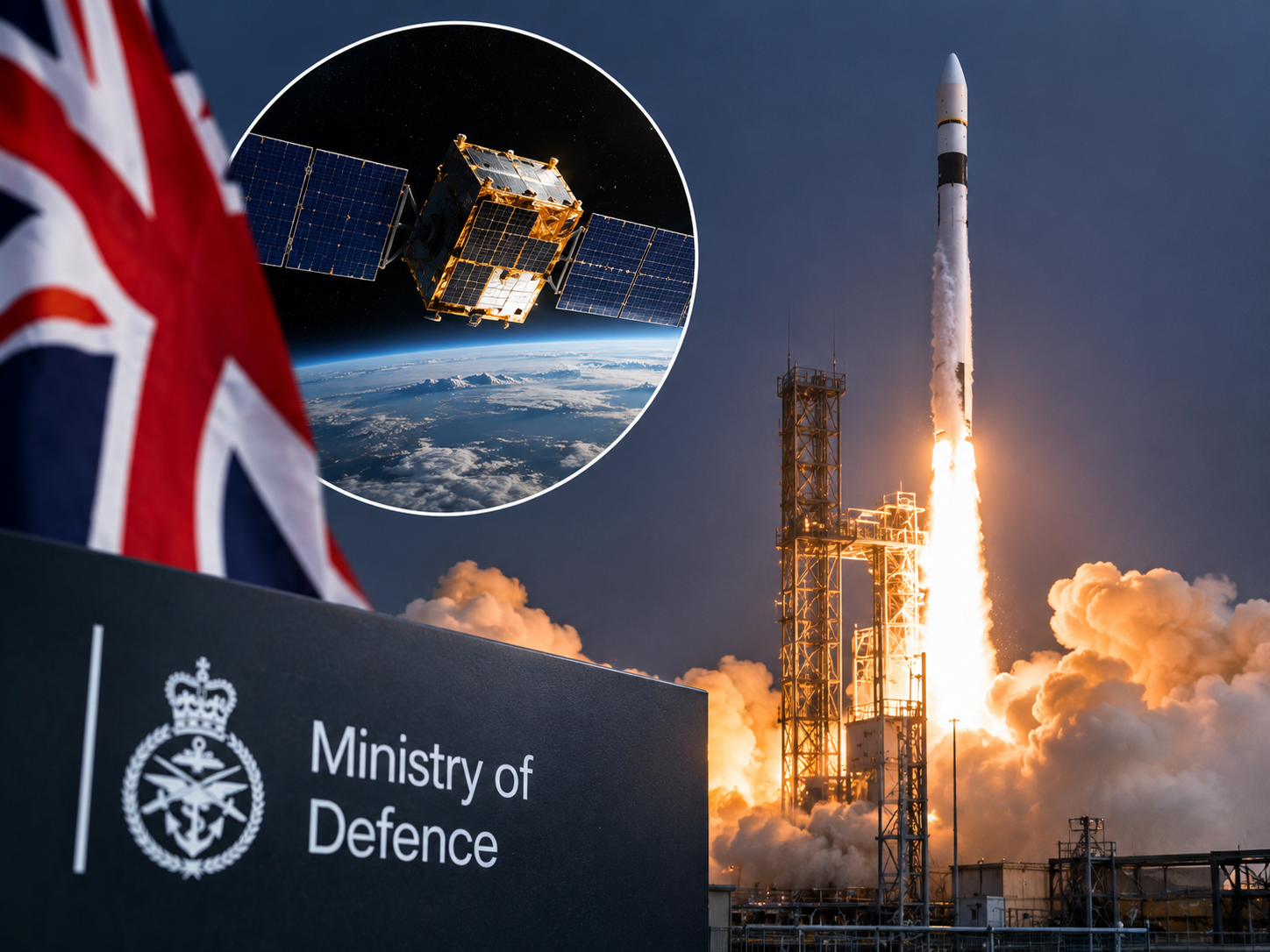
The United Kingdom has officially achieved a major milestone in its national defense capabilities with the successful deployment of the Titania military satellite, providing the UK armed forces with advanced new “eyes in space”. Launched into orbit from Vandenberg, California, this state-of-the-art spacecraft represents a critical leap forward in Britain’s military readiness, arriving right in the middle of a comprehensive £3 billion defence investment push aimed at revolutionizing the nation’s space-based infrastructure. As modern warfare increasingly relies on orbital assets for communication, navigation, and surveillance, the deployment of Titania underscores London’s strategic commitment to securing its sovereign interests above the Earth.
Weighing approximately 100 kilograms, the Titania satellite is built to operate dynamically within low-Earth orbit, racing across the globe at an astonishing speed of 27,000 kilometers per hour. Because of this high-velocity trajectory, the spacecraft will complete a full orbit around the Earth every ninety minutes, allowing for frequent passes over areas of strategic interest. Developed domestically in Hampshire through a collaborative effort between BAE Systems and the UK’s Defence Science and Technology Laboratory (Dstl) under a focused £9.5 million contract, the satellite acts as an advanced Earth-observation platform designed to deliver sharp, real-time intelligence data directly to military commanders and national decision-makers.
The deployment of Titania marks the second military satellite launched under the ISTARI program, following the path blazed by its predecessor, Tyche, which was successfully deployed in August 2024. The broader ISTARI constellation is designed to systematically reduce the United Kingdom’s historical dependence on foreign surveillance systems, ensuring absolute strategic autonomy in intelligence gathering. Looking forward, the Ministry of Defence has already laid out timelines for future expansions, with two additional systems named Juno and Oberon planned for deployment in the coming years to further thicken the nation’s orbital web.
Beyond just observing the ground, the broader framework of Britain’s space defense strategy also focuses heavily on protecting assets currently in orbit. Alongside the launch of Titania, the UK government is actively testing Project Inaros, an innovative trial network of advanced ground-based sensors stationed across Britain, Australia, and Cyprus. This network is engineered to closely track orbital movements, monitor close encounters, and detect potential threats to UK satellites before hostile actors can compromise them. Defence officials note that these combined initiatives are urgently needed amid rising global tensions and an increasingly contested space environment where adversarial powers routinely test proximity maneuvers around critical orbital infrastructure.
Ultimately, the £3 billion multi-year investment into space capabilities is paying immediate dividends by stimulating the domestic industrial base and creating high-skilled technical jobs across the country. By marrying advanced platforms like the Titania satellite with global tracking networks like Project Inaros, the United Kingdom is fundamentally transforming its military architecture. As Air Chief Marshal Sir Harv Smyth and other defence leaders have emphasized, commanding a persistent vantage point from space is no longer optional—it is vital to national resilience, tactical advantage, and ensuring that the armed forces can successfully deter threats wherever they arise.