
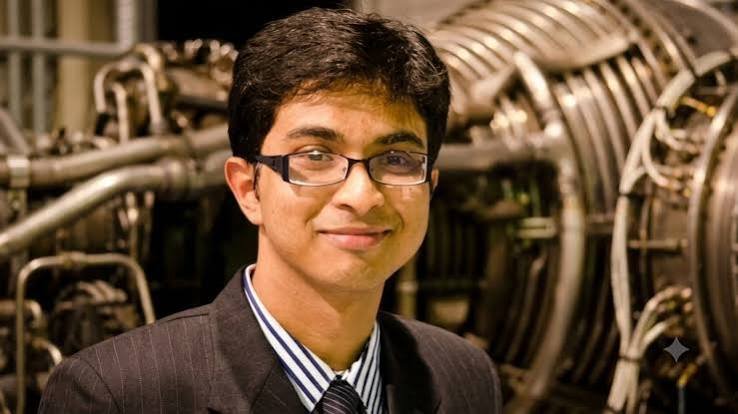
Dr. Prithwish Kundu is an Indian aerospace engineer whose career trajectory reads like a blueprint for reverse brain drain in the best possible sense: world-class training and experience at the highest levels of American aerospace research, followed by a deliberate return to India with an ambitious mission — to help build India’s own jet engines. His story intersects with one of the most strategically important technological gaps in the country: India’s decades-long dependence on foreign engines for its fighter aircraft and the national push toward self-reliance in aero-engine technology.
Kundu’s academic foundation was laid in India, where he completed his undergraduate studies in aerospace engineering, before moving to the United States for advanced research. He earned his PhD in aerospace engineering from the University of Cincinnati, a institution with deep ties to jet propulsion research, and subsequently worked as a research associate and scientist in some of the most advanced combustion and propulsion laboratories in the US. His specialization lies in computational fluid dynamics (CFD), combustion modelling, and gas turbine engine design — the exact technical areas where India’s indigenous engine programs have historically struggled.
His professional journey took him to NASA, where he contributed to research on combustion instabilities and propulsion systems relevant to next-generation launch vehicles and aircraft. Work at NASA gave him exposure to some of the most rigorous validation and testing standards in the world, including high-fidelity simulations of rocket and air-breathing propulsion systems. He later moved to work with the US Army, specifically in its research and development ecosystem, where he focused on gas turbine engine performance, thermal management, and advanced propulsion concepts for military platforms. At the Army, his work involved solving real-world engineering problems under extreme performance requirements — the kind of applied, mission-oriented research that India’s defence establishment urgently needs.
What makes Kundu’s profile particularly significant for India is the combination of skills he brings: deep expertise in combustion physics and instability (a notorious bottleneck in engine development), hands-on experience with high-performance computing for engine design, and familiarity with US military-grade qualification and certification processes. Engine development is not merely a design challenge — it is an integration challenge involving materials, cooling technologies, control systems, and testing infrastructure. Kundu’s career has touched each of these domains.
Upon returning to India, Kundu joined the Indian Institute of Technology (IIT) system as a faculty member, where he established a research group focused on aero-thermodynamics of gas turbine engines and advanced combustion systems. His lab has become a training ground for a new generation of Indian propulsion engineers, many of whom are now feeding into DRDO, HAL, and private aerospace startups. He has been actively involved in India’s indigenous engine programs, including advisory and research contributions to the Gas Turbine Research Establishment (GTRE) — the DRDO laboratory responsible for the Kaveri engine — and to emerging private-sector engine initiatives under the government’s Aatmanirbhar Bharat (self-reliant India) framework.
Kundu’s public advocacy has been unambiguous: India cannot achieve true strategic autonomy in defence aviation without mastering jet engine technology. He has argued that the Kaveri engine program’s struggles were not a failure of Indian talent but of sustained institutional investment, testing infrastructure, and program continuity. His prescription for India includes long-term funding commitments measured in decades rather than five-year plans, dedicated engine testing facilities with altitude simulation capabilities, and strong industry-academia partnerships modelled on the US ecosystem he experienced firsthand.